
No Haggle Car Sale: Get a Firm Cash Offer in 24 Hours
Sell your 2018+ Alberta car fast with a binding no haggle cash offer. Verify payment, clear liens, and often get funds within 24 hours via Kamocars.
No Haggle Car Sale: Get a Firm Cash Offer in 24 Hours

A no haggle car sale is a fixed, no-negotiation cash offer for your vehicle, and it works best if you want speed and certainty over squeezing out the last dollar. If you own a 2018 or newer car, truck, or SUV that still runs, a service like Kamocars can appraise it online, lock in a binding price, and pay you within 24 hours with no back-and-forth.
TL;DR:
- Payment typically arrives within 24 hours after acceptance, but only if inspection confirms the vehicle matches your reported mileage, options, and condition.
- Search the VIN for liens before pickup; an active lien can expose buyers to repossession, so get a lender payoff quote or arrange direct payment.
- Get the offer and payment method in writing, then confirm drafts or transfers with your own bank before handing over the keys.
- Alberta’s bill of sale must include both parties’ legal names and addresses, the VIN, odometer reading, sale price, and signatures to complete the transfer.
- Private sales may pay more for specialty vehicles with enthusiast demand, while a fixed offer suits sellers who prioritize speed, safety, or price certainty.
Table of Contents
- How an instant, no-haggle offer gets created and completed
- What to expect for timing, pricing, and safe payment
- Documents to have ready and how to clear a lien first
- Checklist to avoid scams and unsafe payment practices
- Quick prep that protects your payout and speeds up closing
- When a no-haggle offer beats waiting on a private sale
- How Kamocars makes a no-haggle sale simple
- FAQ
- Sources
How an instant, no-haggle offer gets created and completed
The process is built to remove the guesswork that can make private sales drag on for weeks. Instead of dealing with lowball texts or no-show buyers, you get one clear number and a defined next step.
- Submit your vehicle details. You provide the VIN, your license plate or registration, current mileage, photos, and honest notes on condition.
- The offer gets calculated. The VIN decodes into exact trim, drivetrain, and factory options, which get matched against current wholesale pricing data rather than a generic online estimate.
- You receive a binding cash offer. The number you see is the number you get: no last-minute deductions for “reconditioning” or hidden fees.
- Inspection and free pickup get scheduled. A quick in-person or driveway check confirms the vehicle matches what you reported.
- Payment is released. Once the inspection checks out, funds move and the vehicle is picked up, often the same day.
“No haggling” here means the price is set before anyone shows up. There’s no haggling over curb appeal, no buyer trying to shave $500 off at the last minute, and no competing offers to manage yourself.
What to expect for timing, pricing, and safe payment
Most instant cash offers that check out at inspection get paid within 24 hours of acceptance, a timeline built around skipping the listing, showing, and negotiating phases of a private sale. That speed depends on accurate appraisal data going in: offers built on VIN-specific decoding and documented condition, rather than a generic year/make/model guess, tend to hold up better once the vehicle is actually inspected, which is why Canadian Black Book’s valuation approach leans on detailed condition notes rather than listing averages.
What to confirm before accepting payment:
- Ask which payment methods are offered (e-transfer, certified check, direct deposit).
- Avoid accepting a personal check from an unknown buyer under any circumstance.
- Call your bank to confirm large transfers or drafts have actually cleared before handing over keys.
- Get the payment method and amount confirmed in writing alongside the offer.
Pro Tip: A real no-haggle service puts the offer and payment method in writing before pickup day, not after.
Documents to have ready and how to clear a lien first
Alberta requires a standard bill of sale for private vehicle transfers, and missing fields are the most common reason registry offices reject paperwork. Before you sell, make sure your documentation includes:
- Full legal names and current addresses for both buyer and seller.
- The VIN, year, make, and model exactly as they appear on your registration.
- Odometer reading at the time of sale.
- The total agreed sale price.
- Signatures from both parties, with witness lines completed where required.
AMVIC’s accurate bill of sale guidance recommends working with a licensed business precisely because it keeps full transaction records, which matters if a dispute comes up later. Our bill of sale guide and template walks through each field if you want a reference while filling it out.
A lien is attached to your vehicle’s VIN, not to you personally, so a verbal “it’s paid off” isn’t enough proof for either side. According to Government of Canada guidance on car liens, a buyer who unknowingly takes on a vehicle with an active lien risks having it repossessed, even if they paid in full. A proper VIN-based lien search resolves this before money changes hands. If a lien turns up, your options are contacting your lender for a payoff quote, using an escrow arrangement that pays the lender directly, or working with a buyer who already has a lien-handling process built in.

Pro Tip: Request your lien payoff amount from your lender a few days before your sale so there are no surprises at pickup.
Checklist to avoid scams and unsafe payment practices
Fast cash sales attract fraud, so a few basic checks protect both your money and your vehicle.
- Watch for overpayment schemes. Any buyer who sends more than the agreed price and asks you to refund the difference is running a classic scam.
- Never accept an unverified bank draft or wire transfer as final. Confirm directly with your bank, not with a number the buyer gives you.
- Be wary of buyers who won’t meet at a bank or won’t show ID. Legitimate buyers have no reason to avoid a verifiable meeting point.
- Check the buyer’s business standing. A registered business with BBB accreditation gives you a paper trail that an anonymous private buyer doesn’t.
- Get the offer in writing before you agree to anything. Verbal offers can change at pickup; written ones generally don’t.
Driving and consumer warnings from the APA both point to the same pattern: funds verified at the source, not taken on faith, are what keep a quick sale from turning into a loss.
Pro Tip: Confirm cleared funds with your own bank teller before you hand over the keys, not after.
Quick prep that protects your payout and speeds up closing
A little prep work before you request an appraisal helps the offer match what you actually drive in.
- Gather your registration, service records, both keys or fobs, and a draft bill of sale.
- Take clear photos in daylight, including the interior, tires, and any visible damage.
- Wipe down the interior and give the exterior a quick wash so condition photos reflect the car accurately.
- Pull a VIN history report and disclose any accident or repair history upfront rather than letting the inspection find it.
Transparency here isn’t just about ethics: an offer based on incomplete information tends to get adjusted at inspection, while one built on accurate details is more likely to hold. Our guide on selling fast without getting lowballed covers more ways to protect your number before you ever submit it.
When a no-haggle offer beats waiting on a private sale
A no-haggle cash offer makes the most sense when your time, safety, or certainty matter more than chasing the absolute top dollar a private buyer might eventually pay. If you need the vehicle gone this week, don’t want strangers coming to your driveway, or simply want one firm number instead of managing five competing offers, this route solves a real problem.
Private sale can still win out for specialty or high-demand vehicles where enthusiast buyers pay a premium that a wholesale-based offer won’t reflect. For most daily drivers, though, the time and risk saved tends to outweigh a marginal price gap.
— Omar
How Kamocars makes a no-haggle sale simple
This process addresses the parts of selling a car that waste the most time: endless listings, flaky buyers, and haggling over a price that should have been fair from the start. After you submit your vehicle details online and a binding cash offer is calculated using your VIN and current wholesale data, if it checks out at a quick inspection, the car is picked up and payment is typically sent within 24 hours.
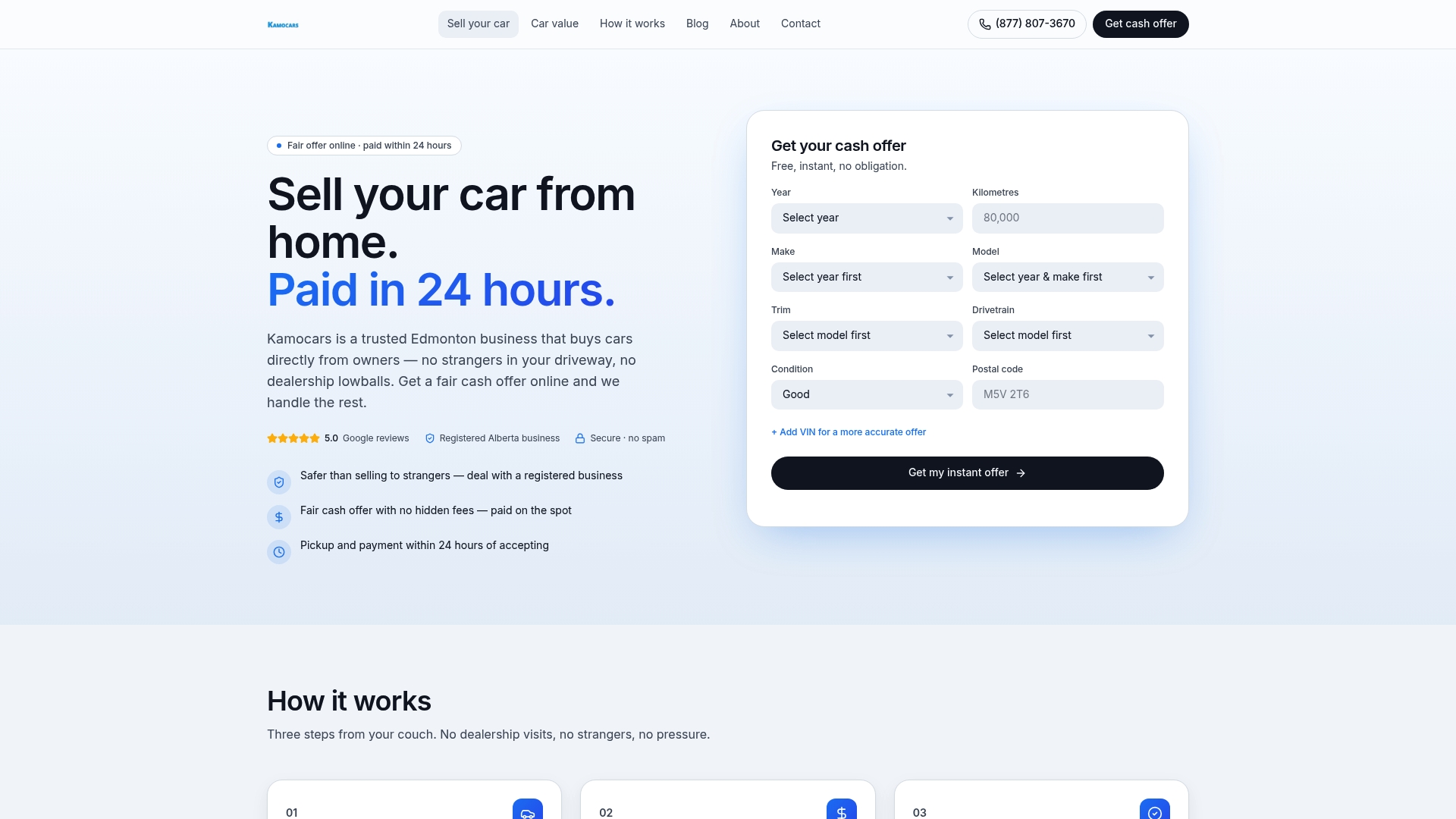
We’re a registered Alberta business with BBB accreditation, and we’ve completed over 500 transactions with sellers who wanted a fast, safe exit from an old vehicle. We also handle liens directly, so if you still owe on your car, that doesn’t stop the sale.
| Step | What happens |
|---|---|
| Online appraisal | You enter VIN, mileage, and condition details |
| Binding offer | We calculate a cash price using wholesale data |
| Inspection and pickup | We confirm condition and collect the vehicle for free |
| Payment | Funds are sent, typically within 24 hours |
If you want a real number instead of guessing, start with our free car value tool or head straight to Sell My Car to get your offer moving today.
This article is general information, not a substitute for advice from a qualified financial advisor. Consult a qualified financial professional about your own circumstances before acting on anything here.
FAQ
What does “no haggle car sale” actually mean?
It means a buyer gives you a fixed cash offer with no negotiation, rather than the back-and-forth typical of private sales or dealership trade-ins. The price you’re quoted is the price you’re paid once the vehicle checks out at inspection.
How fast can I actually get paid?
Many no-haggle cash buyers aim to pay within 24 hours of accepting the offer, once an inspection confirms the vehicle matches what was reported. Our own paid-in-24-hours process follows that same timeline for Alberta sellers.
What if my car still has a loan or lien on it?
A lien is tied to your vehicle’s VIN, and federal consumer guidance warns that an undisclosed lien can lead to repossession even after a sale. You’ll need to get a payoff quote from your lender or work with a buyer who handles lien payoff directly as part of the transaction.
What documents do I need to complete the sale?
Alberta requires a standard bill of sale with both parties’ legal names and addresses, the VIN, odometer reading, sale price, and signatures. Bring your registration and any service records as backup documentation.
How do I know a buyer’s offer isn’t a scam?
Verify the buyer or business is registered, confirm any bank draft or transfer directly with your bank before releasing the vehicle, and never accept a payment method you can’t independently confirm. Consumer protection reporting consistently flags overpayment requests and unverified drafts as the top red flags.
Sources
- Alberta
- Risks of car liens — Government of Canada
- Accurate bill of sale - Alberta Motor Vehicle Industry Council
- If you’re buying a used car privately — beware of sellers who misrepresent themselves | APA
Recommended
Get a real cash offer in 2 minutes
Trusted business. Fair price. Paid on the spot when we pick up your car.