
Sell Your Car in Canada Fast with Kamocars: Paid in 24 Hours
Sell your car in Canada with Kamocars and get paid within 24 hours. Follow 2026 provincial paperwork rules and secure-payment steps to close the sale fast...
Sell Your Car in Canada Fast with Kamocars: Paid in 24 Hours
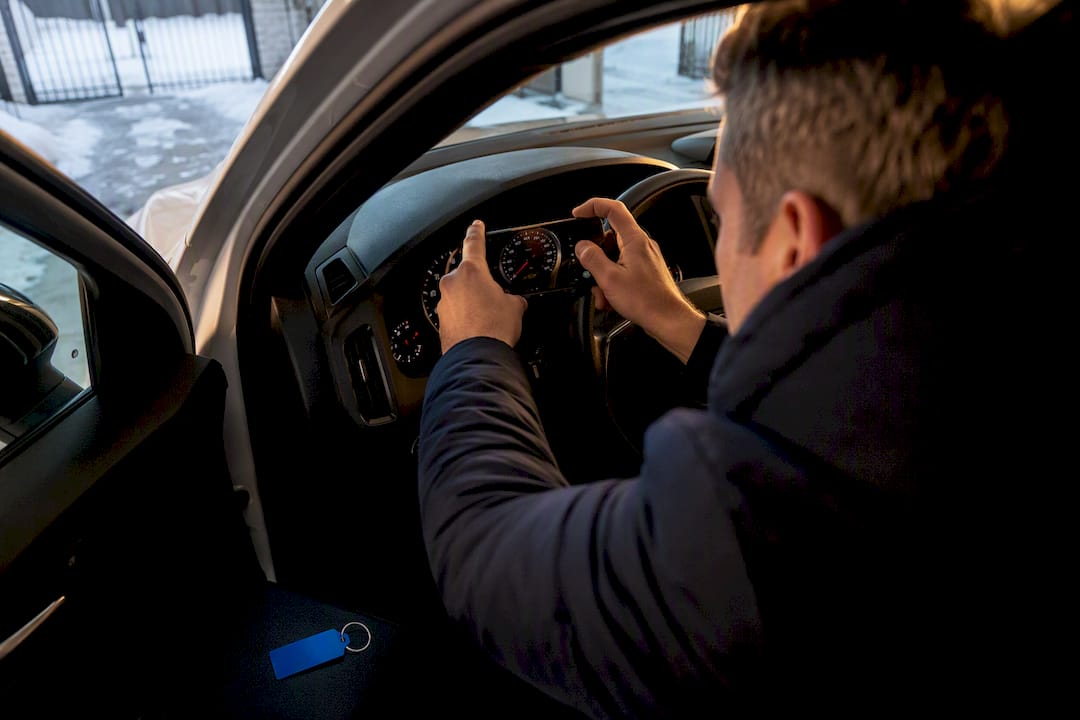
The fastest reliable way to sell car now in Canada is through an instant online buyer or a dealer instant-offer program, both of which routinely confirm a price the same day and pay out within 24 hours. That speed comes at a cost: you trade some negotiating room for certainty. If you want top dollar and can wait one to three weeks, a private sale still wins on price. If you need cash now, Kamocars and similar instant-offer routes are built for exactly that.
TL;DR:
- Instant online buyers and dealer offers can confirm a sale within a day and provide cash in 24 hours, ideal for urgent needs.
- Private sales tend to secure higher prices but require two to three weeks of effort and responsibility for paperwork and negotiations.
- Proper preparation, including accurate photos, honest condition disclosure, and having all paperwork ready, speeds up the sale process drastically.
- Clarify whether offers are binding and verify payment clearance before handing over the vehicle to avoid risks like bounced transfers or undisclosed liens.
- Knowing provincial requirements and pricing benchmarks like Canadian Black Book helps sellers set realistic expectations and avoid overpricing delays.
Table of Contents
- Fast Sell Options: Instant Buyer vs Trade-In vs Private Sale vs Consignment
- How to Get a Firm Cash Offer Now
- Paperwork and Provincial Transfer Checklist
- How Canadian Buyers Value Your Car (and How to Price for Speed)
- Safe Payment, Lien Checks, and Finalizing the Sale
- How Kamocars Helps Sellers Who Need to Sell Now
- Total Costs and Fees Involved in Selling a Car in Canada
- Key Questions to Ask Before You Choose a Buyer or Dealer
- Tips for Preparing Your Car for a Faster Sale
- Speed vs. Price: What I’d Tell a Friend Selling Their Car
- Get a Same-Day Cash Offer From Kamocars
- Where to Verify Paperwork and Pricing Before You Sell
- Sources
Fast Sell Options: Instant Buyer vs Trade-In vs Private Sale vs Consignment
Every route to selling a car in Canada trades speed for price in a slightly different way. Knowing which lever you’re pulling before you start saves you from the classic mistake: listing privately with a “sell this week” deadline, then panicking on day nine.
Here’s how the four main paths stack up:
- Instant online buyer: You submit your VIN, mileage, and photos; the buyer returns a firm cash offer, often same day, with pickup and payment inside 24 hours. Best for sellers who need cash now and want zero back-and-forth.
- Dealership trade-in: Rolled into a new vehicle purchase, usually finalized in one visit. Convenient, but trade-in values typically sit below what an instant buyer or private sale would pay because the dealer bakes in resale margin and reconditioning cost.
- Private sale: Listed on Kijiji, AutoTrader, or Facebook Marketplace. Usually nets the highest price, but expect one to three weeks of showings, no-shows, and negotiation before a deal closes, and you carry all the paperwork yourself.
- Consignment: A dealer lists and sells your car for a commission, splitting the difference between private-sale pricing and hands-off convenience. Timelines run two to six weeks and you still don’t get paid until the car actually sells.
The rule of thumb: pick an instant buyer or dealer offer when speed and certainty matter more than squeezing out the last few hundred dollars. Choose private sale only if your timeline genuinely allows two to three weeks of effort.
How to Get a Firm Cash Offer Now
An accurate, non-negotiable offer depends almost entirely on what you hand the buyer in the first 30 to 60 minutes. Skip a step and you risk a lowball “estimate” that gets renegotiated down at pickup.
- Gather your VIN and exact odometer reading. Instant appraisal tools ask for both up front, and Kamocars’ sight-unseen offer process uses them to pull real market data before quoting a price.
- Pull recent service records. A stack of oil-change receipts and any major repair invoices reassures a buyer that the mileage and condition line up.
- Take 8 to 10 clear photos. Cover all four exterior angles, the interior and dash, a clean shot of the odometer, and a close-up of any dents, cracks, or worn upholstery. Photographing damage honestly upfront, rather than letting a buyer discover it at pickup, is what keeps an offer from shrinking later.
- Cross-check value before you submit. Look up your trim on Canadian Black Book and scan a handful of comparable listings on AutoTrader so you know whether the offer you receive is in a fair range.
- Read the offer’s fine print. Confirm whether the number is a binding offer or a rough estimate, who covers pickup costs, and exactly when payment lands, before you agree to anything.
Describing condition honestly matters more than most sellers think. If you call a car “excellent” and the appraiser finds curb rash on two wheels and a cracked windshield, the offer gets renegotiated on the spot, and that costs you more time than just disclosing it upfront ever would.
Pro Tip: Photograph your odometer and any damage in daylight, not under garage lighting. Appraisers use those photos to confirm condition remotely, and washed-out or shadowy shots are the number one reason instant offers get revised downward at pickup.
Paperwork and Provincial Transfer Checklist
Canada doesn’t run one national process for selling a car. Each province sets its own document requirements, and missing one piece of paper is the single most common reason a sale gets delayed at the last minute.
Ontario is the strictest example: sellers must provide a Used Vehicle Information Package, which costs about $20 and is often paired with a Safety Standards Certificate before the buyer can register the vehicle. Other provinces use lighter processes built around a signed bill of sale and an ownership or registration permit.
| Province | Key document(s) required | Typical seller action |
|---|---|---|
| Ontario | UVIP with associated cost, Safety Standards Certificate (often required) | Order UVIP online, arrange safety inspection if needed |
| Alberta | Bill of sale, registration/ownership certificate | Complete bill of sale, sign over registration |
| British Columbia | Bill of sale, transfer/tax form | Sign transfer section on registration, submit tax form |
| Quebec | Bill of sale, SAAQ registration certificate | Notify SAAQ of transfer within required window |
If you’re in Alberta, Kamocars’ guide to Alberta paperwork walks through exactly what to have on hand before pickup.
Whichever province you’re in, a few steps happen right after the sale closes:
- Notify your provincial motor vehicle authority of the transfer.
- Cancel or transfer your insurance policy the same day.
- Remove your plates unless your province transfers them with the vehicle.
- Keep copies of every signed document. Driving in case questions come up later.
How Canadian Buyers Value Your Car (and How to Price for Speed)
Canadian Black Book is the benchmark dealers and instant buyers lean on most, and pairing it with live listings on AutoTrader gives you a realistic price window rather than a guess. CarGurus and Kijiji comparables round out the picture, especially for regional pricing differences between, say, Alberta and Ontario.
The single biggest cause of a car sitting unsold for weeks is overpricing against those same comparables. Buyers and appraisers adjust value based on condition, mileage relative to age, and accident history, and a price that ignores those adjustments just gets ignored by shoppers.
A vehicle history report accelerates that trust gap fast. Industry guidance puts it starkly: roughly 81% of shoppers are less likely to even consider a vehicle that doesn’t come with a verified CARFAX Canada report attached. That single document does more to speed a sale than almost any other prep step.
Three tactics speed things up without giving away value:
- Price within roughly 5% of your closest local comparables, not your ideal number.
- Disclose known issues in the listing itself, not after a buyer asks.
- Attach a CARFAX Canada report to your listing or offer request before anyone has to ask for one.
Safe Payment, Lien Checks, and Finalizing the Sale
Getting paid safely matters just as much as getting paid fast. Canadian sellers have two payment methods that dominate for good reason: Interac e-Transfer for most private-sale amounts and bank wire for higher-value transactions where e-Transfer limits get in the way. Neither should be treated as final until the funds actually land in your account, not just show as “sent.”
- Confirm the payment has cleared in your own banking app before handing over keys or signing the ownership transfer. A screenshot of a sent e-Transfer is not proof of a completed deposit.
- Clear any lien on the vehicle first. If you financed the car, run a PPSA search or contact your lender directly for a payoff letter confirming the lien is released before you transfer ownership.
- File the sale notice with your provincial authority, cancel your insurance, and keep copies of the bill of sale and any transfer receipts for your own records.
Kamocars’ guide to secure payment steps breaks down verification in more detail if you’re selling privately and want a second set of eyes on the process.
Pro Tip: Never release a vehicle on the promise of a “pending” e-Transfer. Auto-deposit failures and reversed transfers are the most common way private sellers get burned, and they’re entirely avoidable by waiting for funds to actually settle.
How Kamocars Helps Sellers Who Need to Sell Now
Some instant-offer services build their process around the seller who values certainty over the marathon of a private listing, starting every offer with an instant appraisal pulled from current Canadian market data.
What that looks like in practice:
- Instant, market-based appraisals rather than a lowball opening number you have to negotiate up.
- Free pickup, so you’re not driving anywhere or coordinating a meetup with a stranger.
- Payment within 24 hours of accepting your offer, using verified funds rather than a promise.
- Registered business status, which means you’re dealing with an accountable company rather than an anonymous buyer.
Kamocars fits best if you need cash fast, want to skip haggling entirely, and would rather have a business handle pickup logistics and paperwork than manage it yourself. If your car is a 2018 or newer model in running condition, including financed or leased vehicles, that instant-offer path is built specifically for your situation.
Total Costs and Fees Involved in Selling a Car in Canada
The route you choose changes what you actually walk away with, not just how fast you get paid. A private sale carries the fewest built-in fees but the most hidden time cost: you’ll likely spend on a UVIP or safety certificate where your province requires one, plus any minor repairs needed to pass inspection.
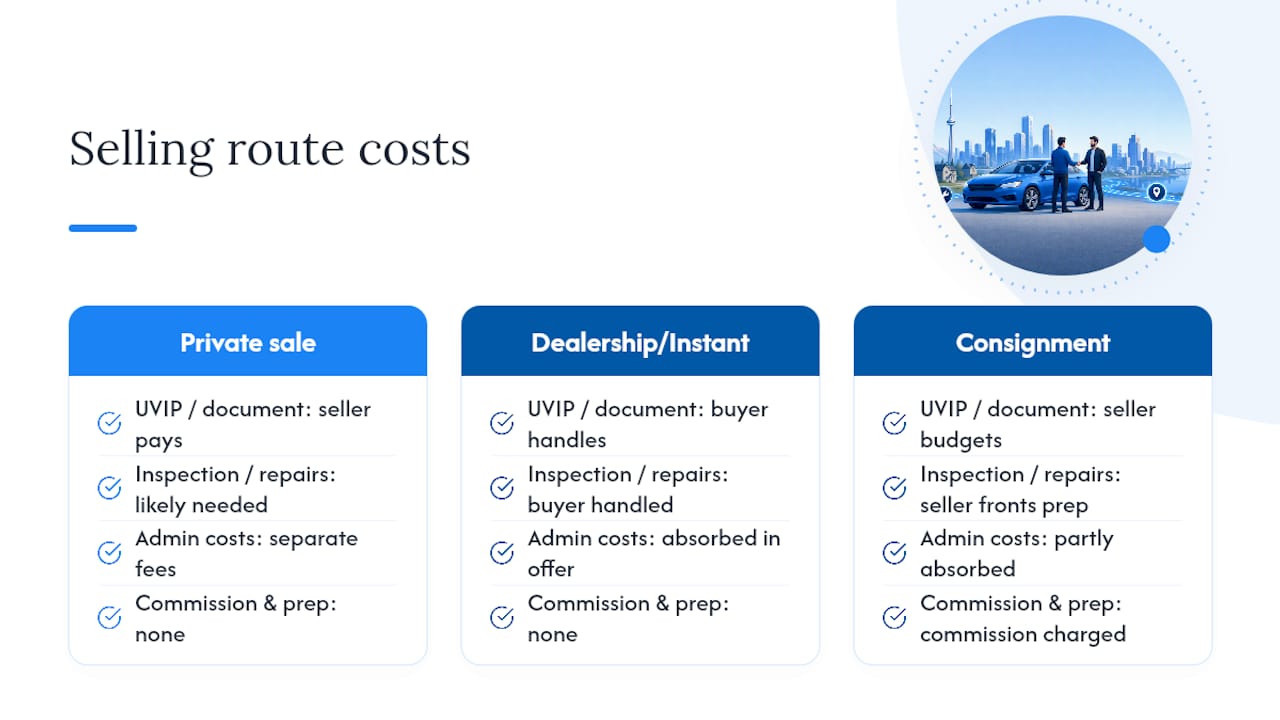
Dealership trade-ins and instant online buyers typically absorb those administrative costs into the offer itself, which is part of why the headline number can look lower than a private-sale asking price. You’re not paying a UVIP fee or arranging a safety inspection separately; the buyer handles it.
Consignment sits in the middle. Expect a commission, often in the range of several hundred dollars or a percentage of the sale price depending on the dealer, deducted once the car actually sells. That’s on top of any prep costs you front before the car goes on the lot.
There’s no GST or HST charged when a private individual sells a personal vehicle in Canada, but provincial sales tax rules on the buyer’s side (and registration transfer fees) still apply and are typically the buyer’s responsibility to handle at registration, not yours as the seller. The one cost every seller should budget for regardless of route: the modest fee for a UVIP or equivalent provincial document, since that paperwork is what actually lets the sale close.
Key Questions to Ask Before You Choose a Buyer or Dealer
A firm offer that turns into a lower number at pickup is the most common complaint sellers have about instant-offer services, and it’s almost always preventable by asking the right questions upfront.
Ask any buyer or dealer directly: Is this offer binding, or just an estimate pending inspection? Who pays for pickup or transport? Exactly when will payment arrive, and in what form? What happens if the in-person inspection turns up something not disclosed in my photos?
A few red flags are worth walking away from outright. Be wary of any buyer who won’t put an offer in writing, who pressures you to sign before you’ve confirmed payment has cleared, or who wants to inspect the car in person before giving you any indication of price. Legitimate instant buyers, including dealer trade-in desks, give you a number based on your VIN, mileage, and photos before they ever see the car in person.
Also confirm the buyer’s business standing. A registered business with a track record of completed transactions carries far less risk than an anonymous private buyer or an unregistered “we buy any car” operation with no verifiable history. If a deal feels rushed in a way that benefits the buyer more than you, that’s usually the clearest signal to slow down.
Tips for Preparing Your Car for a Faster Sale
A clean, documented car sells faster and appraises higher, full stop. Before you submit photos to any buyer, spend an hour on prep that costs little but changes how the car reads in pictures and in person.
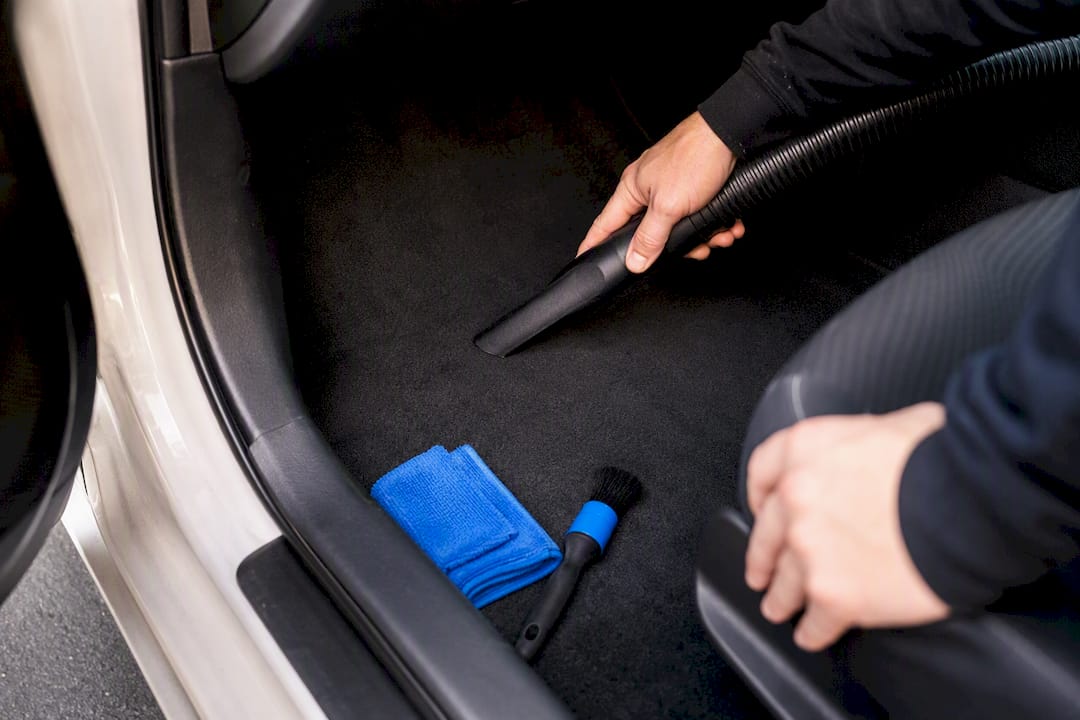
Wash the exterior and vacuum the interior, including under the seats where old receipts and fast-food wrappers tend to hide. A car that looks cared for signals to an appraiser that it’s also been maintained mechanically, even before they check the service history.
Handle small, cheap fixes: a burnt-out taillight bulb, a cracked wiper blade, a dashboard warning light you’ve been ignoring for months. These cost very little to fix and disproportionately affect how an appraiser or buyer values overall condition, since a lit warning light raises questions about what else might be wrong.
Get your documentation together before you request an offer, not after. That means your ownership permit, service records, and any loan payoff information if the car is financed. Sellers who show up to pickup with paperwork already organized close the transaction in minutes instead of making a buyer wait while they search for a title in a glove box.
Speed vs. Price: What I’d Tell a Friend Selling Their Car
Most sellers overestimate how much extra a private sale actually nets them once they account for the weeks of showings, no-shows, and negotiating down from an inflated Kijiji price. The math only favors private sale if your time truly costs you nothing and your car is in strong enough shape to sell itself with minimal back-and-forth.
If you’re financed, leased, or just need the cash resolved this week, instant offers exist for exactly that reason: they remove the uncertainty, not just the time. The one habit that separates a smooth sale from a frustrating one is preparation. Have your VIN, mileage, photos, and paperwork ready before you request a single offer.
Run the same-day sale checklist once before you commit to a route. It catches the small gaps, a missing safety certificate, an unclear lien status, that turn a same-day sale into a three-day headache.
— Omar
Get a Same-Day Cash Offer From Kamocars
Kamocars is the direct route past the two biggest frustrations in selling a car privately: strangers who never show up, and dealers who lowball your trade-in before negotiating from there. You get one straightforward offer based on real market data, not a haggling session.
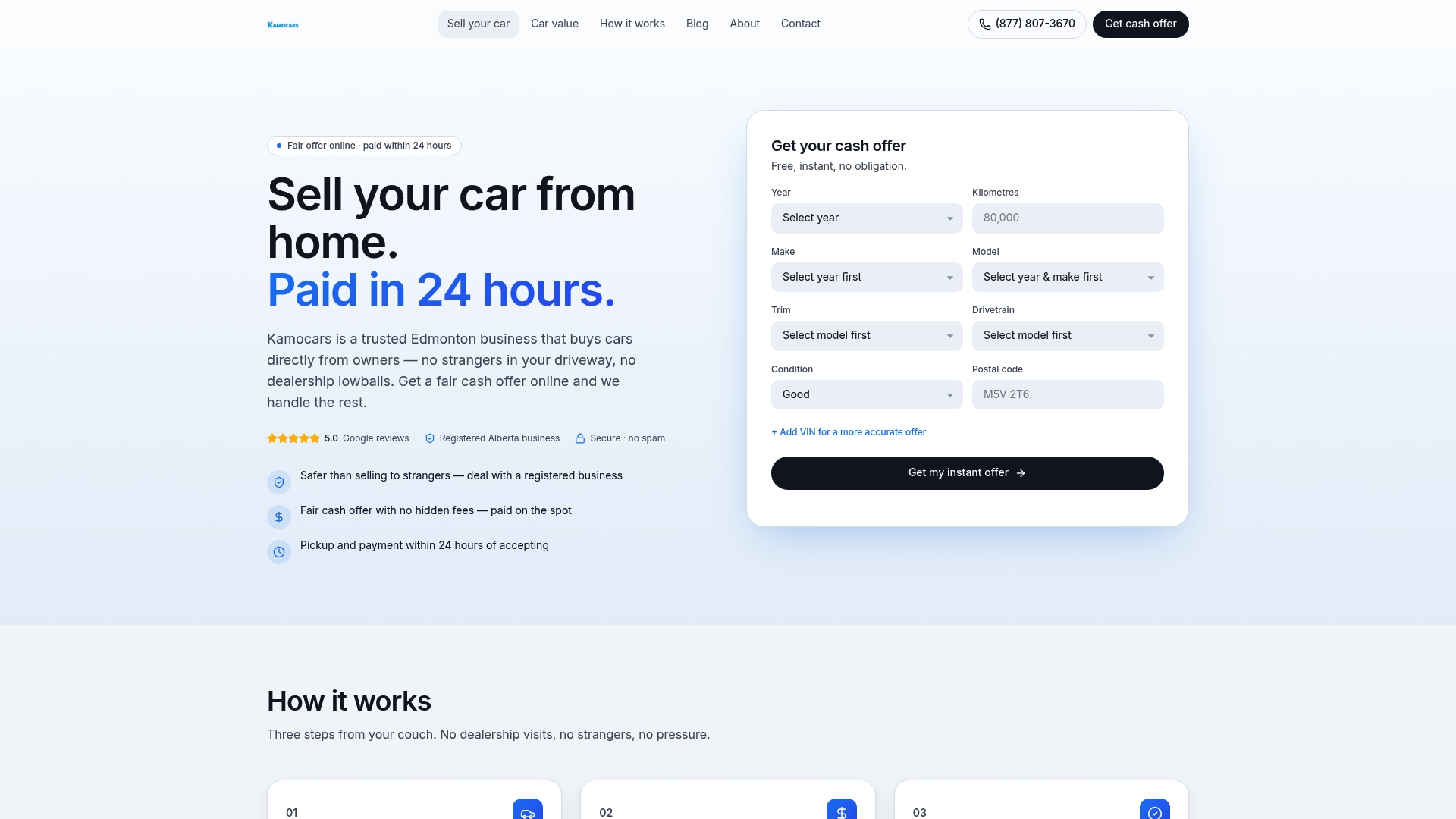
Getting started takes a few minutes. Head to the Kamocars sell-my-car page and enter your VIN, current mileage, and an honest description of your car’s condition, then upload the photos outlined earlier in this guide. Kamocars returns an instant appraisal based on current market data, arranges free pickup, and pays out within 24 hours of your acceptance.
One thing to have ready before the pickup team arrives: your provincial paperwork, whether that’s a UVIP and safety certificate in Ontario or a signed bill of sale and registration elsewhere. Having it organized in advance is what turns a same-day offer into a same-day payment.
Where to Verify Paperwork and Pricing Before You Sell
- Check Ontario’s UVIP requirements directly through ThinkInsure’s guide before listing.
- Review provincial transfer steps outside Ontario through Driving.
- Compare offers against current market data anytime at Kamocars.
Sources
- Used vehicle information package (UVIP) — ThinkInsure
- Why CARFAX reports are essential when buying a used car — FineAutoZone
Recommended
Get a real cash offer in 2 minutes
Trusted business. Fair price. Paid on the spot when we pick up your car.