
15 Minute Recall Packet: Sell Your Alberta Car With an Open Recall
Sell a car in Canada with an open recall. Create a 15 minute VIN packet, add a dated bill of sale, or request a Kamocars offer.
15 Minute Recall Packet: Sell Your Alberta Car With an Open Recall

Yes, you can legally sell a car with an open recall in Canada: no federal law blocks the sale of a used vehicle with an outstanding safety recall. Transport Canada regulates recalls but does not prevent ownership transfer. You have three practical paths: get the recall fixed first, disclose it in writing and sell as-is, or sell directly to a registered buyer.
TL;DR:
- Sellers can legally sell a vehicle with an open recall in Canada by disclosing the recall in writing and providing documented evidence.
- Checking recall status requires VIN lookups on Transport Canada’s database and the manufacturer’s site, saving proof of results for transparency.
- Recall repairs are free but may be delayed due to parts availability; selling after repair boosts resale value and buyer confidence.
- Private sale with disclosure or trade-ins involve more risk and documentation, while selling to a licensed buyer simplifies liability transfer.
- Building a recall packet and keeping detailed records is essential for protecting against future legal claims or misrepresentation disputes.
Table of Contents
- At-a-Glance Checklist Before You List Your Car
- What Canadian Law and Official Guidance Actually Require
- How to Check Recall Status Step by Step
- Repair Timelines and When to Fix Before Selling
- Comparing Your Selling Routes With an Open Recall
- Building a Recall Packet and Disclosure Language
- Protecting Yourself After the Sale
- How Kamocars Handles Cars With Open Recalls
- Our Take: Documentation Beats Guesswork Every Time
- Get a Direct Offer for Your Car With an Open Recall
- FAQ
- Sources
At-a-Glance Checklist Before You List Your Car
Before you post an ad or call a buyer, run through a short list of tasks that protect you and speed up the sale.
- Look up your VIN on the Transport Canada recall database and on the manufacturer’s website.
- Save or print both results as dated proof.
- Book the recall repair if your schedule allows it.
- If you cannot repair in time, write down why and note the expected repair window.
- Build a recall packet with your VIN lookup printouts, recall notices, and any repair receipts.
- Add explicit recall disclosure language to your bill of sale.
- Consider selling to a licensed buyer to cut down on private-sale risk.
Pro Tip: Keep a digital copy of every document in a single folder; buyers and licensed purchasers move faster when everything is ready to send in one email.
What Canadian Law and Official Guidance Actually Require
Canada’s recall framework draws a clear line between what the law requires and what safety guidance recommends. Understanding that gap keeps you out of trouble without creating panic over a routine sale.
- Transport Canada says recalled vehicles should be repaired right away, but it does not expressly prohibit selling a used vehicle while a recall is open.
- Manufacturers must provide recall repairs free of charge, regardless of whether you are the original owner.
- In Alberta, a standard bill of sale should list the VIN, make, model, and year, and sellers are encouraged to note any known defects or open recalls.
- Business sellers in Alberta have added obligations under the Automotive Business Regulation, including lien removal within set timelines.
- Writing down the recall status on your bill of sale significantly lowers your exposure to a later misrepresentation claim.
OMVIC reinforces this directly: both dealers and private sellers can legally sell vehicles with outstanding recalls, provided buyers get the chance to check that status themselves.
How to Check Recall Status Step by Step
Confirming recall status takes a few minutes and gives you documentation you can hand to any buyer.
- Go to Transport Canada’s Motor Vehicle Safety Recalls Database and search by VIN.
- Save or print the results page as your first piece of evidence.
- Cross-check with the manufacturer’s own VIN recall lookup tool, or call an authorized dealer to confirm the recall applies to your specific vehicle.
- Register your vehicle with the manufacturer so any future recall notice reaches the next owner directly.
Not every vehicle in a model year is affected by a given recall. VIN-level checks matter because recalls often target a narrow production run tied to a specific parts batch or build date, which is why Transport Canada’s database is built around individual VIN lookups rather than model-year lists.
Repair Timelines and When to Fix Before Selling
Recall repairs are performed at no cost to you, which removes the main reason sellers hesitate to book one. The real question is timing.
- Call your dealer’s service department or the manufacturer directly to schedule the repair.
- Ask about parts availability; some recalls involve a wait if the replacement component is backordered.
- If the appointment is weeks out, ask for any interim safety instructions and keep that correspondence dated.
- When a quick appointment is possible, repair first, since a clean recall record sells faster and at a better price.
- When the wait is long, disclose the open recall in writing and sell with full documentation rather than delaying the sale.
Pro Tip: A dated email from a dealer confirming a scheduled recall appointment carries almost as much weight as a completed repair receipt when you are disclosing status to a buyer.
Comparing Your Selling Routes With an Open Recall
Each path trades speed, price, and liability differently, so the right choice depends on how much time you have and how much paperwork you want to manage.
- Repair then sell: takes longer but typically brings the highest price and the least buyer friction.
- Private sale as-is with disclosure: faster to close, but it puts the weight of documentation on you and can soften your asking price.
- Trade-in or sale to a licensed buyer: the quickest route, with less personal liability since the buyer assumes responsibility under a formal purchase agreement.
- Selling to a registered buyer in Alberta: gives you a documented, direct transaction instead of negotiating recall status with an unknown private buyer.
For sellers short on time or wary of explaining an open recall to a stranger, a registered buyer offers a cleaner way to close without the back-and-forth of a private listing.
Building a Recall Packet and Disclosure Language
A recall packet is the single most useful thing you can hand a buyer, and it takes about fifteen minutes to assemble.
- Print the Transport Canada and manufacturer VIN lookup results, along with the official recall notice if one was mailed to you.
- Attach the repair invoice if the work is done, or the dealer’s written appointment confirmation if it is not.
- Add disclosure language to your bill of sale that names the VIN, describes the open recall, and dates your disclosure.
- If you are selling to a company, keep a signed purchase agreement that records the recall status and spells out when the lien clears and ownership transfers.
Checking a vehicle’s service history alongside its recall record gives buyers another layer of confidence in what they are purchasing.
Protecting Yourself After the Sale
Your liability does not vanish the moment the keys change hands, but a few habits keep it close to zero.
Always put the recall disclosure in writing and keep a dated copy for yourself. Save your VIN lookup printouts and any dealer correspondence about repair scheduling, since these become your evidence if a dispute surfaces months later. Favor licensed buyers or signed purchase agreements that explicitly transfer responsibility for the vehicle. If a buyer later threatens a misrepresentation claim, a quick consultation with a lawyer is worth the cost compared to litigating without one.

How Kamocars Handles Cars With Open Recalls
When you sell to us, we review your recall packet as part of an offer and handle pickup, payment, and lien clearance promptly. Bringing your VIN lookup printouts and any repair documentation speeds up the appraisal. We document recall status as a normal part of the sale and work with you to close safely rather than treating it as a dealbreaker.
Our Take: Documentation Beats Guesswork Every Time

The conventional advice on this topic treats an open recall like a scandal to hide or a dealbreaker to fear. Neither is accurate. A recall is a data point, and the only mistake that creates real legal exposure is staying silent about it. Sellers spend far too much energy worrying about whether a sale is “allowed” and not nearly enough time building the paper trail that actually protects them: the VIN lookup printout, the dealer email, the disclosure line on the bill of sale.
What gets underrated is how much a recall status affects negotiation, not legality. A disclosed, well-documented recall rarely kills a deal; it just becomes one more fact a buyer weighs against price. What we think you should prioritize first is speed of documentation over speed of listing: spend fifteen minutes on the VIN checks and the paperwork before you ever post the ad or call a buyer. That single habit does more to protect you than any amount of hand-wringing over legal status ever will.
— Omar
Get a Direct Offer for Your Car With an Open Recall
If repairing before selling is not realistic on your timeline, we offer a straightforward alternative: request a cash offer from us, and we handle the rest.
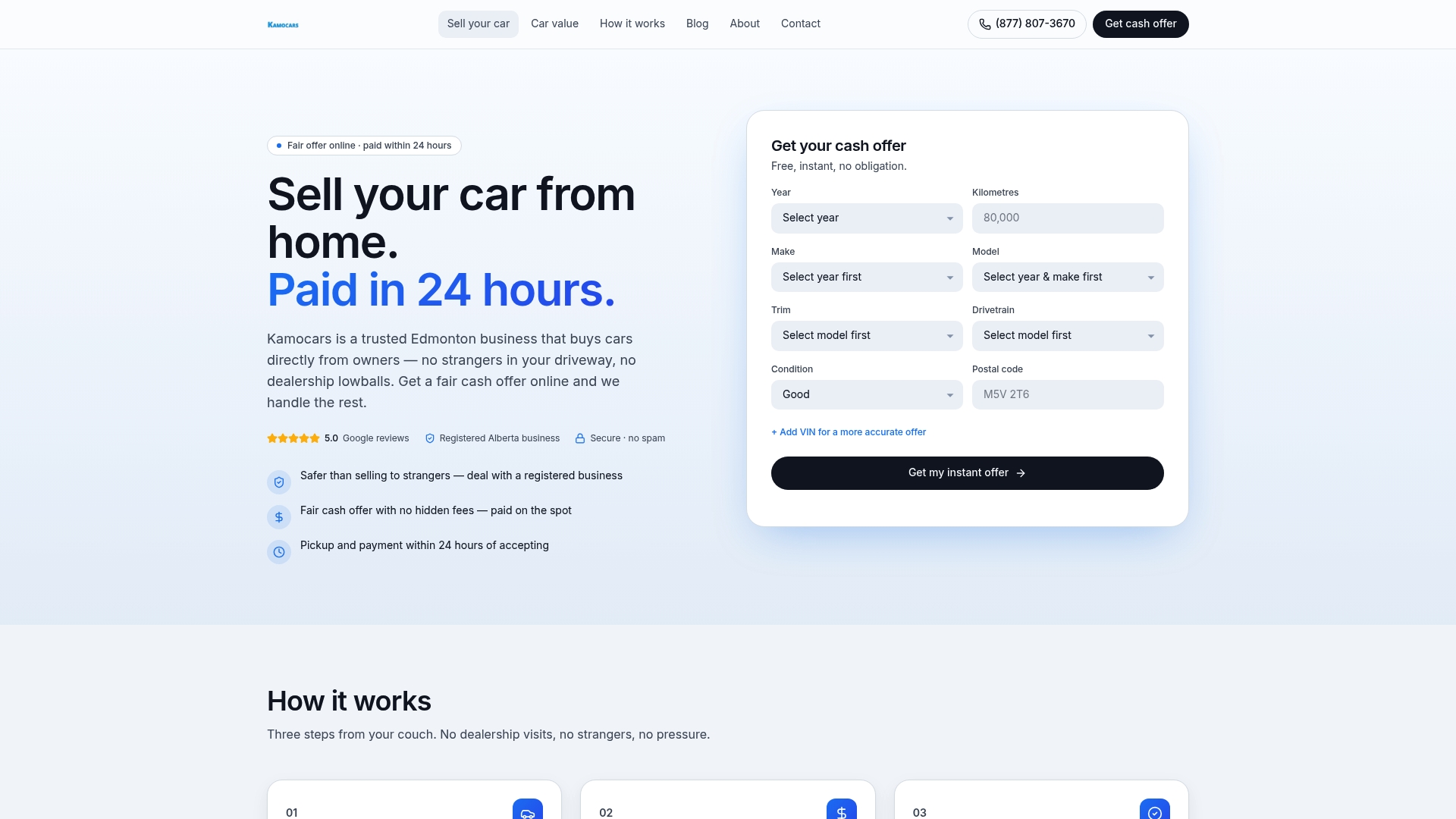
Have your VIN, recall packet, and title ready when you request an offer. Here is what happens next:
- Submit your vehicle details online and get a cash offer based on current Alberta market data.
- Schedule a pickup time that works for you, anywhere in Alberta.
- Get paid and have your paperwork, including lien clearance, handled within 24 hours.
Every purchase runs through a registered business with a documented process, so you are not negotiating recall status with a stranger. See the full process before you request your offer.
FAQ
Can I trade in my vehicle with a recall?
Yes, dealers can accept trade-ins with an open recall, though many will factor the repair cost or delay into their offer. Bringing your VIN lookup printout and any repair documentation helps you negotiate a fairer trade-in value.
How long after a recall can I get my car fixed?
There is no fixed deadline; Transport Canada recommends having recall repairs done as soon as possible, and manufacturers perform them free of charge regardless of how long the vehicle has been affected. Parts availability can affect how quickly a dealer can schedule the appointment.
Do vehicle recalls expire in Canada?
Recalls generally remain open until the repair is completed; there is no expiration date tied to the recall itself. Manufacturers continue to offer the free repair even years after the original notice went out.
Are you liable for a car after you sell it in Ontario?
Liability depends on how the sale was documented; a written bill of sale that discloses known issues, including an open recall, substantially reduces your risk of a later misrepresentation claim. Selling to a licensed buyer with a signed purchase agreement further shifts responsibility to the new owner at the time of transfer.
Sources
- The importance of having recalled vehicles repaired — Transport Canada
- Motor Vehicle Safety Recalls Database — Transport Canada
- Alberta
- Safety recalls — OMVIC
Recommended
Get a real cash offer in 2 minutes
Trusted business. Fair price. Paid on the spot when we pick up your car.