
Why Online Car Marketplaces Leave Private Sellers Exposed
Online car marketplaces expose private sellers to risks like payment fraud and lack of insurance. Learn safer selling options here.
Why Online Car Marketplaces Leave Private Sellers Exposed
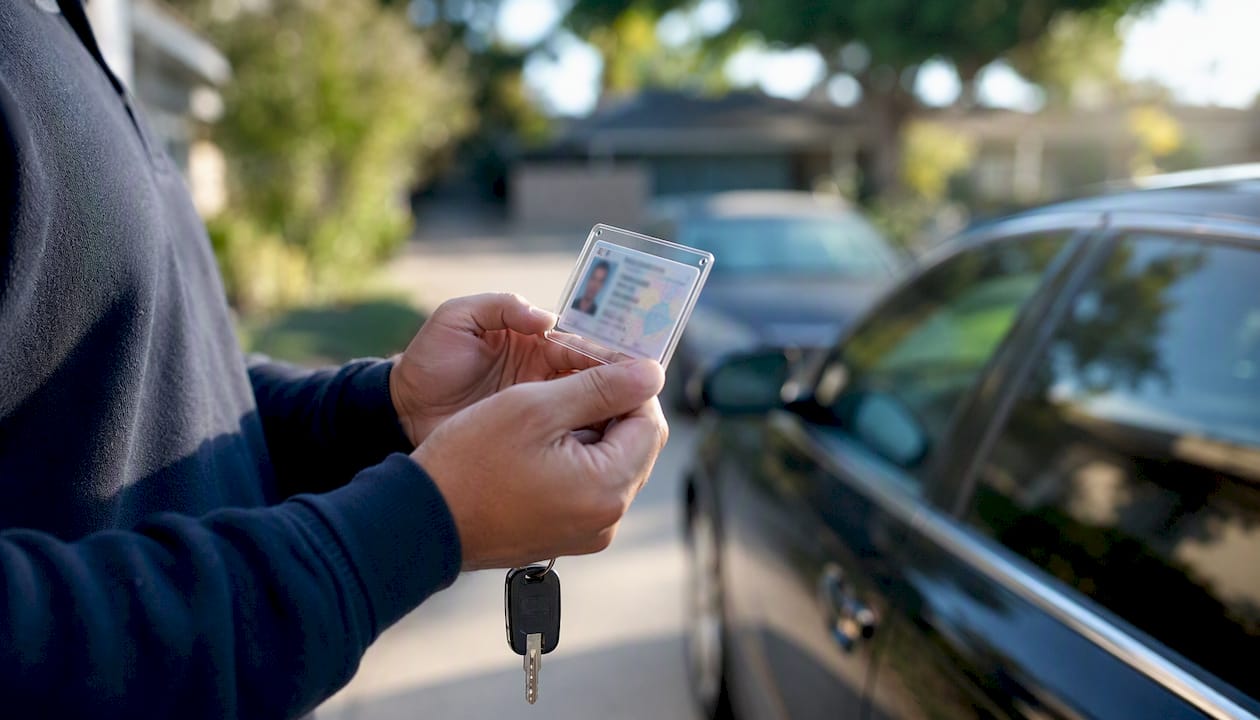
Peer-to-peer car marketplaces typically leave private sellers exposed because payment guarantees, insurance coverage, and transaction responsibilities are split, conditional, or absent entirely. Consumer Reports flags higher risk of scammers, no-shows, and difficult buyers when sellers handle negotiations themselves. The FTC warns that insurance arrangements in peer-to-peer vehicle contexts are complex and owners can be left without coverage outside narrow platform windows. The direct alternative: sell to a verified business buyer like Sellkamocars, which removes payment timing gaps, stranger contact, and paperwork uncertainties in a single transaction.
- Payment fraud is the leading risk: fake cashier’s checks, bounced transfers, and escrow scams are common on peer-to-peer platforms.
- Insurance gaps are real: your personal policy likely excludes losses during a private sale handover.
- Platform protections are limited: identity checks and dispute centers do not guarantee payment or cover physical loss.
- Verified business buyers (instant cash offers) eliminate all three exposure points with guaranteed payment, written agreements, and professional pickup.
Key Takeaways
Peer-to-peer car marketplaces leave private sellers exposed because payment guarantees, insurance coverage, and transaction accountability are absent or conditional, whereas verified business buyers like Sellkamocars eliminate those gaps with guaranteed payment, written agreements, and professional pickup.
| Point | Details |
|---|---|
| Marketplace protections are limited | Identity checks and dispute centers do not guarantee payment or cover physical loss during a private sale. |
| Insurance gaps are real | Personal auto policies typically exclude losses during private-sale handovers; consult your insurer before any transaction. |
| Verified buyers remove key risks | Guaranteed payment, written purchase agreements, and professional pickup eliminate payment fraud and stranger-contact risks. |
| Private sale trade-off | Private sales may yield a higher headline price but carry significantly higher time, risk, and paperwork costs. |
| Sellkamocars as a secure option | Over 500 completed transactions, 24-hour payment, and registered business status make Sellkamocars a verified alternative to peer-to-peer selling in Alberta. |
Table of Contents
- Why online car marketplaces lack protection for private sellers
- What marketplace “protections” actually cover
- What regulators and consumer organizations say about seller risk
- How verified-business buyers and instant cash offers reduce your exposure
- How Sellkamocars specifically addresses seller protection and speed
- If you must use a peer-to-peer marketplace: a safety checklist
- Expected timeline, costs, and trade-offs for each selling path
- Which path fits your priorities?
- Why verified-business buyers are the right call for most Alberta sellers
- Sell your car quickly and securely with Sellkamocars
- Sources
Why online car marketplaces lack protection for private sellers
Private sellers carry every operational risk on peer-to-peer platforms. There is no intermediary guaranteeing payment, no insurer covering the handover window, and no enforcement mechanism that acts fast enough to protect you once something goes wrong.
Payment risks are the most immediate. Fake cashier’s checks look legitimate but bounce days after you hand over the title. Personal checks can be stopped. Mobile transfers can be reversed or spoofed. Escrow services advertised by buyers are often fraudulent sites designed to stall the transaction until the scammer disappears with your vehicle. Even legitimate transfers create a timing gap: you may hand over keys before the funds clear your account.
Possession versus liability is the gap most sellers miss. The moment a buyer takes a test drive, you have transferred physical control of a vehicle that is still legally yours. Your personal auto policy almost certainly does not cover an accident during that window. The platform’s terms do not fill that gap either.
Buyer behavior adds another layer. No-shows waste your time. Test-drive theft is a documented risk. Identity spoofing means the person who shows up may not be who they claimed online. Private-sale processes create multiple vulnerability points including exposed contact information, test-drive theft, and payment fraud that professional buying services eliminate by removing stranger contact entirely.
Pro Tip: Never hand over keys for a test drive without first photographing the buyer’s government-issued ID and confirming their insurance coverage. A legitimate buyer will not object.
Platform identity checks and ratings systems reduce some risk, but they do not verify funds, guarantee payment, or prevent a buyer from disputing a transfer after the fact. Dispute resolution centers are slow and typically exclude high-value transactions from meaningful remedies.
What marketplace “protections” actually cover
Most peer-to-peer platforms offer some version of identity verification, messaging controls, listing takedowns, and a dispute center. Each has a concrete ceiling.
| Protection feature | What it covers | Where it stops |
|---|---|---|
| Identity verification | Confirms a profile exists | Does not verify funds, intent, or insurance |
| Messaging controls | Keeps contact on-platform initially | Buyers move off-platform quickly; no enforcement after |
| Listing takedowns | Removes fraudulent listings | Does not recover your money or vehicle |
| Dispute center | Mediates post-sale complaints | Rarely covers payment fraud; slow resolution |
| Platform insurance window | Covers some liability during a defined period | Excludes private sales; gaps at handover |
The European Commission’s exploratory study found that many peer consumers do not know who is responsible when something goes wrong, and that platforms’ liability terms frequently exclude responsibility. For a vehicle of significant value, that ambiguity is a serious financial exposure.
Reuters coverage explains that peer-to-peer platforms are often structured as marketplaces rather than rental companies, which shapes how courts treat liability and how insurance outcomes are determined. The platform’s legal structure is designed to limit its own exposure, not yours.
What regulators and consumer organizations say about seller risk
The guidance from authoritative sources is consistent: private sellers should not assume platform protections are sufficient for high-value vehicle transactions.
- FTC: Insurance arrangements in peer-to-peer vehicle contexts are not foolproof. Seller protection depends on what a platform actually insures, not its marketing claims.
- Maine Bureau of Insurance: Traditional personal auto policies usually exclude losses when a vehicle is rented or shared. Peer-to-peer programs are not required to provide comprehensive or collision coverage. Consult your insurance agent before any sharing or private-sale event.
- Consumer Reports: Private-party sellers handle messaging, negotiations, and transfer logistics themselves, which increases exposure to scammers and difficult buyers. Meeting strangers in secure public locations is a minimum precaution, not a complete solution.
The core regulatory message: check your own insurance policy before any private vehicle transaction, because the platform’s coverage window and your personal policy’s exclusions may leave a gap precisely at the moment of handover.
How verified-business buyers and instant cash offers reduce your exposure
A verified business buyer removes the three main failure modes: payment uncertainty, possession-versus-coverage timing, and stranger contact.
- Guaranteed payment: Business buyers use bank transfers or certified business checks confirmed before or at pickup. No cashier’s check risk, no reversal window.
- Written purchase agreement: A formal contract documents the sale price, vehicle condition, and transfer terms. Both parties sign before the vehicle moves.
- Title and lien handling: Professional buyers confirm lien status upfront and coordinate payoff directly with your lender if the vehicle is financed. You do not manage that process yourself.
- Professional pickup: The buyer comes to you. No test drives with strangers, no meeting in parking lots, no exposed home address.
- Documented inspection: Condition is assessed and recorded at pickup, so there is no post-sale dispute about undisclosed damage.
Consumer Reports’ survey of 14,000+ members showed the highest satisfaction rates with instant cash offer services, which typically require only a VIN and basic vehicle details to generate a near-immediate offer. The process often closes in one to three days, with payment confirmed before the vehicle leaves your driveway.
How Sellkamocars specifically addresses seller protection and speed
Sellkamocars is a registered business buyer based in Edmonton, and its operating model is built around the exact gaps peer-to-peer platforms leave open.
Concrete trust signals:
- Registered business status: you are selling to a licensed entity, not an anonymous private party.
- Over 500 completed transactions with verified customer ratings.
- Payment within 24 hours of accepting an offer, confirmed before pickup.
- Written purchase agreement provided for every transaction.
- Home or workplace pickup across Alberta, no public meetups required.
- Financed and leased vehicles handled directly, including lien coordination.
The online car valuation process starts with your VIN and basic vehicle details. You get an appraisal based on current Canadian wholesale data, not a lowball estimate designed for negotiation. If you want to understand how a lien or outstanding loan affects your net proceeds, the car loan calculator gives you a clear payoff picture before you commit.
For sellers who want to verify what a legitimate business buyer looks like before proceeding, the trusted car buyer verification guide walks through the trust signals that matter: registration, transaction history, and written agreements.
If you must use a peer-to-peer marketplace: a safety checklist
If a private sale is your chosen path, follow these steps in order. Skipping any one of them is where most fraud occurs.
- Verify buyer identity before sharing your address. Request a government-issued ID and confirm the name matches the platform profile.
- Never transfer keys before payment clears. A cashier’s check is not cleared funds. Wait for a wire transfer to appear in your account, confirmed by your bank.
- Meet at a safe exchange zone. Many police stations offer supervised transaction areas. Use them.
- Verify cashier’s checks at the issuing bank by calling the bank’s published number directly, not a number printed on the check.
- Complete the title and bill of sale correctly at the time of exchange. An incomplete title transfer leaves you liable for the vehicle after it leaves your possession.
- Record buyer information and photograph their ID with their consent. Keep copies for at least 90 days.
- Notify your insurer the day of sale so coverage adjustments are documented.
Pro Tip: If a buyer pressures you to skip any verification step or offers to “handle the paperwork later,” treat it as a fraud signal. Legitimate buyers expect and accept verification. For a printable version of this checklist, see the hassle-free car sale checklist from Sellkamocars.
For deeper procedures on car sale fraud prevention, Sellkamocars publishes step-by-step guidance covering payment verification and identity spoofing scenarios.
Expected timeline, costs, and trade-offs for each selling path
| Selling path | Timeline | Protection level | Expected net price | Recourse if problems arise |
|---|---|---|---|---|
| Peer-to-peer private sale | 2–6 weeks | Low: no payment guarantee, insurance gaps | Potentially highest headline price; higher time and risk cost | Platform dispute center; police report; civil claim |
| Instant cash offer / pro buyer | 1–3 days | High: guaranteed payment, written agreement, lien handling | Competitive; lower than best private-sale price | Business contract; registered entity accountability |
| Dealership trade-in | Same day | Medium: payment guaranteed; offer often lowest | Lowest net value; convenience premium | Dealer licensing board; consumer protection office |
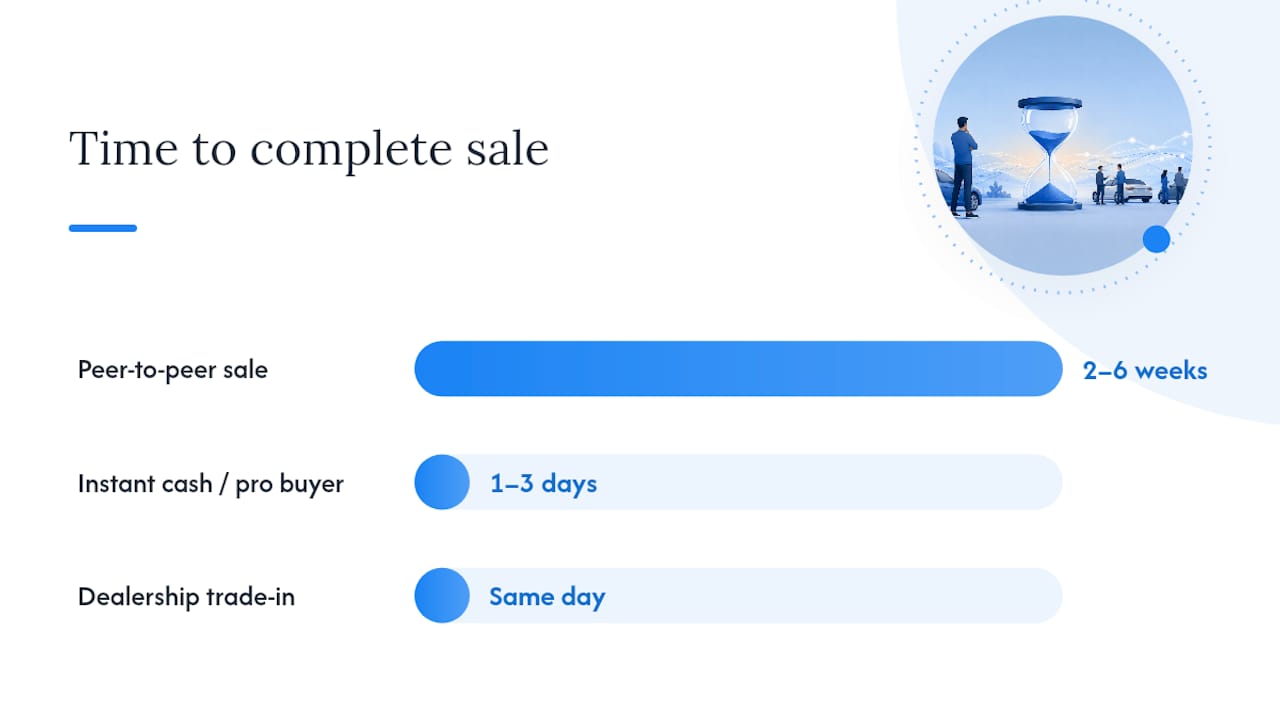
The private sale path can yield the highest number on paper, but Consumer Reports frames the trade-off clearly: higher headline price comes with higher hassle and risk. For a 2018+ vehicle in running condition, the gap between a competitive instant cash offer and a private-sale price is often smaller than sellers expect, and the time and risk cost of a private sale is larger. Comparing your selling options side by side helps you see where that gap actually sits for your specific vehicle.
Which path fits your priorities?
- Security first: Go with a verified business buyer or instant cash offer. Payment is guaranteed, paperwork is handled, and you never meet a stranger.
- Speed plus acceptable price: An instant cash offer closes in one to three days at a competitive price. A trade-in is faster but typically yields less.
- Maximum price, willing to accept risk: Private sale with the full checklist above. Budget two to six weeks and follow every verification step.
Three quick questions to confirm your path:
- Do you need funds within 72 hours? → Instant cash offer or trade-in.
- Are you uncomfortable meeting strangers or managing paperwork? → Verified business buyer.
- Is your vehicle financed or leased? → Verified business buyer handles lien coordination; private sale requires you to manage payoff timing yourself.
If you are defrauded on a peer-to-peer platform, file a police report immediately, report the fraud to the FTC at Reportfraud, and contact your provincial consumer protection office. Time matters: the faster you report, the better the chance of recovery.
Why verified-business buyers are the right call for most Alberta sellers
Most Alberta sellers I speak with are not trying to squeeze the last dollar out of their vehicle. They want a fair price, a fast close, and zero drama. The peer-to-peer marketplace model asks you to absorb risks that a registered business buyer eliminates by design. Sellkamocars operates as a licensed Edmonton-based business with local pickup capability across Alberta, which means the transaction happens on your terms, at your location, with a written agreement and confirmed payment. For a 2018+ vehicle in running condition, that combination is hard to beat.
Sell your car quickly and securely with Sellkamocars
Skip the strangers, the no-shows, and the payment uncertainty. Sellkamocars buys 2018+ cars, trucks, and SUVs directly from Alberta owners: you get an instant appraisal online, a written offer, home pickup, and payment confirmed within 24 hours. No haggling, no title paperwork headaches, no lien coordination on your end.
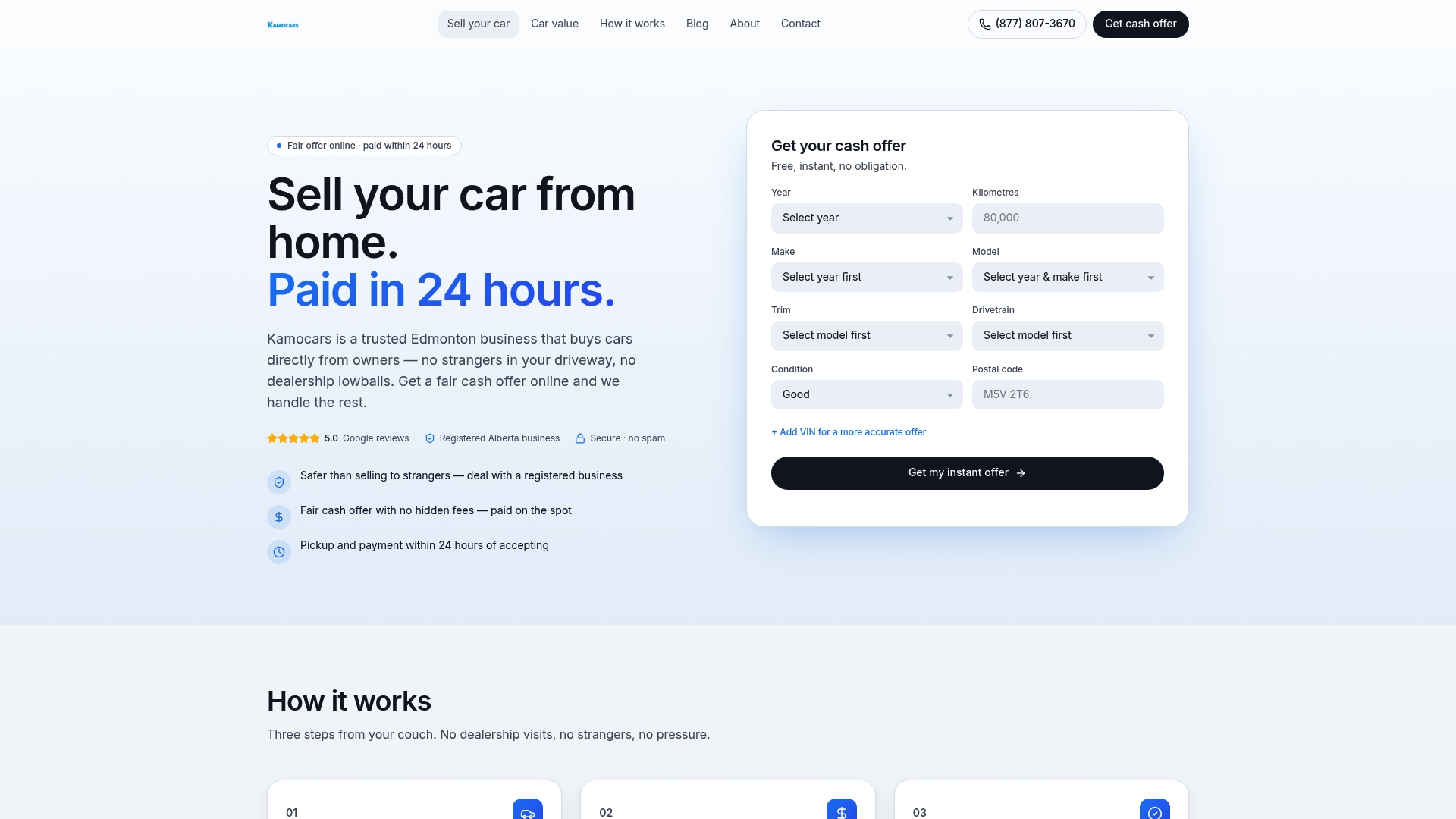
The process takes minutes to start. Enter your vehicle details at the free Alberta car value tool and get an appraisal based on current market data. If you accept, Sellkamocars handles the rest, including pickup and secure payment, so you can move on without the risk that comes with selling privately.
Sources
The following sources back the core claims in this guide:
- How to get more money for your used car — Consumer Reports
- Peer‑to‑peer car sharing: potentially a risky side gig — FTC
- The sharing economy: important points to consider before sharing your car or home — Maine Bureau of Insurance
- Exploratory study of consumer issues in peer‑to‑peer platform markets — European Commission
- Sell your car without meeting strangers: safe options and timeline — AutoLetGo
This article is general information, not a substitute for advice from a qualified financial advisor. Consult a qualified financial professional about your own circumstances before acting on anything here.
Recommended
Get a real cash offer in 2 minutes
Trusted business. Fair price. Paid on the spot when we pick up your car.