
Wholesale Values in Canada: Get an Instant Cash Offer in 24 Hours
Compare VIN based, region adjusted Canadian valuations to set a fair wholesale floor. Alberta sellers can get a 24 hour cash offer.
Wholesale Values in Canada: Get an Instant Cash Offer in 24 Hours
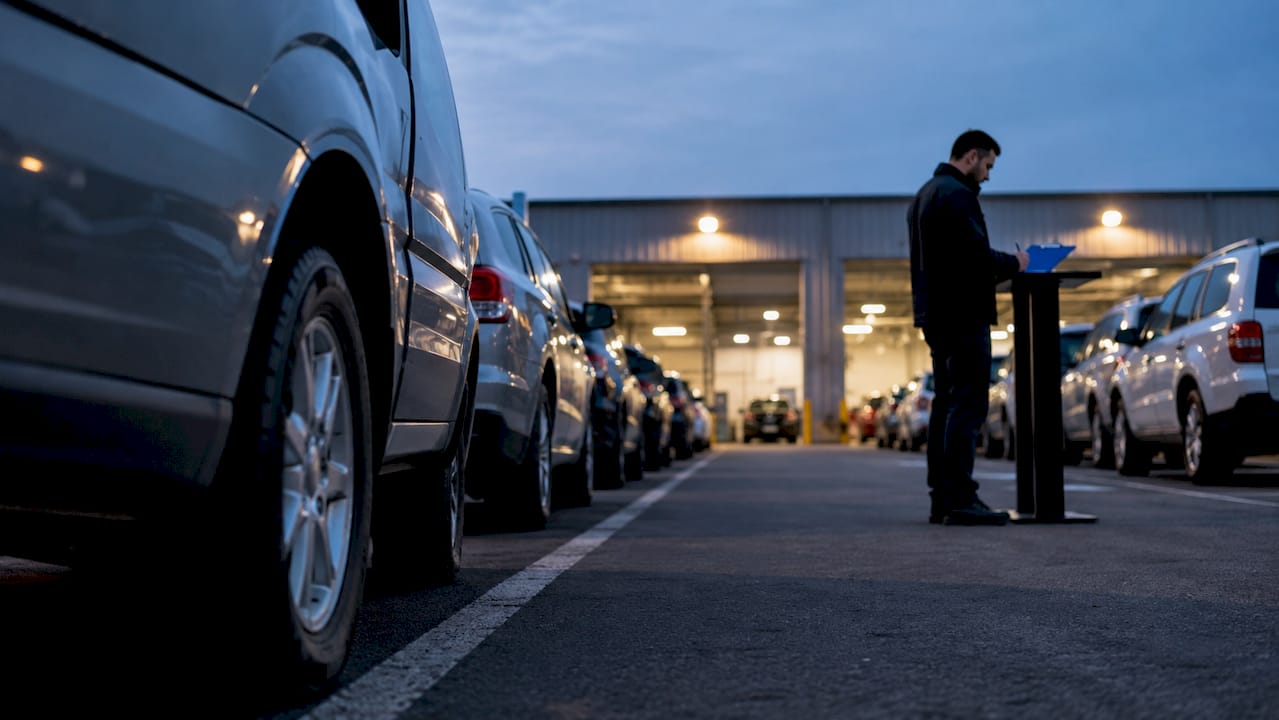
Wholesale value is what a dealer expects to pay for your vehicle before reconditioning and markup, the same benchmark used at auction. Check two or three region-adjusted Canadian tools, like CARFAX Canada or Canadian Black Book, before you accept any offer. Use that number as your negotiation floor, not your ceiling, when you’re selling privately or trading in.
TL;DR:
- Cross-check two or three Canadian-specific valuation tools, such as VMR Canada, CARFAX Canada, and Canadian Black Book, to determine accurate wholesale values.
- Adjust the online estimates downward for condition issues like wear or upcoming maintenance, since most tools assume average condition.
- Use wholesale values to inform your negotiation or trade-in decision, focusing on offers built from current auction and transaction data.
- Be aware that regional market factors, such as province-specific demand and import restrictions, significantly influence wholesale prices.
- Rely on VIN-specific data and current market trends, especially for electric or hybrid vehicles, which require detailed battery or condition documentation for accurate valuation.
Table of Contents
- Where to Find Trusted Canadian Wholesale Values
- Wholesale vs. Retail vs. Trade-In: What’s the Real Difference?
- How Do Valuation Tools Calculate Wholesale Values?
- How to Use Wholesale Values When Selling or Trading In
- Canadian Wholesale Market Snapshot for 2026
- Legal and Regulatory Factors That Affect Wholesale Prices
- Do EVs, Hybrids, and Gas Vehicles Have Different Wholesale Values?
- Common Pitfalls in Wholesale Valuation Tools
- Kamocars’ Perspective: Using Wholesale Data to Make Fast, Fair Offers in Alberta
- Get an Instant Cash Offer Backed by Real Wholesale Data
- Quick Links to Canadian Valuation Tools and Market Reports
- Sources
Where to Find Trusted Canadian Wholesale Values
Not every online “what’s my car worth” calculator uses real Canadian transaction data. Some are built on American figures with a currency conversion slapped on top, which skews results for Canadian sellers. The tools below are built specifically for the Canadian market and each pull from different data sets, so cross-checking two or three gives you a far more honest number than trusting one.
- VMR Canada tracks wholesale and retail pricing for Canadian vehicles back to the 1990s, making it one of the longest-running Canadian valuation resources available to the public.
- CARFAX Canada bases its estimates on what buyers actually paid for comparable vehicles, adjusted for odometer reading, market shifts, and location.
- Canadian Black Book leans dealer-facing, publishing segment and regional market insights that shape how dealers set wholesale offers.
- Canadian Red Book, powered by CARFAX Canada, reports wholesale, retail, and trade-in values side by side and is widely used by insurers and lenders.
- J.D. Power/NADA Canada data appears inside several of the above platforms rather than as a standalone Canadian consumer tool.
Run a VIN-based lookup whenever a tool offers one. Year, make, and model alone miss trim-level options, accident history, and mileage variance that can shift a value by a couple thousand dollars in either direction.
Wholesale vs. Retail vs. Trade-In: What’s the Real Difference?
Wholesale value is the dealer’s cost basis, roughly what they’d pay at auction or offer you at trade-in before spending a dime on your car. Retail value is what that same dealer lists it for after detailing, minor repairs, and a markup that covers overhead and profit. The gap between those two numbers, often several thousand dollars on a mainstream vehicle, isn’t padding. It reflects real reconditioning costs, financing on inventory sitting on the lot, and the risk that a car doesn’t sell as fast as projected.
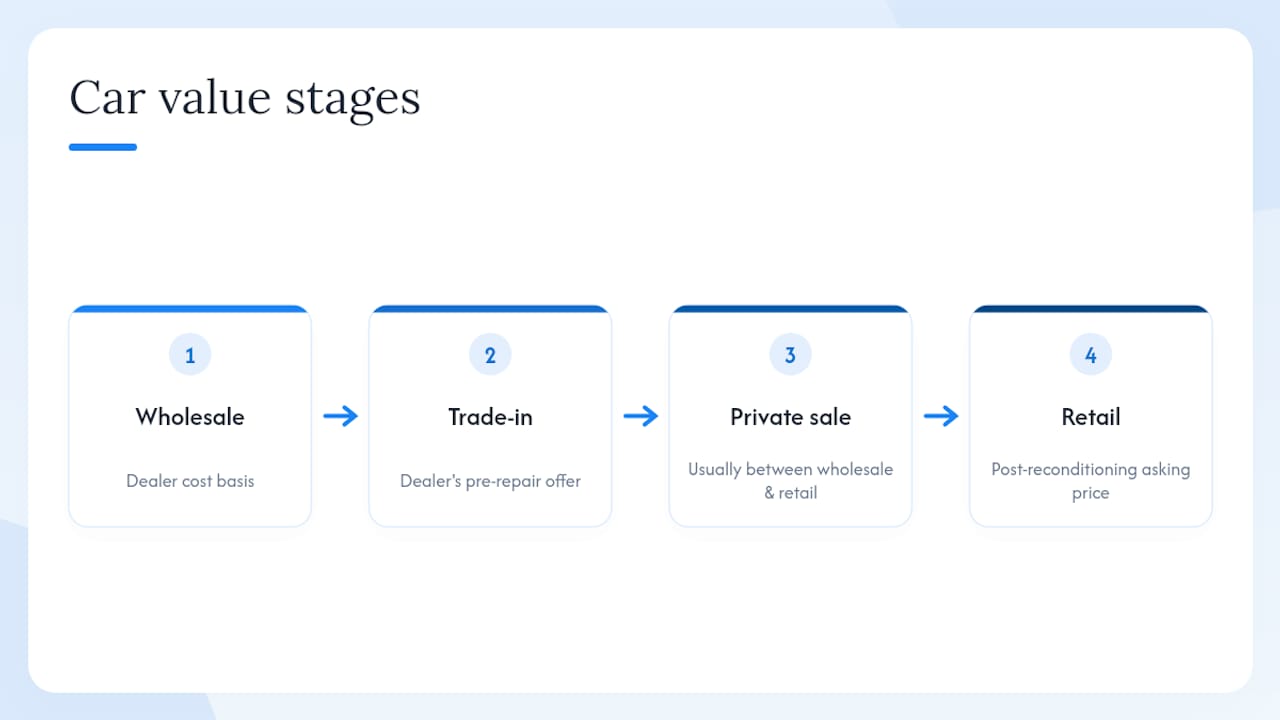
Private sale prices usually land somewhere between wholesale and retail, depending on your car’s condition, how badly a buyer wants it, and how patient you are willing to be. A clean, well-documented vehicle in high local demand can push close to retail in a private sale. A car with cosmetic issues or an unusual color combination might sell closer to wholesale even privately.
This is exactly why a wholesale figure looks low if you compare it to a retail listing for the same model. You’re comparing two different roles in the same transaction chain, not two competing prices for your car.
How Do Valuation Tools Calculate Wholesale Values?
Every credible Canadian tool builds its wholesale number from a similar mix of raw data, weighted differently depending on the provider. The core inputs are auction results, recent realized transaction prices (not asking prices), VIN-specific vehicle history, mileage, factory options, condition grade, and local demand.
- Auction results show what dealers actually paid each other for similar units, the purest wholesale signal available.
- Transaction-based data, which CARFAX Canada emphasizes, reflects what real buyers paid rather than what sellers hoped to get.
- VIN history flags accidents, odometer rollbacks, and lien records that can knock thousands off a valuation instantly.
- Regional adjustments account for the fact that a crew-cab pickup is worth more in rural Alberta than downtown Toronto.
Two tools can return different numbers for the identical vehicle simply because one weighs recent auction data more heavily and the other leans on dealer-reported figures, as Black Book’s own guidance on comparing wholesale and retail values points out.
If they’re farther apart than that, one tool is likely missing a condition adjustment or working from stale data.*
How to Use Wholesale Values When Selling or Trading In
Knowing your wholesale number only helps if you use it correctly. Here’s the sequence that puts you in control of the conversation instead of reacting to whatever a dealer quotes you.
- Pull two or three region-adjusted valuations, ideally VIN-based, from sources like VMR Canada, CARFAX Canada, or Canadian Black Book.
- Adjust downward for real condition issues (worn tires, interior damage, upcoming maintenance) since online tools assume average condition unless you specify otherwise.
- Pick your selling route: private sale usually nets the highest price but takes the most time and effort; a dealer trade-in offers tax advantages on your next purchase in most provinces. An instant cash buyer trades some top-end dollars for speed and certainty.
- Ask any buyer how they source their offer, whether it’s built on current auction data or a flat internal formula, and whether any fees get deducted before you’re paid.
An instant, wholesale-based cash offer makes the most sense when your time has real value, when your vehicle needs mechanical work you don’t want to sort out before selling, or when you simply want payment finalized without weeks of showings and no-show buyers.
Pro Tip: Get your Canadian valuations first, then request an offer. Sellers who compare numbers before talking to a buyer negotiate from strength instead of guessing.
Canadian Wholesale Market Snapshot for 2026
Canada’s wholesale market has been running supply-constrained but demand-fragile through 2026, according to OPENLANE’s Vehicle Value Index, meaning tight inventory props prices up even as buyer appetite wavers month to month.
Market signal: Weekly wholesale reporting from mid-2026 showed a decline of roughly 0.49% for the week ending May 30, alongside auction conversion rates sitting in the mid-30s to 40% range, a sign that dealers are being more selective about what they’ll bid on.
That conversion rate matters more than most sellers realize. When fewer than half the vehicles listed at auction actually sell, dealers get pickier, and wholesale offers compress across the board. Interest rates, tariff-related import costs, and regional supply gaps are all feeding into that pickiness this year.
Watch three things before you sell: the week-over-week wholesale trend for your vehicle segment, the current auction conversion rate, and how your province’s average listing prices compare to national figures. A softening market doesn’t mean you wait forever, but it does mean the gap between “list high and hope” and “take a solid wholesale-based offer now” narrows fast.
Legal and Regulatory Factors That Affect Wholesale Prices
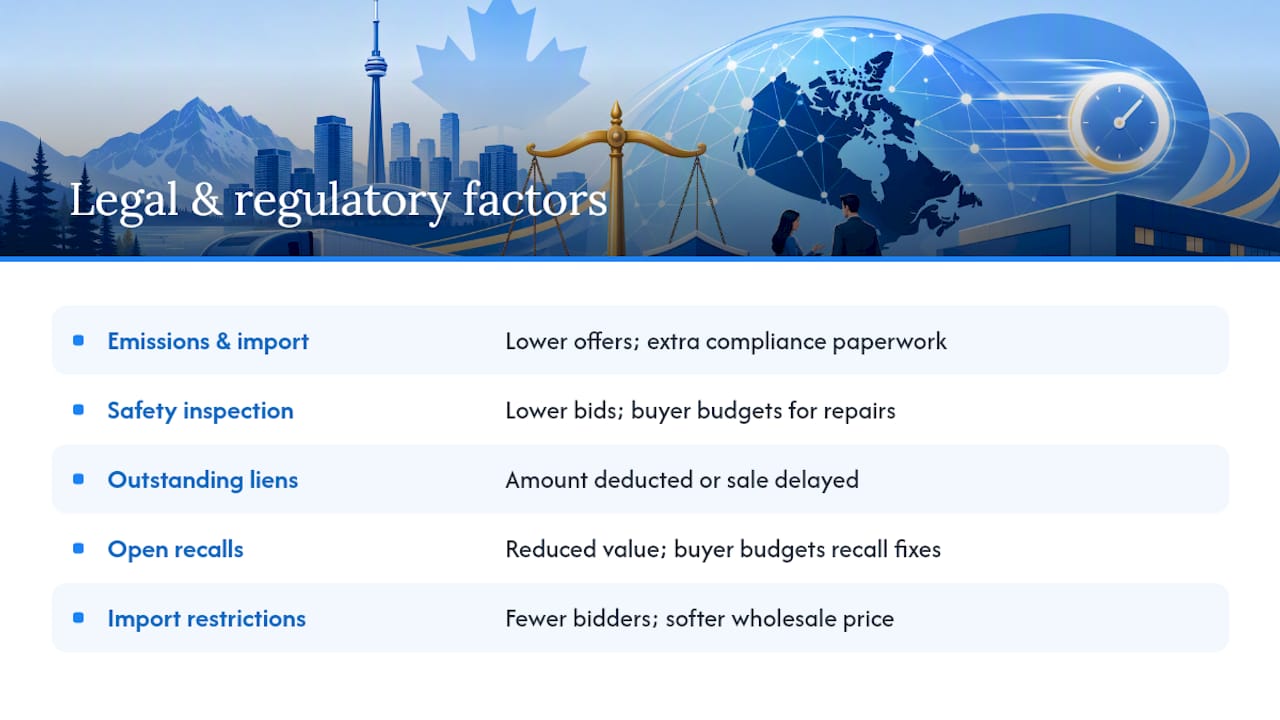
Emissions standards and import rules shape wholesale values more than most sellers expect. Vehicles that fail to meet current Canadian emissions requirements, or that were personally imported from the US without proper compliance documentation, often sell at a wholesale discount because dealers face extra paperwork and potential resale restrictions.
Provincial safety inspection requirements also factor into wholesale offers. A vehicle that hasn’t passed a required safety inspection in provinces like Alberta or Ontario typically gets a lower wholesale bid, since the buyer has to budget for inspection costs and any repairs needed to pass. Outstanding liens are another regulatory wrinkle. A dealer or wholesale buyer needs a clear title before they can resell your vehicle, so any lien registered against the car gets deducted from the offer, or the deal gets held up entirely until it’s cleared.
Federal recall status matters too. An open recall doesn’t necessarily tank a wholesale value, but a buyer sourcing offers from transaction data will factor in the cost and hassle of getting that recall addressed before resale. Import restrictions on specific vehicle categories, gray-market vehicles brought in outside normal channels, for instance, can also limit which dealers are even willing to bid, which shrinks the buyer pool and softens the wholesale number.
None of these factors are exotic. They’re the everyday paperwork realities that separate a clean, quick wholesale transaction from one that drags on for weeks while a buyer sorts out title or compliance issues.
Do EVs, Hybrids, and Gas Vehicles Have Different Wholesale Values?
Fuel type changes the wholesale calculation more than most owners assume. Gasoline vehicles remain the most liquid wholesale category in Canada simply because demand is broad and buyer pools are deep across every province.
Electric vehicles carry an added variable: battery health. Two identical EVs with the same mileage can have meaningfully different wholesale values depending on battery degradation, which standard VIN-based tools don’t always capture well. A documented battery health check, similar to the certification process gaining traction for used electric vehicles in other markets, can help a wholesale buyer price an EV more confidently instead of discounting for uncertainty.
Hybrids tend to hold wholesale value steadily, since buyer demand has stayed consistent for years without the volatility EVs sometimes see tied to public charging infrastructure and battery-cost headlines. Diesel vehicles, once a strong resale category for trucks, have seen wholesale demand soften somewhat in provinces tightening emissions enforcement, though heavy-duty diesel pickups in Alberta and other resource-economy regions still command solid wholesale interest.
The practical takeaway: if you’re selling an EV or hybrid, don’t rely on a generic year/make/model estimate. Get a VIN-specific valuation and, for EVs, be ready to document battery condition, since that single factor can move your wholesale number more than mileage does.
Common Pitfalls in Wholesale Valuation Tools
The biggest mistake sellers make is treating one online estimate as gospel. Every tool has blind spots, and knowing them helps you avoid a lowball surprise or an inflated expectation that a real buyer won’t match.
- Stale data: Some free calculators update infrequently, so a tool’s number might reflect market conditions from months ago, not this week’s auction results.
- Generic condition assumptions: Most tools default to “good” or “average” condition unless you actively adjust the input, which inflates estimates for vehicles with real wear.
- Missing VIN history: Year/make/model-only lookups can’t account for a rebuilt title, flood history, or accident record that a VIN-based check would catch immediately.
- Regional blending: A tool that doesn’t let you specify province or city may average national data in a way that misrepresents your local market.
The fix is straightforward: cross-check two or three tools, always use VIN-based lookups when available, and be honest about condition rather than optimistic. If a buyer’s offer lands far below every tool’s range, ask directly how they sourced that number. A legitimate wholesale buyer working from real market data, the same approach Kamocars applies to its own offers, should be able to explain the gap rather than just repeat a lower figure.
Kamocars’ Perspective: Using Wholesale Data to Make Fast, Fair Offers in Alberta
Sellkamocars builds every offer from current Canadian wholesale data, then adjusts for your vehicle’s actual condition and Alberta’s local demand, not a generic national average. That’s the difference between an instant offer you can trust and a lowball guess.
With over 500 completed transactions and a registered business status backing every deal, sellers get pickup and payment within 24 hours. An instant offer makes sense when speed and certainty matter more than chasing the last few hundred dollars a private sale might bring.
— Omar
Get an Instant Cash Offer Backed by Real Wholesale Data
Sellkamocars turns wholesale data into a straight answer instead of a guessing game. You skip the private-sale grind, no strangers test-driving your car in your driveway, no haggling back and forth over Kijiji messages, and get an appraisal built on the same regional data the tools above use.
This works best for Alberta owners with a 2018 or newer car, truck, or SUV that’s still running, whether it’s financed, leased, or owned outright. You get an instant appraisal, secure pickup at your home, and payment finalized within 24 hours. Start by running your numbers through a couple of the valuation tools above, then get your free instant appraisal through Sell My Car Edmonton and compare it against what a private sale would realistically take in time and effort.
Quick Links to Canadian Valuation Tools and Market Reports
Run your own lookup before you accept any offer. These are the sources referenced throughout this guide:
- CARFAX Canada: transaction-based estimates adjusted for odometer and location.
- VMR Canada: historical wholesale and retail pricing dating back decades.
- Canadian Black Book: dealer-focused values and regional market insights.
- Canadian Red Book: wholesale, retail, and trade-in values used by insurers and lenders.
- OPENLANE Vehicle Value Index: wholesale market trends and volatility signals.
Sources
- Car Value in Canada: How much is my car worth? | CARFAX Canada
- OPENLANE Vehicle Value Index
- How Do I Compare Wholesale and Retail Automotive Values To Optimize My Inventory? - Black Book
Recommended
Get a real cash offer in 2 minutes
Trusted business. Fair price. Paid on the spot when we pick up your car.