
What Is a Convenient Car Transaction for Sellers?
Discover what is a convenient car transaction for sellers. Enjoy a fast, hassle-free process with transparent pricing and minimal paperwork.
What Is a Convenient Car Transaction for Sellers?

A convenient car transaction is a low-friction, mostly online process that completes appraisal, financing, and paperwork within 24–48 hours, eliminating the need for multiple in-person dealership visits. The industry term for this model is the “transactional sale,” and it has replaced traditional negotiation-heavy processes for a growing number of sellers. Transparent, upfront pricing replaces haggling. Digital document submission replaces stacks of physical paperwork. For sellers who value speed, fairness, and security, understanding this model is the first step toward a sale that works on your terms.
What is a convenient car transaction and how does it work step by step?
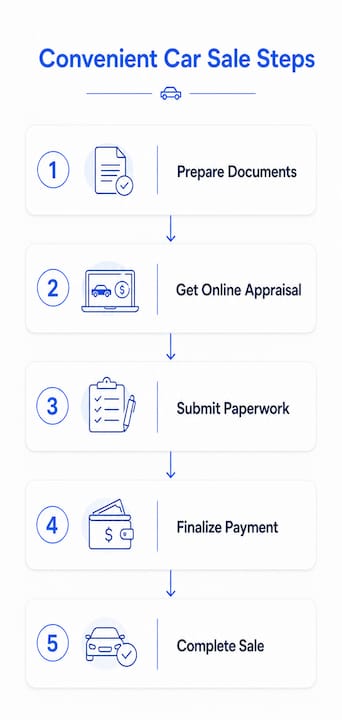
The process follows a clear sequence. Each step is designed to reduce friction and keep the timeline tight.
-
Submit your vehicle details online. You enter your car’s year, make, model, mileage, and condition into an appraisal tool. Instant online appraisal tools establish a competitive pricing baseline in minutes, giving you real leverage before any conversation with a buyer or service.
-
Receive a transparent offer. The offer reflects current market data, not a dealer’s inventory needs. Non-negotiable, transparent pricing is the defining feature of the transactional model. You see the number upfront, with no hidden fees buried in the fine print.
-
Submit documents remotely. You upload your title, lien release or payoff statement, vehicle keys, and recent maintenance records. Modern services complete transactions within 24 hours after documentation is submitted and reviewed. Preparing these documents in advance is the single biggest factor in keeping your timeline on track.
-
Sign digitally. Contracts are signed electronically. No office visits, no waiting rooms, no pressure from a finance manager pushing add-ons.
-
Schedule pickup and receive payment. A driver collects your vehicle at a time that works for you. Payment follows within the agreed window, often the same day.
Pro Tip: Before you submit anything, gather your lien-free title, all sets of keys, and a one-page maintenance summary. Missing any one of these can add days to your timeline even with the fastest services.
The entire sequence, from first appraisal to cash in hand, fits inside a standard business day when your documents are ready. That is what separates a truly convenient auto purchase from a process that just looks fast on the surface.

What are the key benefits and drawbacks for sellers?
The transactional model delivers real advantages, but it also comes with trade-offs worth knowing before you commit.
Benefits:
- Speed. Most services deliver payment within 24 hours of document review. You skip the weeks of listing, showing, and negotiating that private sales require.
- Upfront pricing. You know the offer before you agree to anything. The shift to customer-centric models means sellers no longer have to decode bundled numbers.
- Fewer dealership visits. The entire process can happen from your home. This matters most for sellers with busy schedules or vehicles that are difficult to transport.
- Professional concierge options. Professional car concierge services charge between $1,000 and $3,000 but create net savings by avoiding overpayment and saving multiple workdays. For high-value vehicles, that math often works in your favor.
- Security. Registered services verify identity and handle payment through traceable channels, removing the risk of meeting strangers with cash.
Drawbacks:
- Lower ceiling than private sale. A direct buyer may pay more than a service offer. If maximizing the final dollar is your only goal, a private listing is worth the extra time.
- Document preparation falls on you. The process is fast only when your paperwork is complete. Sellers who skip this step cause their own delays.
- Service fees vary. Concierge and pickup services are not always free. Read the fee structure before you accept any offer.
“True convenience requires full disclosure of out-the-door costs early to avoid surprise fees like warranties or protection plans during closing. Demanding transparency is what separates a smart deal from a merely fast one.”
The right choice depends on what you value most. Speed and security favor the transactional model. Maximum price favors a private sale with more time invested.
How do tax laws and regional rules affect your car sale?
Tax law is one of the most overlooked factors in a car transaction, and it directly affects how much money you keep.
In 37 states, sales tax applies only on the difference between the new car price and the trade-in value. That gap can save sellers between $1,500 and $3,000 per transaction. That is a meaningful number, and it makes the trade-in route financially competitive even when the offer is slightly below private-sale prices.
| State Category | Tax Treatment | Seller Impact |
|---|---|---|
| 37 states with trade-in credit | Tax on price difference only | Saves $1,500–$3,000 per deal |
| States without trade-in credit (e.g., California, Hawaii) | Full sale price taxed | Outright sale may net more |
| States with lien requirements | Payoff statement required | Delays if not prepared in advance |
In states like California and Hawaii, trade-ins do not reduce the taxable amount, so an outright sale to a cash buyer may produce a better net result. Knowing your state’s rules before you choose a selling method is not optional. It is the difference between leaving money on the table and keeping it.
Lien status also matters. If your vehicle carries an outstanding loan, you need a payoff statement from your lender before any service can complete the transaction. Failing to prepare a lien release can add days to your timeline even when using the fastest concierge or automated services.
Pro Tip: Call your lender at least three business days before your planned sale date. Request a 10-day payoff quote in writing. This single step prevents the most common delay in fast car transactions.
What best practices ensure a secure and fair car selling experience?
Speed without preparation creates risk. These practices protect your interests while keeping the process moving.
-
Prepare your title first. A lien-free title, all vehicle keys, and a recent maintenance summary are the three documents that determine whether your sale closes on time or stalls. Get them ready before you request any appraisal.
-
Get multiple appraisal offers. Many sellers secure multiple instant appraisal offers in under five minutes online. Relying on one valuation risks accepting a price tailored to a dealer’s inventory needs rather than your car’s actual market value. Three offers give you a credible floor.
-
Demand full out-the-door pricing. Full disclosure of out-the-door costs must come early in the process. Ask for an itemized breakdown that includes all fees, not just the vehicle offer price. Any service that resists this request is not worth your time.
-
Verify the vehicle history report. Even fast, digital-first transactions must include verifying the vehicle history report. A clean report protects you from post-sale disputes and supports your asking price.
-
Protect yourself from fraud. Use only registered, verifiable services. Check for a business registration number, read verified reviews, and never hand over keys before payment is confirmed. The safe car sale practices used by professional services exist because fraud in private digital sales is real and growing.
-
Prepare a video walkaround. High-quality video walkarounds and up-to-date maintenance summaries are becoming standard requests from buyers in digital-first sales. A two-minute video documenting your car’s condition reduces disputes and builds buyer confidence before pickup.
Pro Tip: Separate your trade-in negotiation from any new car purchase negotiation. Bundling the two lets dealers obscure the true value of each deal. Treat them as two independent transactions.
The sellers who get the best outcomes from convenient transactions are not the ones who move fastest. They are the ones who prepare thoroughly and verify every number before signing.
Key Takeaways
A convenient car transaction delivers speed and security only when sellers combine digital tools with thorough document preparation and transparent pricing verification.
| Point | Details |
|---|---|
| Core definition | A convenient car transaction completes appraisal, paperwork, and payment within 24–48 hours using digital tools. |
| Document readiness | Prepare your lien-free title, all keys, and maintenance records before requesting any appraisal offer. |
| Tax law awareness | In 37 states, trade-in credits save sellers $1,500–$3,000; check your state’s rules before choosing a method. |
| Multiple appraisals | Get at least three online offers to establish a fair market floor before accepting any single valuation. |
| Transparency first | Demand full out-the-door pricing early; any service that hides fees is not a genuinely convenient option. |
Why convenience without diligence is a costly mistake
I have seen sellers treat “convenient” as a synonym for “effortless,” and that mindset costs them money every time. The transactional model is genuinely fast when you show up prepared. When you don’t, it is just as slow and frustrating as any traditional dealership visit.
The sellers I respect most treat the appraisal phase like a negotiation, even when the pricing is non-negotiable. They pull three offers, know their car’s history report cold, and have their title in hand before the first conversation. That preparation is what gives them confidence to accept a fair offer quickly instead of second-guessing every number.
The concierge fee question comes up constantly. My honest view: if your car is worth $20,000 or more and your time has real value, a $1,500 service fee that saves you a week of showings and one bad private-sale experience is a rational trade. If you are selling a $6,000 commuter car, do the math first.
The one thing I will not compromise on is verification. Digital transactions move fast, and that speed creates openings for fraud. Always confirm a service’s business registration. Always get payment confirmation before handing over keys. The car sale fraud prevention steps that professional services follow exist because the risks are real, not theoretical. Convenience is worth pursuing. Carelessness is not.
— Omar
Sellkamocars makes the convenient car sale real
Sellkamocars built its entire process around what sellers actually need: a fair cash offer, zero haggling, and payment within 24 hours. You submit your vehicle details online, receive a market-based offer, and schedule free pickup at your door. No strangers, no showings, no surprise fees.
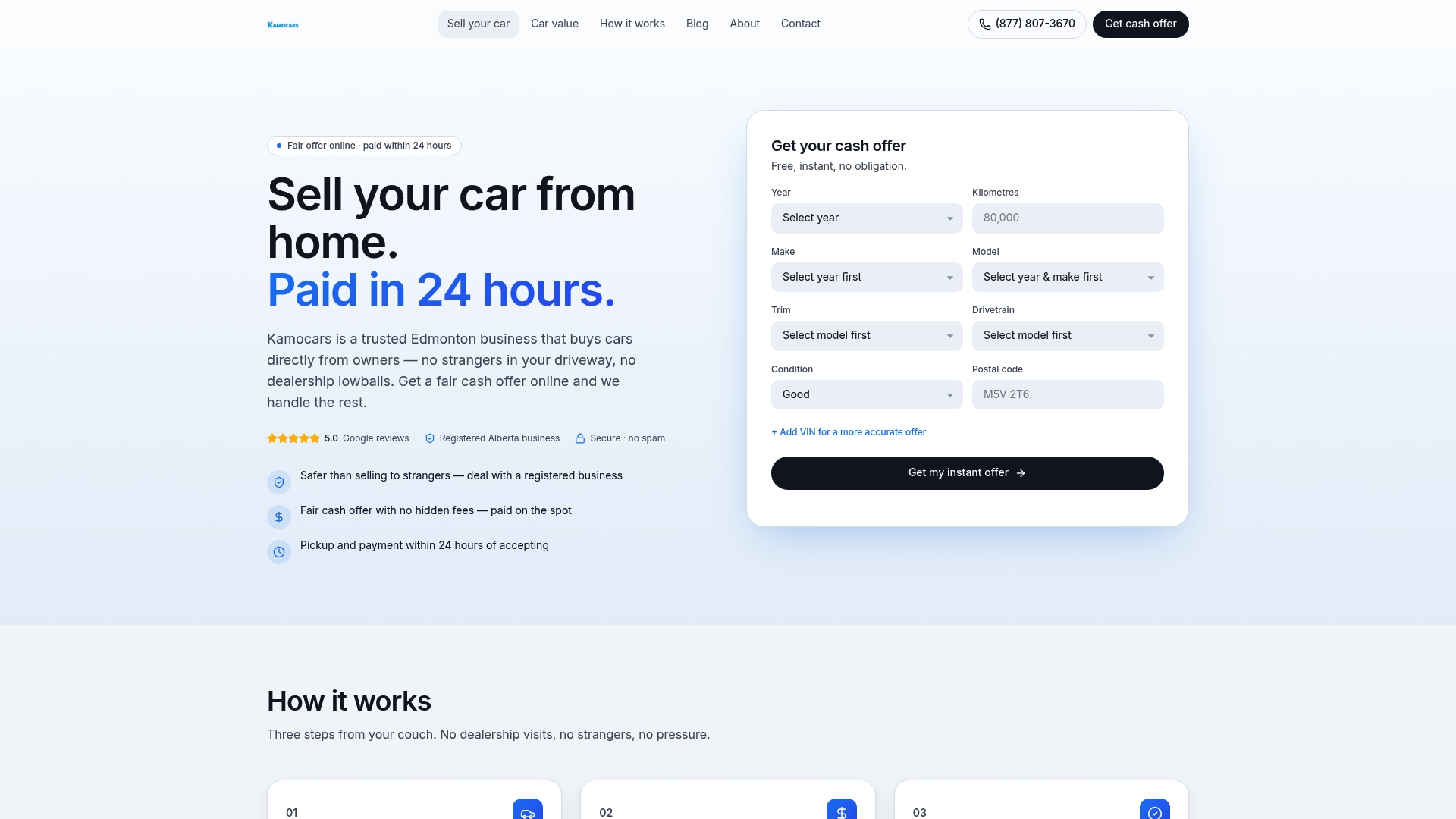
With over 500 completed transactions and a registered business status, Sellkamocars removes the guesswork from the selling process. Use the free car value tool to see what your vehicle is worth right now, or go straight to the sell my car page to get your cash offer and schedule pickup. The process takes minutes to start and closes within a day.
FAQ
What is a convenient car transaction?
A convenient car transaction is a mostly online process that completes appraisal, paperwork, and payment within 24–48 hours, eliminating multiple in-person dealership visits and using transparent, upfront pricing.
How fast can I sell my car through a convenient service?
Most services complete the full transaction within 24 hours after you submit verified documents, including your title, keys, and maintenance records.
Do I get a fair price in a fast car transaction?
Yes, when you collect multiple appraisal offers online before accepting any single valuation. Relying on one offer risks accepting a price based on dealer inventory needs rather than true market value.
How do state tax laws affect my car sale?
In 37 states, trade-in credits reduce your taxable amount by $1,500–$3,000 per transaction. In states like California and Hawaii, no trade-in credit applies, so a direct cash sale may produce a better net result.
What documents do I need for a hassle-free auto transaction?
You need a lien-free title or payoff statement, all vehicle keys and remotes, and a recent maintenance summary. Missing any one of these documents is the most common cause of delays in fast car transactions.
Recommended
Get a real cash offer in 2 minutes
Trusted business. Fair price. Paid on the spot when we pick up your car.