
What Does Car Buyer Verification Mean for Sellers?
Learn what car buyer verification means for sellers. Discover how it ensures faster payments, safer transactions, and reduced fraud risk.
What Does Car Buyer Verification Mean for Sellers?
Car buyer verification means confirming who the buyer is, that they can actually complete the transaction, and that their contact and consent are properly documented. For sellers, it covers three concrete things: identity (who they are), intent and financial ability (can they pay), and documented consent (are communications legally authorized). Here’s what that looks like in practice:
- Photo ID check: Government-issued ID cross-referenced with trusted databases to confirm buyer identity
- Database cross-checks: VIN, ownership, and lien records validated against third-party sources
- Intent and financial checks: Structured form answers, soft credit pull, or stated credit tier to confirm purchase readiness
- TCPA consent capture: Documented opt-in with timestamp and source URL authorizing contact
For you as a seller, a verified buyer means faster payment, cleaner title transfer, and far less fraud risk. Professional buyers like Sellkamocars build verification into their process so the sale closes in hours, not days.
Table of Contents
- How does car buyer verification actually work, step by step?
- What’s the difference between a verified identity and a verified lead?
- What should you prepare as a seller before verification starts?
- How is your personal data used during verification, and what are your rights?
- How do you spot a fake verification attempt and protect yourself?
- Why do professional car buyers use layered verification?
- Key Takeaways
- How Sellkamocars approaches verification
- Ready to sell to a verified buyer today?
- Useful sources and further reading
- A seller’s perspective on what verification really signals
- What sellers often miss about the “verified” label
How does car buyer verification actually work, step by step?
Professional buyers run verification through a layered sequence. Each step builds on the last, and skipping one creates gaps that slow the deal or expose you to risk.
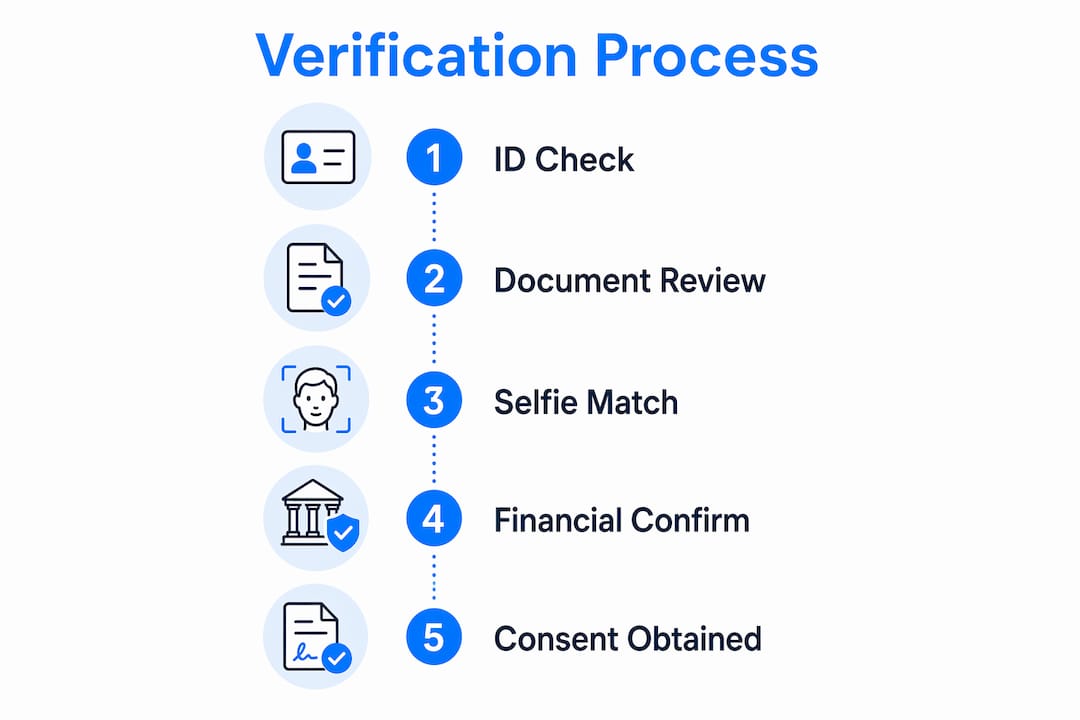
- Buyer submits information: Name, contact details, and vehicle interest are entered into a secure platform or form.
- ID and document check: A government-issued photo ID is reviewed. Some platforms use biometric selfie verification alongside document checks for added accuracy.
- Contact verification: Phone number ownership is confirmed via SMS OTP, the highest standard for proving a number is real and active.
- Intent and finance check: A soft credit pull or structured intent questions confirm the buyer can close. Soft pulls don’t affect the buyer’s credit score.
- TCPA consent capture: Documented opt-in is recorded with a timestamp and source URL before any marketing calls or texts are sent.
- Payment and title pre-checks: Bank details or payment method are validated before the transaction closes.
| Step | What the buyer provides | What you see as a seller |
|---|---|---|
| ID check | Government-issued photo ID | Confirmation the buyer’s identity is validated |
| Contact verification | Phone number (SMS OTP) | Verified contact on file |
| Intent/finance check | Credit tier or soft pull consent | Buyer confirmed as purchase-ready |
| TCPA consent | Explicit opt-in | Legal record of authorized contact |
| Payment pre-check | Bank or payment details | Funds confirmed before title changes hands |
Document-based checks are faster to complete but rely on the accuracy of the ID itself. Biometric selfie verification adds a second layer by matching a live photo to the ID, which reduces impersonation risk. The trade-off is slightly more data collected and more scrutiny around how that data is stored.

What’s the difference between a verified identity and a verified lead?
The word “verified” gets used loosely in automotive marketing, and that ambiguity costs sellers time. A verified identity confirms who someone is. A verified lead confirms who they are, that they intend to buy soon, and that they’ve consented to contact. Those are not the same thing.
Three dimensions separate a real verified lead from a name with a checked box:
- Contact accuracy: Was the phone number or email confirmed via SMS OTP or carrier validation? A simple format check (“does this look like a phone number?”) proves nothing.
- Intent verification: Did the buyer answer structured questions confirming near-term purchase plans? Browsing a listing is not intent.
- Credit or financial verification: Was a soft pull run, or did the buyer self-report a credit tier? This confirms ability, not just interest.
Pro Tip: When deciding whether to accept an offer quickly, prioritize the financial verification dimension. A buyer who has passed a soft pull or confirmed financing is far more likely to close at the quoted price than one who has only verified their phone number.
What should you prepare as a seller before verification starts?
Getting your documents ready before a professional buyer initiates verification is the single fastest way to close within 24 hours. Delays almost always come from the seller’s side, not the buyer’s.
Here’s what to have on hand:
- Vehicle title: Clean title in your name. If there’s a lien, have your payoff amount and lender contact ready.
- Current registration: Confirms the vehicle is legally yours to sell.
- Your government-issued photo ID: Matches the name on the title.
- Payoff information (if applicable): Lender name, account number, and 10-day payoff quote.
- Odometer disclosure: Required by federal law for most vehicles under 10 years old.
Review the full legal document checklist before your sale starts so nothing stalls at the last step.
On timeline: professional buyers can close verified transactions within hours when verification is complete in advance. The typical range with a service like Sellkamocars is payment and pickup within 24 hours. What slows things down: a title with an unresolved lien, a name mismatch between ID and title, or documents sent through unsecured channels that require re-submission.
Pro Tip: Submit your title photo and ID through the buyer’s secure portal, not by email. Unsecured email can delay verification if the platform flags the submission as non-compliant.
How is your personal data used during verification, and what are your rights?
Verified checkout flows collect personal information to enable secure payments and legal title transfers. Knowing what’s reasonable to share, and what isn’t, protects you without slowing the deal.
Common PII collected during a verified sale:
- Driver’s license number and birthdate: Standard for ID verification and title transfer
- SSN (in some cases): Required by secure digital payment platforms to process electronic payments and verify identity
- Bank account details: Needed to receive payment via ACH or wire transfer
- Phone number and email: Used for contact verification and TCPA-compliant follow-up
Before sharing any sensitive information, ask the buyer service three direct questions: Where is my data stored? How long is it retained? Can I request deletion after the sale closes? A professional buyer will answer all three clearly. If they can’t, that’s a signal to pause.
TCPA consent matters on the seller side too. If you’re receiving buyer leads or live transfers, the buyer’s documented consent protects you from liability if contact disputes arise. Insist on seeing the opt-in timestamp and source URL before acting on any inbound lead.
How do you spot a fake verification attempt and protect yourself?
Scammers use the language of verification to create false confidence. Knowing the red flags keeps you in control.
Watch for these warning signs:
- Requests to send the title before payment clears: No legitimate buyer needs your title before funds are confirmed.
- Inconsistent ID details: Name, address, or photo that doesn’t match across documents.
- Refusal to use the platform’s verification flow: A real professional buyer won’t ask you to bypass their own system.
- Pressure to accept cash outside the documented process: Cash with no paper trail eliminates your recourse if something goes wrong.
- Overpayment schemes: A “buyer” sends more than the agreed price and asks you to refund the difference.
To verify the verifier: confirm you’re on the buyer’s actual domain (check the URL carefully), insist on platform-handled payments where funds are traceable, and wait for bank transfer confirmation before releasing the title or handing over keys.
Pro Tip: Use verification checkpoints as a natural gate. Tell the buyer you’ll schedule pickup once ID verification and payment confirmation are both complete. A legitimate buyer will agree immediately.
For a deeper look at protecting yourself through the sale, the car sale fraud prevention guide covers the most common scam patterns and how to shut them down.
Why do professional car buyers use layered verification?
Professional buyers adopt multi-step verification because it directly reduces the friction that kills deals. Fewer no-shows, faster title transfers, and lower fraud exposure all follow from a verified buyer pool.
When a buyer has passed identity, intent, and financial checks before showing up, the transaction moves on a predictable timeline. The digital car buying process has made this layered approach standard for services that handle high transaction volumes. Compare that to a private-party sale where you meet a stranger with cash and no documentation: the risk profile is completely different.
Verification also affects negotiation. A buyer who has completed financial pre-checks is far more likely to close at the quoted offer price. Unverified inquiries often renegotiate at pickup or back out entirely. For sellers who want a firm number and a fast close, that distinction is worth understanding before you choose how to sell.
Key Takeaways
Car buyer verification confirms identity, purchase intent, and documented consent, and when it’s complete before pickup, professional buyers can close the transaction within 24 hours.
| Point | Details |
|---|---|
| What verification covers | Identity, intent/financial ability, and TCPA-documented consent — all three are required for a real verified buyer. |
| Documents to prepare | Have your title, registration, photo ID, and payoff info ready before verification starts to avoid delays. |
| Timeline with professional buyers | Verified transactions with professional buyers typically close within hours to 24 hours when documents are in order. |
| Top safety rule | Never release your title or keys until payment is confirmed through the platform’s traceable payment system. |
| Sellkamocars | Sellkamocars handles verification, payment, and pickup within 24 hours, backed by many completed transactions. |
How Sellkamocars approaches verification
Sellkamocars runs a straightforward verified sale process built around speed and seller protection. You submit your vehicle details online, receive an instant appraisal based on current market data, and then move through a secure document exchange that covers ID confirmation and title review. Payment and pickup are handled within 24 hours of verification being complete.
With over 500 successful transactions completed and a published library of seller guides, Sellkamocars brings documented experience to every step. The registered business status means you’re dealing with an accountable entity, not an anonymous buyer from a classifieds listing.
Pro Tip: Before your Sellkamocars appraisal, photograph your title, registration, and ID in good lighting and save them to a secure folder. When verification starts, you can upload everything in one pass and cut the back-and-forth entirely.
Ready to sell to a verified buyer today?
Selling to a verified professional buyer is the fastest way to skip the uncertainty of private-party sales. Sellkamocars gives you a fair cash offer based on real market data, handles all the paperwork, and picks up your vehicle with payment confirmed, typically within 24 hours.
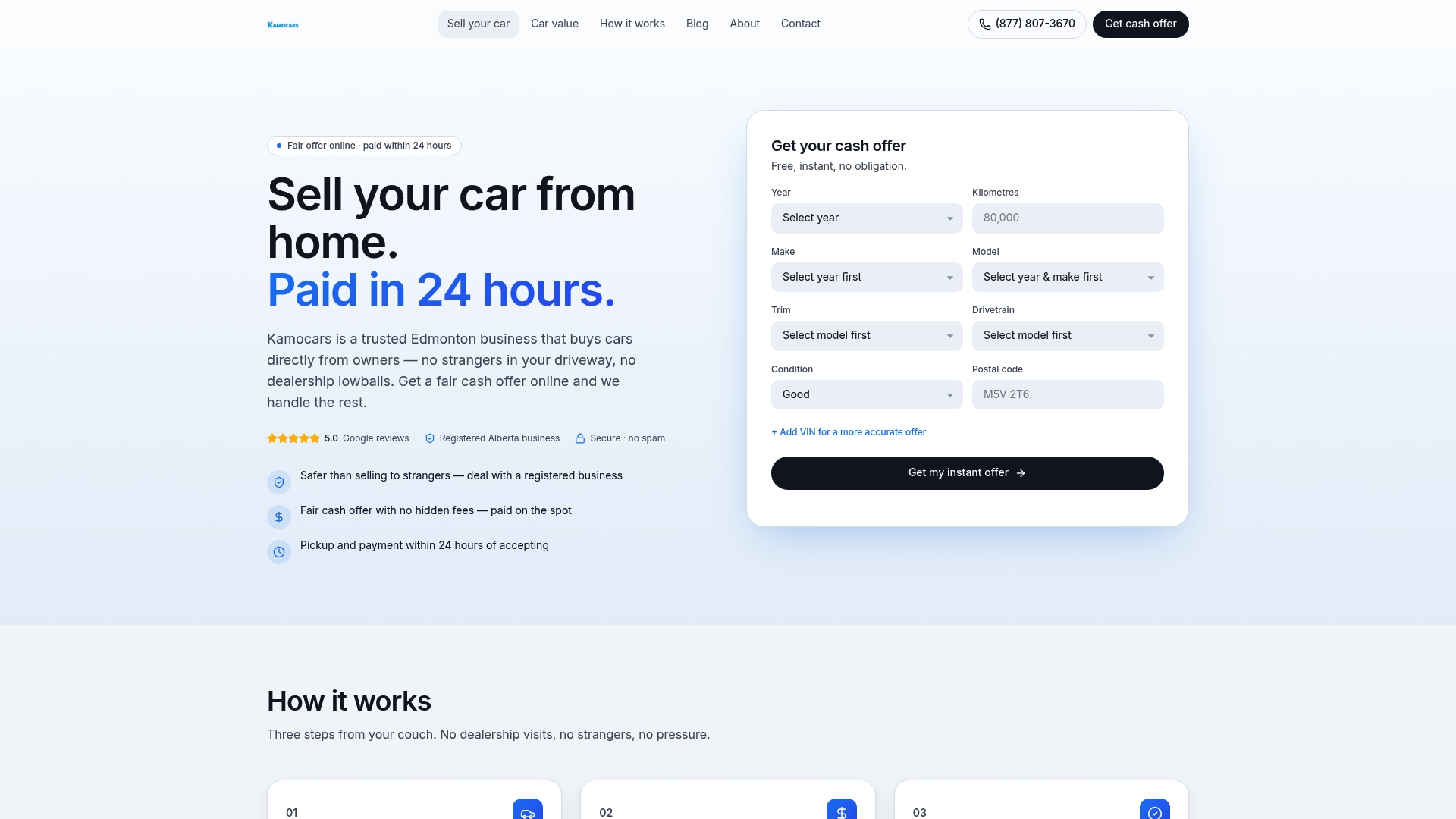
No haggling, no strangers, no waiting. You get a secure cash offer and a clear timeline from the moment you submit your vehicle details. If you want to understand the full process before you start, the how it works page walks you through every step, including how verification is handled on Sellkamocars’ end so you know exactly what to expect.
This article is general information for U.S. sellers and does not constitute legal or financial advice. Confirm current title transfer and documentation requirements with your state’s DMV or a qualified professional for your specific situation.
Useful sources and further reading
- Importance of Buyer Verification in Car Sales — Covers how identity checks reduce risk in private-party U.S. vehicle transactions and how verification shortens timelines for professional buyers.
- Verified Auto Leads: How Dealers Spot the Real Ones — Explains the three verification dimensions (contact, intent, TCPA consent) and what separates a genuine verified lead from a marketing label.
- The Role of Biometric Verification in Car Buying Security Measures — Details how facial recognition and biometric checks are being adopted in automotive transactions and the privacy trade-offs involved.
- About OfferUp Verified Checkout — Documents what PII a secure checkout platform may collect and how platform-handled payments protect sellers.
Before sharing any personal information with a buyer service, review that platform’s privacy policy and data retention terms directly. Verification standards vary by platform, and knowing what you’re agreeing to before you submit documents is always the right move.
A seller’s perspective on what verification really signals
What sellers often miss about the “verified” label
The word “verified” has become one of the most overloaded terms in automotive sales. Sellers see it on listings, in lead notifications, and in buyer profiles, and most assume it means the same thing everywhere. It doesn’t.
Real verification is a layered process. A buyer who has confirmed their phone number via SMS has cleared one checkpoint. A buyer who has also passed a financial pre-check and provided documented TCPA consent is a fundamentally different proposition. The gap between those two is where most private-party deals fall apart: the seller thought they had a serious buyer; they had someone who clicked a link.
The practical implication is this: when a professional buyer service tells you a buyer is “verified,” ask which dimensions that covers. Identity alone is table stakes. Intent plus financial readiness is what actually predicts a clean close. Sellers who understand that distinction stop wasting time on inquiries that were never going to convert and start moving faster with buyers who will.
Verification isn’t just a safety feature. It’s a filter that tells you, before you invest time in a transaction, whether the person on the other end is actually ready to buy.
Recommended
Get a real cash offer in 2 minutes
Trusted business. Fair price. Paid on the spot when we pick up your car.