
Trusted Car Buyer Verification Guide for a Safe Sale
Ensure a safe sale with our trusted car buyer verification guide. Verify identity, check vehicle history, and secure your transaction today!
Trusted Car Buyer Verification Guide for a Safe Sale
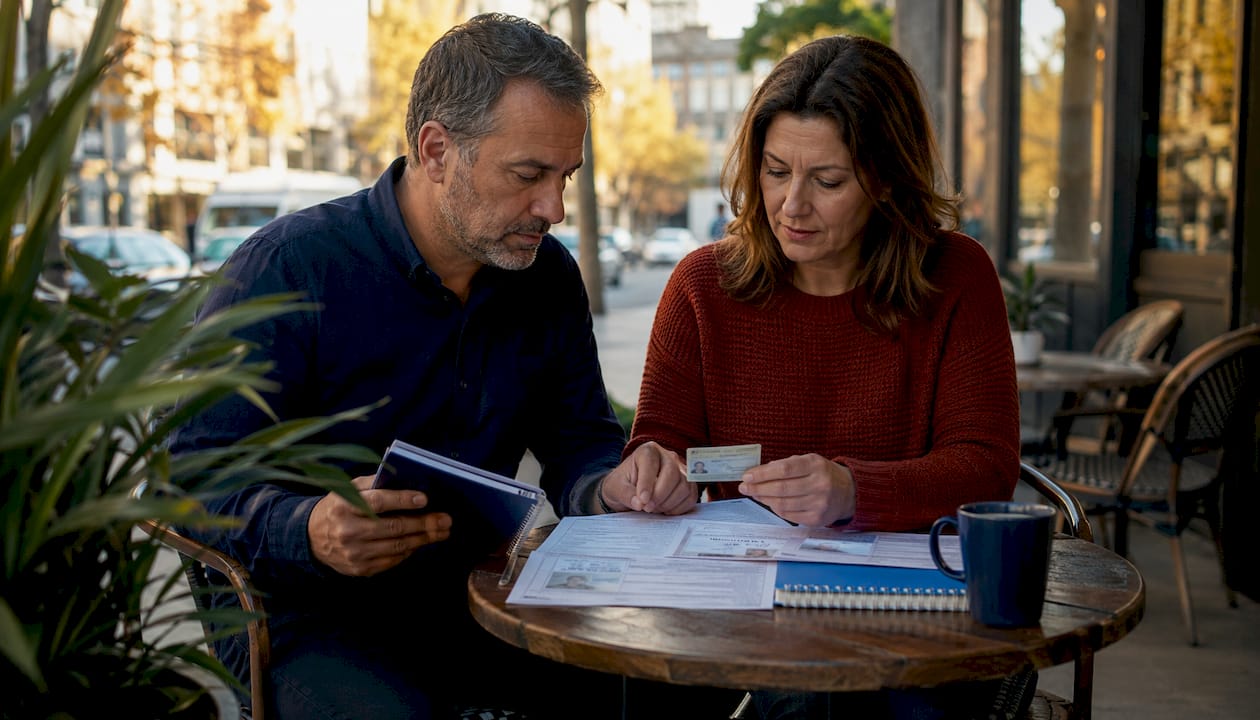
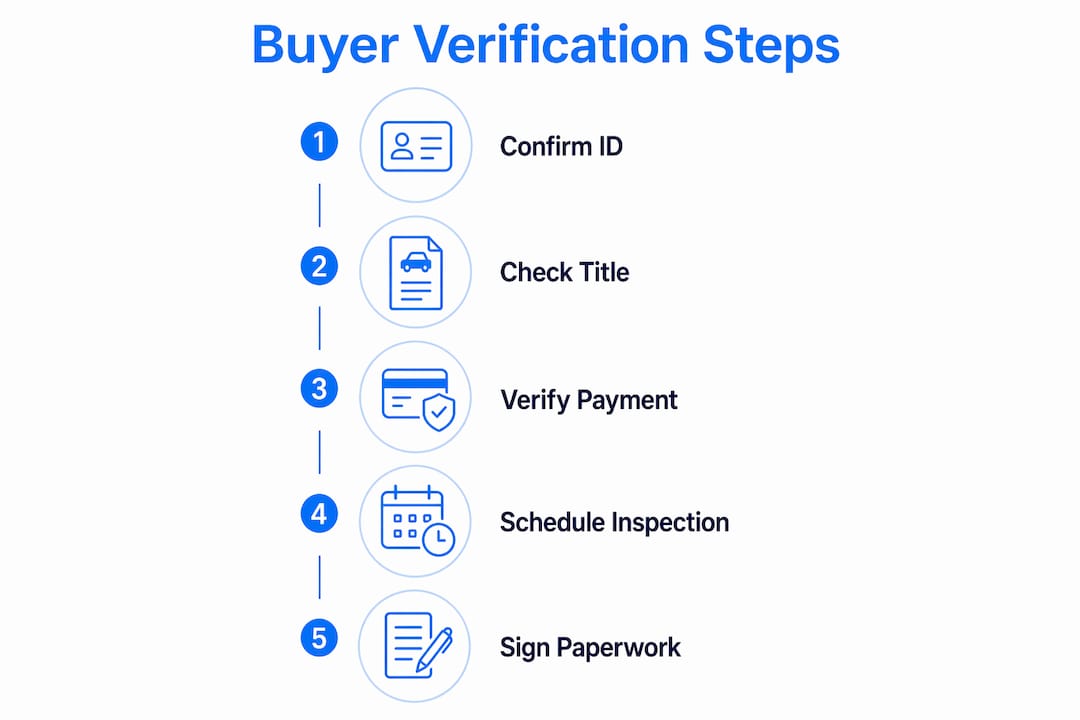
Yes, you can verify a buyer and complete a safe private-party sale. The path is straightforward: confirm the buyer’s identity matches the title, run an NMVTIS check through vehiclehistory.gov, require an independent inspection before payment, and accept only verified funds through a bank or reputable escrow service.
Non-negotiable steps before handing over keys or title:
- Government-issued photo ID must match the name on the signed title
- Run an NMVTIS report at vehiclehistory.gov plus a commercial report (Carfax or AutoCheck) for full history
- Schedule an independent pre-purchase inspection at a shop you choose
- Accept only cash, in-branch cashier’s check, or verified bank transfer
- Sign and hand over the title only after funds are confirmed
- Submit a release-of-liability notice to your state DMV immediately after the sale
Start with your state DMV’s seller guidance and the FTC’s consumer resources at consumer.ftc.gov for jurisdiction-specific rules.
Table of Contents
- Step-by-step seller checklist for a trusted, secure sale
- How to verify the buyer’s identity and contact information
- Payment methods and how to verify funds before releasing the vehicle
- Safe test drives and meeting logistics
- Title transfer and paperwork: what you must complete and what to avoid
- Vehicle history reports and independent inspection: when they happen matters
- Common red flags and scams that should make you walk away
- After the sale: DMV, insurance, and record-keeping
- How to verify the buyer’s financial capacity or loan pre-approval
- How to handle and verify escrow services safely
- How to document and record buyer communications for legal protection
- Out-of-state and international buyers: extra verification steps
- Taxes and fees the seller may owe after the sale
- How to handle trade-in offers or vehicle exchanges securely
- Key Takeaways
- What most sellers get wrong about the verification process
- Sellkamocars: a faster, lower-risk alternative to private sale
- Useful sources and official links for verification and state rules
Step-by-step seller checklist for a trusted, secure sale
This is your trusted car buyer verification guide in action, ordered from first contact to final paperwork.
Before you meet:
- Get the buyer’s full name, phone number, and email at first contact.
- Request the VIN if the buyer is asking about a specific vehicle; run NMVTIS and a commercial report before you travel.
- Confirm the name the buyer gives you matches what they’ll present on a government-issued ID.
- Arrange a meeting at a bank lobby or a police department safe-exchange location, never at a remote address.
- Confirm the buyer’s plan for payment and inspection before agreeing to meet.
At the meeting:
- Check the buyer’s photo ID against the name on your title.
- Walk through the VIN at three locations: dashboard, driver’s door jamb, and engine block. Any mismatch is a deal-breaker.
- Allow the independent inspection at a shop you selected, not the buyer’s mechanic.
- Verify funds in-branch before signing the title.
- Complete the signed title transfer, odometer disclosure, and bill of sale together, in person.
After the sale:
- Submit your release-of-liability or notice of sale to your state DMV.
- Cancel or transfer your insurance and remove plates if your state requires it.
- Keep copies of the signed title, bill of sale, buyer’s ID, and any lien payoff receipts.
Pro Tip: Schedule the independent inspection before you finalize the price. If the inspector finds issues, you hold the leverage to adjust the number or walk away with no money on the table.
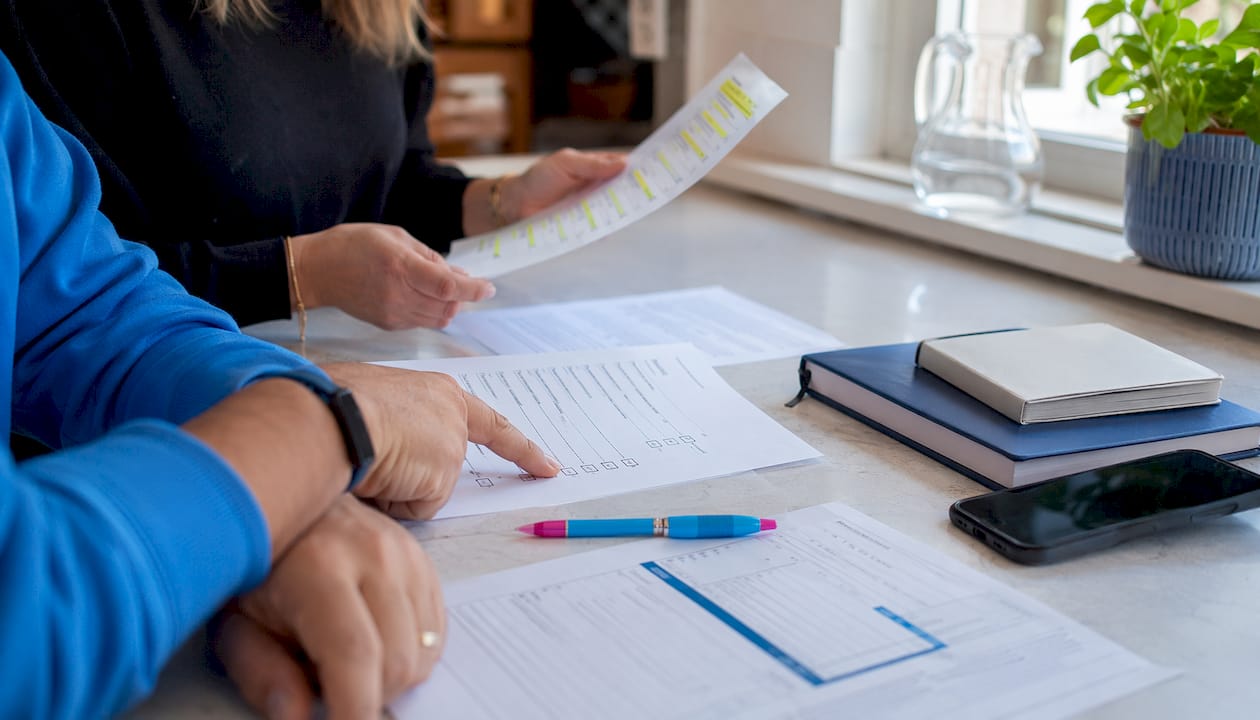
How to verify the buyer’s identity and contact information
The rule is simple: the name on the buyer’s government-issued photo ID must match the name that will appear on the signed title. No exceptions. If the buyer is purchasing on behalf of someone else, you need a notarized power of attorney before you proceed.
Before the meeting, ask the buyer to text or email a photo of their driver’s license and confirm the name, address, and expiration date. Cross-check the phone number with a reverse-lookup tool and verify the email responds to a direct reply. A buyer who refuses to share ID photos before meeting is a red flag worth taking seriously.
At the meeting, physically inspect the title for whiteout, altered fonts, or lien notations. If a lender’s name still appears on the title, the lender holds it and the seller cannot legally transfer ownership until the lien is released. The Texas Department of Insurance specifically warns that mismatched IDs and title names are among the most reliable early signals of fraud.
Pro Tip: Use a short script: “Before we meet, I’ll need a photo of your driver’s license and the front of your payment. I do this with every buyer.” A legitimate buyer won’t hesitate.
Payment methods and how to verify funds before releasing the vehicle
| Payment Method | Speed | Reversibility | Fraud Risk | Verification Step |
|---|---|---|---|---|
| Cash | Immediate | None | Counterfeit bills | Count at bank; use counterfeit pen |
| In-branch bank transfer | Same day | Low | Low | Teller confirms transfer |
| Cashier’s check | Same day | Moderate | Counterfeit checks | Verify at issuing bank in person |
| Reputable escrow service | 1–3 days | Low | Fake escrow sites | Confirm provider independently |
| Zelle / Venmo / P2P | Instant | None | High (irreversible) | Avoid for large transactions |
For any amount over a few hundred dollars, verify cashier’s checks at the issuing bank before you sign anything. Walk in with the buyer, hand the check to a teller, and ask them to confirm it is genuine and the funds are available. An in-branch wire transfer confirmed by a teller is equally solid.
Avoid Zelle, Venmo, and similar apps for vehicle transactions. These payments are instant and irreversible, and they give you no recourse if the buyer disputes the transaction or the account is fraudulent. If there is a lien on your vehicle, pay the lender directly at their branch and get a written lien release before the sale closes.
Pro Tip: If a buyer insists on wiring funds to an account you provide remotely, or pushes for payment before inspection, stop the sale. Legitimate buyers do not need to skip the bank.
Safe test drives and meeting logistics
Meeting safety is not optional. Follow these rules every time:
- Meet during daylight hours at a bank lobby, police department safe-exchange location, or a busy public parking lot.
- Never meet at a remote address, an empty lot, or after dark.
- Before the test drive, hold the buyer’s driver’s license and take a photo of it.
- Require proof of insurance if the buyer will drive; your insurance may not cover an uninsured driver in an accident.
- Ride along on the test drive or set a specific short route and time limit.
- Keep your personal valuables, spare keys, and registration documents out of the car during the drive.
- Bring a friend or family member as a witness whenever possible.
Meeting at a bank lobby also makes payment verification faster. The buyer and seller can confirm funds on the spot, reducing the risk of counterfeit checks or disputed transfers.
Title transfer and paperwork: what you must complete and what to avoid
A signed, unaltered title is the legal conveyance of ownership in every U.S. state. A bill of sale alone does not transfer ownership. If you hand over the car without a properly signed title, you may remain legally responsible for the vehicle.
| Document | Required? | Notes |
|---|---|---|
| Signed certificate of title | Yes | Both parties sign; no whiteout or alterations |
| Odometer disclosure | Yes (most states) | Required for vehicles under 10 years old |
| Bill of sale | Recommended | Includes price, date, VIN, buyer/seller info |
| Lien release | If applicable | Must be obtained from lender before transfer |
| Release of liability / notice of sale | Yes | Submit to DMV immediately after sale |
The Virginia DMV notes that private-party buyers may face an uninsured motor vehicle fee if they don’t purchase liability insurance during registration. State rules vary, so check your own DMV’s seller page for exact deadlines and fees.
Do not: accept a promise to mail the title later, let the buyer drive away with an unsigned title, or sign the title before funds are verified.
Pro Tip: Review your state’s legal document checklist before the meeting so you arrive with every form already filled in correctly.
Vehicle history reports and independent inspection: when they happen matters
Run the NMVTIS consumer check at vehiclehistory.gov as soon as you have the VIN. This federal database surfaces title brands, salvage designations, and odometer inconsistencies. Follow it with a Carfax or AutoCheck report for accident and service detail that commercial providers add beyond the government record.
Check VIN locations physically at the meeting: dashboard, driver’s door jamb, and engine block must all match the title. Any discrepancy signals theft, cloning, or a swapped VIN and is an immediate reason to stop the transaction.
Schedule the pre-purchase inspection (PPI) at an independent shop you select, not one the buyer recommends. The FTC advises that an independent inspection is the single most effective protection against hidden mechanical problems. A typical PPI costs a moderate fee and frequently uncovers issues worth thousands in repairs. For higher-value vehicles, a pre-inspection for luxury cars covers additional systems that standard inspections may skip.
Pro Tip: Order the history report before you drive to meet the buyer. If the report shows a salvage title or odometer rollback, you save the trip entirely.
| History Check | What It Reveals | Where to Get It |
|---|---|---|
| NMVTIS (vehiclehistory.gov) | Title brands, salvage, odometer | vehiclehistory.gov |
| Carfax / AutoCheck | Accidents, service records | Carfax.com / AutoCheck.com |
| NICB VINCheck | Theft, total loss | nicb.org/vincheck |
| Independent PPI | Mechanical condition | Independent certified shop |
Common red flags and scams that should make you walk away
Document and behavior red flags:
- Buyer refuses to show a government-issued ID or resists an in-person meeting
- Name on the title does not match the seller’s ID
- Title shows whiteout, altered fonts, or inconsistent ink
- VIN on the dashboard does not match the door jamb or engine block
- Seller hasn’t put the car in their own name (title jumping)
Active scam patterns:
- Overpayment: buyer sends more than the agreed price and asks you to refund the difference. The original payment later bounces.
- Counterfeit cashier’s check: looks legitimate but is worthless. Always verify at the issuing bank.
- VIN cloning: a stolen vehicle is given the VIN of a legitimate car. NMVTIS and a physical VIN check catch this.
- Fake escrow sites: fraudsters direct you to a site they control. The Texas Department of Insurance warns this is one of the most common classifieds scams.
Pro Tip: Keep a record of every communication. If something feels off, it usually is. Trust that instinct and walk away before any money or paperwork changes hands. Review car sale fraud prevention steps for a full list of seller-side protections.
After the sale: DMV, insurance, and record-keeping
Complete these steps the same day you hand over the keys.
Immediate actions:
- Submit your release-of-liability or notice of sale to your state DMV. Colorado, for example, gives sellers five days to report the transfer online via myDMV.
- Cancel your insurance or transfer it to your next vehicle. Do not leave the policy active on a car you no longer own.
- Remove your license plates if your state requires it (most do).
- If there was a lien payoff, get the written payoff receipt from the lender and keep it with your sale records.
Record-keeping checklist:
- Signed title (your copy)
- Bill of sale with buyer’s name, VIN, price, and date
- Photo of buyer’s government-issued ID
- Lien release document (if applicable)
- Lien payoff receipt (if applicable)
- DMV release-of-liability confirmation
Keep these records for at least as long as your state recommends, typically three to five years. If a parking ticket, toll violation, or accident report arrives after the sale, your documentation proves you were no longer the owner.
How to verify the buyer’s financial capacity or loan pre-approval
When a buyer says they’re financing the purchase, ask for a pre-approval letter from their lender before you take the car off the market. A pre-approval letter from a bank or credit union names the buyer, states the approved amount, and includes an expiration date. It is not a guarantee of funding, but it confirms the lender has reviewed the buyer’s credit and income.
For private-party sales, the safest approach is still verified funds at closing. If the buyer’s lender is paying you directly, confirm the wire or check with your own bank before releasing the title. Never release the vehicle based on a verbal promise that “the loan is approved.”
How to handle and verify escrow services safely
Escrow is a legitimate option for high-value transactions, but only when both parties independently verify the provider. Escrow.com is one of the few widely recognized, licensed escrow services for vehicle transactions in the U.S. Before agreeing to use any escrow service, look up the company independently through your state’s financial regulator, not through a link the buyer sends you.
The scam version works like this: the buyer suggests an escrow site, sends you a link, and the site looks professional. You deposit the title or agree to ship the car, and the funds never arrive. The Texas Department of Insurance documents this pattern specifically in vehicle classifieds.
If a buyer insists on an escrow service you have never heard of and cannot verify through a state regulator or the Better Business Bureau, decline and offer an in-branch bank transfer instead.
How to document and record buyer communications for legal protection
Every agreement made verbally should be confirmed in writing before the sale closes. Use email or text so you have a timestamped record. If a buyer promises to handle a specific repair, waive a fee, or accept the car in a particular condition, get it in writing before you sign the title.
Keep a communication log that includes the date, method (call, text, email), and a one-line summary of what was discussed. If a dispute arises after the sale, this log is your first line of defense. A car sale contract that both parties sign at closing captures the final agreed terms and supersedes any earlier verbal discussion.
Out-of-state and international buyers: extra verification steps
Out-of-state buyers are common and legitimate, but they require additional steps. Ask for a copy of their out-of-state driver’s license and confirm it is current. The title transfer process follows your state’s rules, not the buyer’s home state, so check your DMV’s guidance on out-of-state sales.
For international buyers, the complexity increases significantly. Payment verification is harder, shipping logistics add risk, and title transfer to a foreign address can create registration problems for the buyer. If you proceed, use only a licensed, verifiable escrow service and confirm with your state DMV that the title can be transferred to a foreign address. When in doubt, a cash-in-hand, in-person transaction at a bank is the only truly safe option.
Taxes and fees the seller may owe after the sale
In most U.S. states, private-party sellers do not pay sales tax on the transaction. Sales tax is typically the buyer’s responsibility, paid when they register the vehicle. However, sellers may owe capital gains tax if the car sold for more than its adjusted cost basis, though personal-use vehicles sold at a loss (the most common scenario) generally do not trigger a taxable gain. Confirm your situation with a tax professional.
Fees you may encounter as a seller include DMV title transfer fees, lien release recording fees if a lender is involved, and any state-specific seller notification fees. Virginia, for example, has specific registration and insurance requirements that affect both buyer and seller obligations at the point of sale.
This article is general information, not tax or legal advice. Confirm current rules with your state DMV and a qualified professional for your specific situation.
How to handle trade-in offers or vehicle exchanges securely
A trade-in from a private buyer, where they offer their car as partial or full payment, carries the same risks as a cash sale plus additional title complexity. Before agreeing to any exchange, run an NMVTIS report and a commercial history check on the trade-in vehicle. Verify the title is clean, the name matches the person offering it, and there are no outstanding liens.
Get an independent appraisal of the trade-in vehicle before you agree to a value. Do not rely on the buyer’s estimate. Both title transfers must happen simultaneously and in person, with both parties signing their respective titles at the same time. If either title has a problem, stop the exchange until it is resolved.
Key Takeaways
A safe private-party sale requires identity verification, a clean title, an independent inspection, and confirmed funds before you sign anything over.
| Point | Details |
|---|---|
| ID must match the title | Buyer’s government-issued photo ID must match the name on the signed title exactly. |
| Run NMVTIS plus a commercial report | Check vehiclehistory.gov and Carfax or AutoCheck to surface salvage, odometer issues, and liens. |
| Inspection before payment | A typical pre-purchase inspection fee protects both parties and preserves your negotiating leverage. |
| Verify funds at the bank | Confirm cashier’s checks or bank transfers with a teller before signing the title. |
| Sellkamocars as a fast alternative | Sellkamocars provides same-day cash offers and handled paperwork for sellers who want to skip private-party risk entirely. |
What most sellers get wrong about the verification process
The checklist in this guide is not complicated, but most sellers skip at least one step, usually payment verification or the independent inspection, because they feel awkward asking or they trust a buyer who seems friendly. That instinct costs people real money.
The part that gets overlooked most often is the sequence. Sellers frequently let a buyer test drive the car, fall in love with it, and then feel pressured to close quickly. That pressure is exactly when mistakes happen: accepting a cashier’s check without verifying it, signing the title before the funds clear, or skipping the inspection because “the buyer seems honest.” Honest buyers don’t object to verification. They expect it.
The other underrated protection is documentation of every communication. A text thread or email chain is not just a record; it is leverage. If a buyer later claims the car was misrepresented, your written record of every agreed term is the difference between a clean dispute resolution and a legal headache.
Sellkamocars: a faster, lower-risk alternative to private sale
If the checklist above feels like more than you want to manage, that is a legitimate reason to consider a different route. Sellkamocars offers U.S. sellers a cash offer based on current market data, handles the paperwork, and completes pickup and payment within 24 hours. No strangers at your door, no cashier’s check verification at a bank, no title transfer uncertainty.
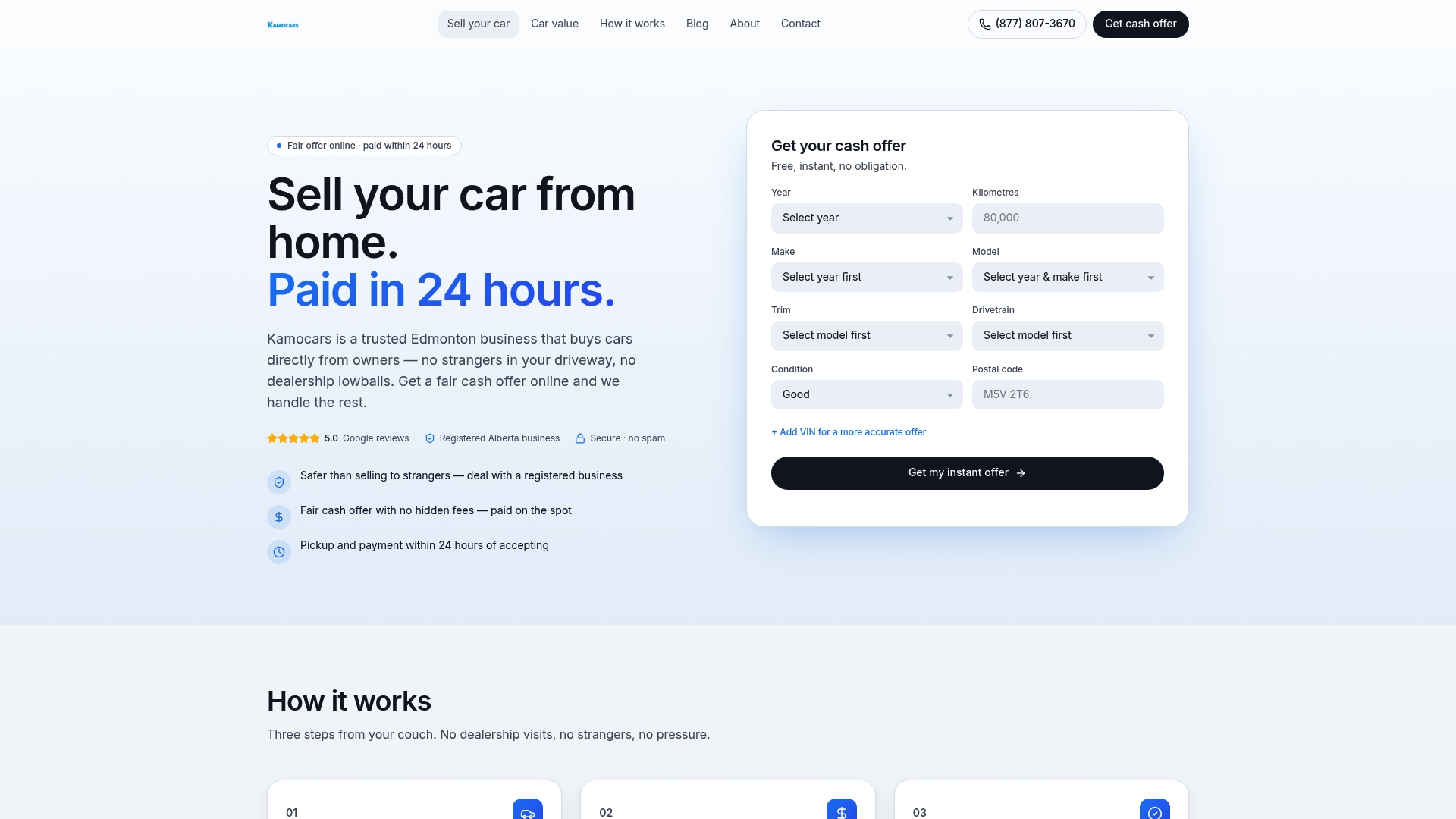
Sellkamocars has completed over 500 transactions with a strong customer rating, and its registered business status means you are dealing with a verified buyer, not an anonymous private party. For sellers who have read this guide and decided the private-sale process carries more risk than it’s worth, Sellkamocars is the direct alternative.
Get a cash offer for your car in minutes, or review how the process works before you decide.
Useful sources and official links for verification and state rules
Government and regulatory resources:
- NMVTIS consumer portal at vehiclehistory.gov: the federal starting point for title, salvage, and odometer history
- FTC consumer guidance on used-car purchases, inspections, and payment safety
- Texas Department of Insurance: VIN checks, scam patterns, and escrow warnings
- Virginia DMV used-car tips: private-sale requirements, registration, and uninsured vehicle fees
- Colorado DMV buying and selling guide: title signing, odometer disclosure, and release-of-liability deadlines
Commercial history and inspection resources:
- Carfax (carfax.com): accident and service history reports
- AutoCheck (autocheck.com): alternative commercial history reports
- NICB VINCheck (nicb.org/vincheck): free theft and total-loss check
- Independent certified repair shops: for pre-purchase mechanical inspections; find ASE-certified shops through ase.com
Recommended
Get a real cash offer in 2 minutes
Trusted business. Fair price. Paid on the spot when we pick up your car.