
2026 SUV Towing Capacity List: Top Picks Ranked
Discover the 2026 SUV towing capacity list ranking top models like the GMC Hummer EV and Jeep Grand Wagoneer for your towing needs.
2026 SUV Towing Capacity List: Top Picks Ranked
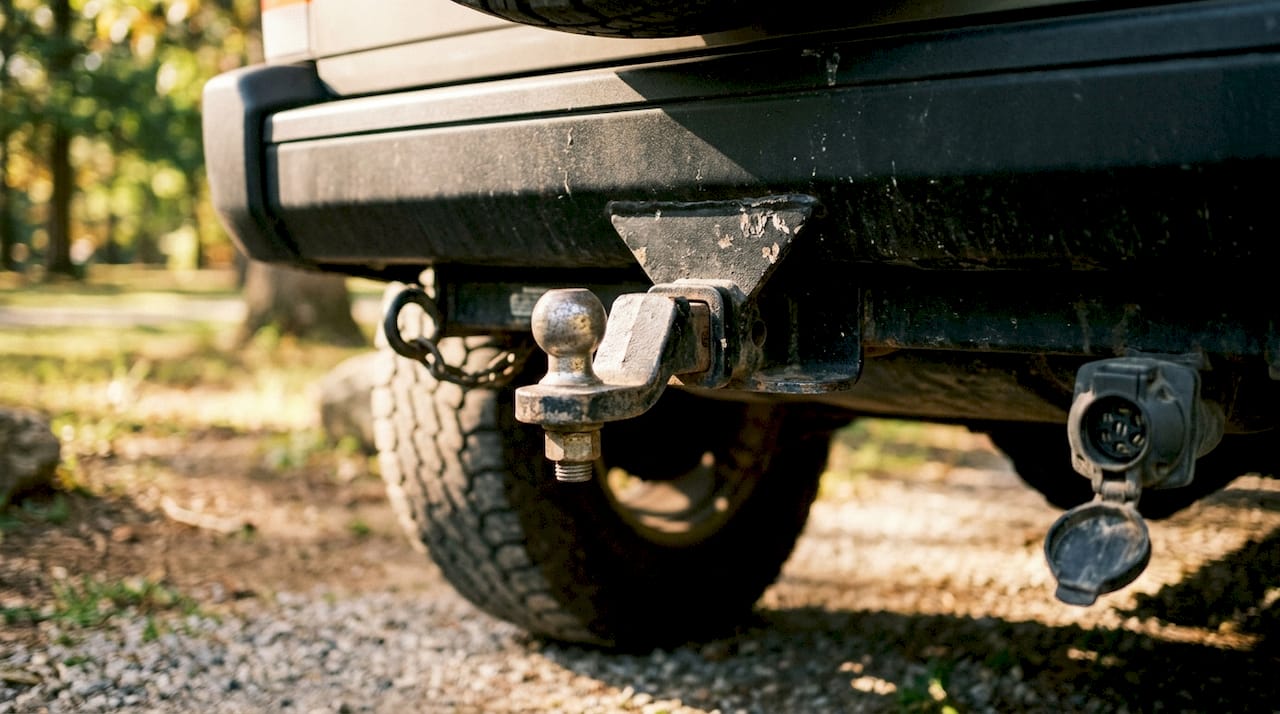
The GMC Hummer EV SUV leads the 2026 SUV towing capacity list at 10,300 lbs, followed by the Jeep Grand Wagoneer (10,000 lbs), Jeep Wagoneer (up to 10,000 lbs), Ford Expedition (up to ~9,600 lbs), and Toyota Sequoia (up to ~9,520 lbs). Every one of those numbers requires a specific trim, engine, and in most cases a factory tow package. If you skip that step, you may be buying a vehicle that tows 2,000 to 3,000 lbs less than the headline figure. Full-size, body-on-frame or truck-based SUVs dominate the top of every chart. For heavy trailers (7,000 lbs+), stick to that class. For occasional towing under 5,000 lbs, midsize crossovers like the Kia Telluride, Honda Pilot, or Chevrolet Traverse are more than capable.
| Model | Max Advertised Tow (lbs) | Factory Tow Package Required? |
|---|---|---|
| 2026 GMC Hummer EV SUV | 10,300 | Yes (2X trim) |
| 2026 Jeep Grand Wagoneer | 10,000 | Yes (Heavy-Duty Trailer Tow) |
| 2025 Jeep Wagoneer | ~10,000 | Yes (select config) |
| 2026 Ford Expedition | ~9,600 | Yes (4WD + Max Trailer Tow) |
| 2026 Toyota Sequoia | ~9,520 | Yes (select RWD trim) |
Key Takeaways
Full-size, body-on-frame SUVs dominate the top of every towing capacity chart, and the factory tow package is the single most important spec to confirm before purchase.
| Point | Details |
|---|---|
| Top-rated SUVs by tow capacity | GMC Hummer EV (10,300 lbs), Jeep Grand Wagoneer (10,000 lbs), Ford Expedition (~9,600 lbs) lead the 2026 field. |
| Factory tow package is mandatory | Most top ratings require a specific trim and factory package; base trims often tow 1,000–3,000 lbs less. |
| Apply the 80% rule | Use no more than 80% of max rated capacity for sustained towing to maintain margin for passengers, cargo, and grades. |
| EV towing trades range for capacity | Electric SUVs can match gas tow ratings but lose 40–60% of range under a full tow load; plan charging stops. |
| Sellkamocars | If upgrading your tow rig, Sellkamocars buys your current SUV or truck in Alberta with a cash offer and free pickup within 24 hours. |
Table of Contents
- What does the 2026 SUV towing capacity list look like, ranked?
- How do the top SUVs compare side by side?
- How do manufacturers calculate towing capacity?
- How do you choose the right tow-capable SUV for your needs?
- What do EV owners need to know about towing?
- How do passengers and cargo reduce your real towing capacity?
- What most buyers get wrong about tow ratings
- Ready to sell your current tow vehicle?
- Where to verify SUV towing specs
- Sources
What does the 2026 SUV towing capacity list look like, ranked?
Body-on-frame and truck-based SUVs own the top 12 spots. Car and Driver’s towing rankings confirm that maximum ratings are frequently trim-specific, and factory tow packages typically raise the max rating by 1,000–3,000 lbs compared with base trims. Here is how the field breaks down.
1. 2026 GMC Hummer EV SUV — 10,300 lbs
The top BEV towing figure in the segment. That 10,300-lb rating is locked to the 2X trim with the factory tow prep. Base Edition 1 and lower trims do not reach it.
- Package required: 2X trim with factory tow prep
- Real-world note: Range drops significantly under load (see EV section below); plan charging stops before any long haul.
2. 2026 Jeep Grand Wagoneer / Grand Wagoneer L — 10,000 lbs / 9,860 lbs
The Grand Wagoneer leads non-electric full-size SUVs at 10,000 lbs when equipped with the Heavy-Duty Trailer Tow Package. The longer Grand Wagoneer L comes in at 9,860 lbs with the same package.
- Package required: Heavy-Duty Trailer Tow Package on both variants
- Real-world note: Without the Heavy-Duty package, capacity drops materially. Confirm the window sticker before signing.
3. 2025 Jeep Wagoneer — ~10,000 lbs
The standard Wagoneer hits near 10,000 lbs on select engine and tow-package combinations, making it one of the highest non-electric ratings in the segment.
- Package required: Specific engine + tow package combination
- Real-world note: Not every Wagoneer trim reaches this figure. Verify the exact configuration with the dealer spec sheet.
4. 2026 Ford Expedition / Expedition Max — ~9,600 lbs
The Expedition reaches approximately 9,600 lbs in 4WD configurations with the Max Trailer Tow Package. The longer Expedition Max shares the same powertrain but adds third-row and cargo room. Certain wheel upgrades can reduce the rating.
- Package required: 4WD + Max Trailer Tow Package
- Real-world note: Larger wheel options (22-inch) can cut towing capacity. Stick with the recommended wheel spec if towing is the priority.
5. 2026 Toyota Sequoia — ~9,520 lbs
The Sequoia’s hybrid V6 model offers strong towing capability on certain rear-wheel-drive trims, with four-wheel-drive and heavier trims rated lower.
- Package required: RWD + Tow Prep Package on select trims
- Real-world note: The hybrid system adds weight; 4WD variants typically rate around 9,000 lbs.
6. 2026 Lincoln Navigator / Navigator L — ~8,700 lbs
The Navigator tows up to approximately 8,700 lbs. Larger wheel packages reduce that figure, so spec the vehicle with towing in mind first, luxury second.
- Package required: Factory Tow Package; standard on most trims
- Real-world note: Navigator L (extended wheelbase) shares the same rating on comparable trims.
7. 2026 Dodge Durango / Durango SRT Hellcat — ~8,700 lbs
The Durango is the only unibody SUV in this tier. V8 configurations with the Trailer Tow Group IV package reach ~8,700 lbs. The Durango SRT Hellcat, with its supercharged 6.2L V8, hits the same ceiling.
- Package required: Trailer Tow Group IV (V8 trims)
- Real-world note: Unibody construction means a different towing feel than body-on-frame rivals; a weight-distributing hitch is strongly recommended above 5,000 lbs.
8. 2026 Nissan Armada — ~8,500 lbs
The Armada provides capable towing performance across most trims with standard towing equipment.
- Package required: Tow package included on most trims
- Real-world note: One of the more accessible full-size options for buyers who want tow hardware without extensive option-box checking.
9. 2026 Infiniti QX80 — ~8,500 lbs
The QX80 shares its platform with the Armada and provides similar towing capabilities along with a luxury interior. The premium price buys refinement, not extra towing capacity.
- Package required: Tow package; confirm by trim
- Real-world note: Payload capacity is similar to the Armada, so the same real-world math applies.
10. 2026 Land Rover Range Rover — ~8,200 lbs
Tow ratings depend on engine choice, with top V8 variants achieving the highest capacity within the Range Rover lineup. The Range Rover is the only vehicle in this tier where engine selection alone can swing the rating by over 1,000 lbs.
- Package required: Tow Assist package; varies by engine
- Real-world note: Confirm the specific engine and trim combination before purchase.
11. 2026 Lexus GX (GX 550) — ~6,000 lbs
The GX 550 provides a robust towing capacity befitting its body-on-frame construction and turbocharged V6. It sits below the full-size heavyweights but above most midsize crossovers.
- Package required: Tow prep package on select trims
- Real-world note: A strong choice if you want body-on-frame durability with a luxury interior and don’t need to exceed 6,000 lbs.
12. Midsize and crossover SUVs: 3,500–5,000 lbs
MotorTrend’s list of SUVs that tow at least 5,000 lbs includes the Kia Telluride (5,000 lbs), Honda Pilot (5,000 lbs), Jeep Grand Cherokee (up to 6,200 lbs), Ford Explorer (up to 5,600 lbs), Lincoln Aviator (up to 6,000 lbs), Hyundai Palisade (5,000 lbs), Chevrolet Traverse (5,000 lbs), and Buick Enclave (4,500 lbs). The Honda Passport, Subaru Ascent, and Subaru Outback cluster around 3,500–5,000 lbs. The Tesla Model X reaches approximately 5,000 lbs. The Tesla Model Y and Subaru Outback typically cap near 3,500 lbs. CarBuzz’s midsize SUV towing chart is a useful reference for confirming exact figures across this band.
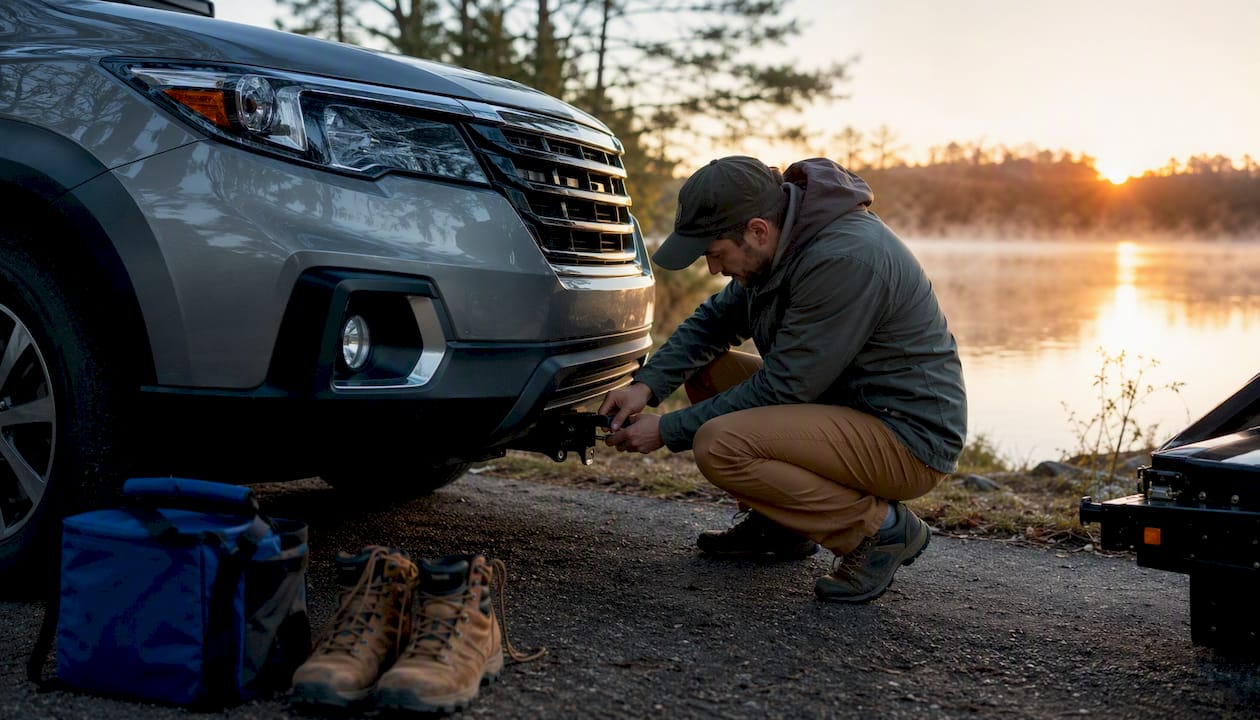
Pro Tip: Before you finalize any purchase, check the yellow door-jamb sticker on the specific vehicle. That sticker lists the exact GVWR and payload for that VIN, which is the only reliable way to confirm real-world capacity on the unit you’re buying.
How do the top SUVs compare side by side?
The table below covers the top-tier models where towing is the primary buying criterion. Manufacturer specs and SAE J2807 cross-references back these figures; always verify in the owner’s manual or window sticker.
Manufacturer specs; verify in the owner’s manual or window sticker.
- Rows where the top number requires an optional package are flagged above as “Yes” in the tow package column. Never assume the base trim delivers the advertised max.
- The Dodge Durango is the only unibody platform in the top tier; all others are body-on-frame or truck-based.
- MSRP notes reflect base pricing for the model line, not the specific trim required to reach the max tow figure.
How do manufacturers calculate towing capacity?
Understanding the math behind a tow rating turns a headline number into something you can actually use. Here are the key terms:
- GCWR (Gross Combined Weight Rating): The maximum total weight of the vehicle, passengers, cargo, and trailer combined. This is the hard ceiling.
- Curb weight: The vehicle’s weight with a full tank of fuel and no passengers or cargo.
- Payload: The maximum weight of passengers and cargo the vehicle can carry inside the cab and bed.
- Hitch rating: The maximum tongue weight and trailer weight the hitch receiver is rated for (Class I through Class V, ranging from 2,000 lbs to 20,000+ lbs).
- Tongue weight: The downward force the trailer’s coupler exerts on the hitch ball. Typically 10–15% of total trailer weight.
The formula is straightforward:
GCWR − curb weight − payload used = maximum trailer weight
If a Sequoia has a GCWR of 19,000 lbs, a curb weight of 6,000 lbs, and you load 1,000 lbs of passengers and gear, your theoretical trailer ceiling is 12,000 lbs. But the vehicle’s advertised max tow is ~9,520 lbs, so that lower figure is the binding limit. Advertised max towing is always a best-case number, tested under controlled conditions with minimal payload.
KBB’s towing capacity guide makes clear that every passenger and pound of cargo you add reduces the trailer weight you can safely pull. A family of four with luggage can easily consume 1,000–1,200 lbs of payload before the trailer is even hitched.
The SAE J2807 standard standardizes how manufacturers test and report towing capacity, which means 2026 model ratings are more comparable across brands than they were a decade ago. Still, trim-level differences remain common. The owner’s manual and door-jamb sticker on the specific vehicle you buy are the only authoritative sources for your exact unit.
How do you choose the right tow-capable SUV for your needs?
Start with your trailer, not the vehicle. Here is the checklist that separates a smart purchase from an expensive mistake.
Step 1: Know your fully loaded trailer weight. Weigh the trailer at a truck stop scale with everything you’d normally carry. Guessing is how people end up overloaded on a mountain grade.
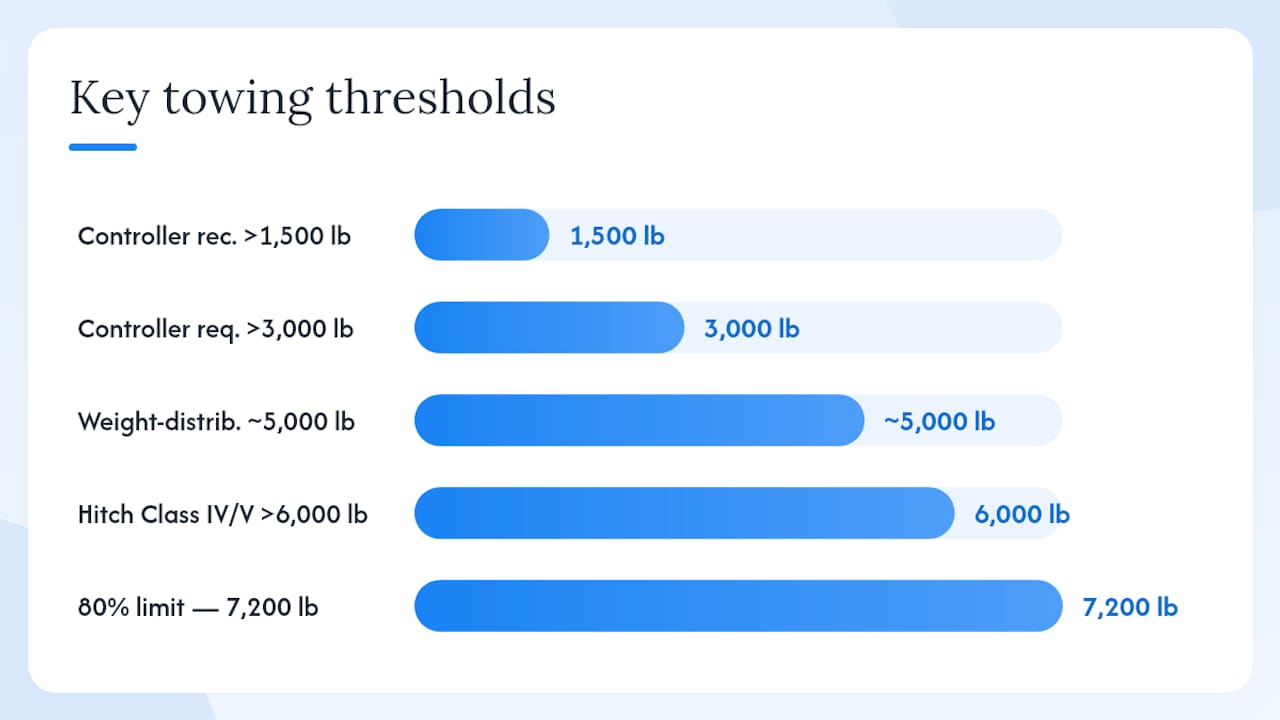
Step 2: Apply the 80% rule. Experienced towers recommend using no more than 80% of the vehicle’s max rated towing capacity for sustained trips. That margin covers hills, emergency braking, and the payload you’ll inevitably add. A vehicle rated at 9,000 lbs should be treated as a 7,200-lb practical limit.
Step 3: Check GCWR and payload. Confirm both figures on the door-jamb sticker of the specific vehicle. Add your expected passenger and cargo weight, then subtract from GCWR to find your real trailer ceiling.
Step 4: Confirm the factory tow package. Ask the dealer: “Which exact trim, axle ratio, and tow package delivers the advertised figure?” The answer should be specific. If the salesperson is vague, ask for the window sticker and the RPO (Regular Production Option) codes.
Step 5: Check cooling, brakes, and hitch hardware.
- Trailer brake controller: required for trailers over 3,000 lbs in most states and strongly recommended above 1,500 lbs.
- Transmission/engine oil cooler: often part of the tow package; confirm it’s included.
- Hitch class: Class IV or V for anything above 6,000 lbs.
Red flags to watch for:
- The top tow rating is only available on a trim you can’t afford or that isn’t in dealer stock.
- Wheel upgrades (larger diameter) reduce the tow rating on the window sticker.
- The trailer brake controller is missing and the dealer treats it as optional.
- The cooling package is absent and the dealer says “you probably won’t need it.”
- The advertised figure assumes equipment you haven’t confirmed is on the vehicle.
What do EV owners need to know about towing?
Electric SUVs like the 2026 GMC Hummer EV SUV can match or beat gas rivals on raw tow ratings. The tradeoffs show up differently.
- Range loss is significant. Towing a heavy trailer at highway speeds can cut an EV’s range by 40–60% depending on trailer weight, speed, and terrain. A vehicle with 300 miles of highway range may deliver 130–180 miles under a full tow load.
- Battery thermal management. Sustained towing generates heat. Most EV tow systems include thermal derating, which can reduce available power on long grades if the battery temperature rises.
- Tow rating is trim-specific. The Hummer EV’s 10,300-lb rating applies to the 2X trim. Other configurations rate lower.
- Regenerative braking in tow mode. Most EVs offer a dedicated tow mode that adjusts regen braking to prevent trailer push. Use it. Failing to activate tow mode can cause unpredictable braking behavior with a heavy trailer.
- Charging infrastructure matters. DC fast chargers (CCS or NACS) are the only practical option mid-trip. Plan stops at stations with 150 kW+ output to keep wait times reasonable.
Pro Tip: Before any long EV tow trip, do a short 20–30 mile loaded test run to measure your actual range-under-tow on that specific route’s terrain and speed. Manufacturer range estimates under tow are averages; your real number will vary.
How do passengers and cargo reduce your real towing capacity?
The advertised max tow number assumes a nearly empty vehicle. Here is what the math looks like in practice.
| Setup | Payload Used | Usable Trailer Weight |
|---|---|---|
| Driver only, light gear (150 lbs) | 150 lbs | Max rated − 150 lbs |
| Driver + 3 passengers + luggage (~900 lbs) | 900 lbs | Max rated − 900 lbs |
| Driver + 4 passengers + gear + full fuel (~1,200 lbs) | 1,200 lbs | Max rated − 1,200 lbs |
Worked example using a 2026 Ford Expedition (max tow ~9,600 lbs, payload ~1,900 lbs):
- Full tank + driver + 3 passengers + luggage = approximately 900 lbs of payload used
- Remaining payload: 1,900 − 900 = 1,000 lbs
- Usable trailer weight before hitting GCWR: 9,600 − 900 = 8,700 lbs
- Apply the 80% rule: 9,600 × 0.80 = 7,680 lbs practical limit
That is the number you should shop against, not 9,600. KBB’s guidance reinforces this: owners consistently underestimate how quickly passengers and cargo consume the gap between curb weight and GCWR.
Keeping your loaded trailer at or below 80% of the vehicle’s max rated capacity gives you margin for grades, wind resistance, and emergency stops. TrailerPlace’s towing guide suggests keeping loaded trailer weight under ~7,000 lbs for comfortable towing behind most full-size SUVs, which aligns with the 80% rule for vehicles in the 8,500–9,000-lb range.
What most buyers get wrong about tow ratings
Most buyers anchor on the headline number and skip the trim verification. That is the single most common and costly mistake in this category.
A vehicle advertised at 10,000 lbs may only reach that figure on one specific trim with one specific axle ratio and one specific factory package. The base trim of the same model might tow 7,500 lbs. Both are sold under the same nameplate. The window sticker is the only document that tells you which vehicle you’re actually buying.
There is also a tendency to treat towing capacity as a static number. It isn’t. Add four adults, a full tank, and a roof box, and you’ve consumed 800–1,200 lbs of the gap between curb weight and GCWR before the trailer is attached. The 80% rule exists precisely because real-world towing happens with real-world loads, not the stripped test conditions manufacturers use.
One more thing buyers miss: hitch hardware. A Class V receiver on the vehicle means nothing if the hitch ball mount is undersized or the trailer lacks electric brakes. The vehicle rating and the hitch hardware rating must both cover the trailer weight. Verify both.
Ready to sell your current tow vehicle?
If you’ve worked through this list and decided your current SUV or truck no longer fits your towing needs, Sellkamocars offers a faster exit than a private sale or dealership trade-in. You get a cash offer based on current wholesale market data, free home pickup, and payment within 24 hours, with no haggling and no strangers showing up at your door.
Sellkamocars buys 2018 and newer cars, trucks, and SUVs in running condition across Alberta. Whether you’re moving up to a higher-capacity tow rig or simply ready to move on, the process takes minutes online. Get your cash offer at Sellkamocars and have the vehicle picked up on your schedule.
Where to verify SUV towing specs
Always confirm using the vehicle’s owner’s manual and the door-jamb sticker on the specific unit you intend to buy.
- Cars: Aggregated top-10 list with model-year figures and package notes.
- Car and Driver — Best SUVs for Towing: Ranked list with testing methodology and trim-level caveats.
- Road & Track — SUVs with Best Towing Capacity: Covers Grand Wagoneer family and non-electric full-size leaders.
- TowingCalculator — 2026 SUV Towing Capacity Chart: SAE J2807–cross-referenced chart with trim-level breakdowns.
- TrailerPlace — SUV Trailer Towing Guide: Practical guidance on trailer weight limits, hitch selection, and comfort thresholds.
- MotorTrend — SUVs That Tow at Least 5,000 lbs: Crossover and midsize options for buyers who don’t need full-size capacity.
- CarBuzz — Midsize SUV Towing Capacity Chart: Midsize model ratings useful for the 3,500–6,000-lb towing band.
Sources
- Cars
- Best SUVs for towing | Car and Driver
- These SUVs have the best towing capacity | Road & Track
- SUV trailer towing guide | Trailer Place
- SUVs and crossovers that can tow at least 5,000 pounds | MotorTrend
Recommended
Get a real cash offer in 2 minutes
Trusted business. Fair price. Paid on the spot when we pick up your car.