
2018+ Cars in Alberta: Decide If a Missing Spare Key Cuts Price
Alberta sellers with 2018+ cars: learn how to compare spare-key replacement cost to likely buyer deductions, and when a binding cash offer removes the haggle.
2018+ Cars in Alberta: Decide If a Missing Spare Key Cuts Price

Yes, a spare key or fob usually matters at the margins: it reduces a buyer’s negotiating leverage and can speed up a sale, especially with dealers and fast cash buyers. The fix is simple. Locate your spare before you list the car, or weigh the replacement cost against the deduction a buyer is likely to ask for. If the replacement is cheap relative to that deduction, get it made before you sell.
TL;DR:
- Replacing a missing spare key is often worth it if the replacement cost is significantly lower than the buyer’s likely deduction, especially with dealer or locksmith quotes.
- Dealers typically fold the cost of making a car retail-ready—including keys—into their overall reconditioning estimate rather than itemizing it, often leading to a higher deduction.
- For private sales, providing functional keys and clear documentation can help defend your asking price, but missing keys may still trigger disproportionate deductions.
- Fast cash buyers usually prefer upfront, binding offers based on the provided details, which can eliminate disagreements over missing keys.
- Checking and testing all keys, gathering service records, and referencing documentation before listing or appraisal can prevent unnecessary value loss.
Table of Contents
- Why spare keys matter to buyers and appraisers
- How dealers and appraisers treat a missing key
- Seller checklist before you list or get appraised
- Is replacing a spare key worth the cost?
- Which sale channel handles a missing key best
- What sellers get wrong about small missing items
- Want a fast cash offer instead of negotiating over a key?
- Sources
- FAQ
Why spare keys matter to buyers and appraisers
A missing spare key rarely sinks a deal, but it gives the other side something to point at. CARFAX Canada’s guidance on pricing a used car notes that documentation and extras reduce buyer doubts and make it harder for a buyer to argue the price down over small missing items. Confidence is the currency here: a buyer who feels informed negotiates less.
In person, inspection friction works the other way. A missing item, no matter how small, becomes a bargaining chip the moment it’s noticed, because it signals the car might have other gaps too. Buyers commonly expect to see:
- A second key or fob, ideally both tested and working
- Service records and recent repair receipts
- A set of winter tires, if the car is sold with them implied
- A vehicle history report covering accidents and ownership
Each item on that list does the same job: it closes a question before the buyer has to ask it.
How dealers and appraisers treat a missing key
Dealers and reconditioning teams work from checklists, and a missing key gets flagged early, usually during the walk-around before anyone opens the hood. From there, the gap gets priced into the reconditioning estimate, not treated as a one-line fix.
- The inspector notes the missing key and any functional issues with the one key present
- Recon teams estimate the cost to make the car retail-ready, including the key
- That estimate gets folded into the offer, not itemized separately
- Fast cash-buyer appraisals tend to apply a flatter, more transparent deduction than a full dealer recon process
A missing key often costs more at the dealer than at the key shop. Dealers price in their own shop rates and inventory-turn costs rather than the retail price of a replacement, which is part of why Canadian Black Book’s valuation data stresses that condition and completeness, not just mileage and accident history, drive how much margin a dealer builds into an offer.
Seller checklist before you list or get appraised
Work through this before you post an ad or book an appraisal. It takes an afternoon and it protects your asking price.
- Find every key and fob you own, and test each one on the doors, ignition, and remote functions.
- Pull a CARFAX Canada Vehicle History Report and, in Alberta, a Vehicle Information Report (VIR) through a registry agent.
- Gather service records and receipts for recent repairs or replacements. CARFAX Canada’s guide to buyer questions notes that buyers often ask about exactly this, and showing proof adds perceived value.
- Photograph both keys, your documents, and any extras like winter tires, then reference them in your listing.
- Check what documents you need to sell a car in Alberta so nothing holds up the transfer once you have a buyer.
- If you genuinely have no spare, decide now whether to replace it or disclose it honestly and expect a modest deduction.
Pro Tip: Keep your receipts and the history report together in one folder, physical or digital, and hand it over before the buyer asks. It shortens the conversation and shows you’ve got nothing to hide.
Is replacing a spare key worth the cost?
Run the math before you book a locksmith or dealership appointment. Replacement costs vary by vehicle: a basic key blank costs little, but a programmable fob for a 2018 or newer vehicle often needs dealer or locksmith programming, which adds to the bill. Get a quote from a local locksmith or your dealership’s parts counter before you decide.
- Call two or three sources (dealer parts department, independent locksmith, big-box auto center) for a replacement quote specific to your make and model.
- Estimate the likely deduction a buyer or dealer would apply for a missing key, based on how that channel treats recon costs.
- Compare the two numbers. If the replacement quote is meaningfully lower than the expected deduction, replace it.
- If the gap is small or the quote comes in high (certain European or luxury fobs run well above average), disclosing the gap and negotiating honestly may cost you less than replacing it.
As a rule of thumb, when replacement runs well under the deduction a buyer might ask for, it almost always pays for itself. When it doesn’t, disclosure beats a pointless repair bill.
Which sale channel handles a missing key best
Your sale channel changes how much a missing key actually costs you.
- Private sale: buyers may ask you to replace the key or knock the price down directly. Strong documentation, a history report, and clear photos of what you’re including help you hold your number.
- Dealer trade-in: expect the gap to show up inside a larger recon-driven deduction rather than a line item, since dealers price completeness into their overall offer rather than charging you the retail replacement cost.
- Fast cash buyer: these buyers usually prioritize speed and certainty over haggling. Presenting both keys and your paperwork upfront tends to shorten the process and can avoid a deduction altogether. Kamocars, for example, reviews online offers against the details you provide and aims to keep the number binding rather than renegotiated after pickup.
If your priority is the highest possible number and you have time, a private sale with full documentation usually wins. If your priority is speed and a number you can trust from the start, a cash buyer model tends to remove the key question from the negotiation entirely.
What sellers get wrong about small missing items

The mistake I see most often is sellers treating a missing spare key as a footnote, something to mention if asked. It’s the opposite. A missing key is one of the first things a trained eye looks for, and it often triggers a deduction well out of proportion to what the key actually costs to replace. That gap between perception and actual cost is where sellers lose money for no good reason.
Three habits fix most of it. Find your spare and test it before you do anything else. Document everything, keys included, with photos and receipts in one place. Then pick your sale channel based on what you actually want: top dollar and patience, or speed and certainty. Readers weighing those two goals often find Kamocars’ how it works page useful for seeing what a fast, documented sale actually looks like in practice.
— Omar
Want a fast cash offer instead of negotiating over a key?
If you’d rather skip the back-and-forth over a missing spare, Some services give Alberta sellers a binding cash offer, with no last-minute deductions once you accept.
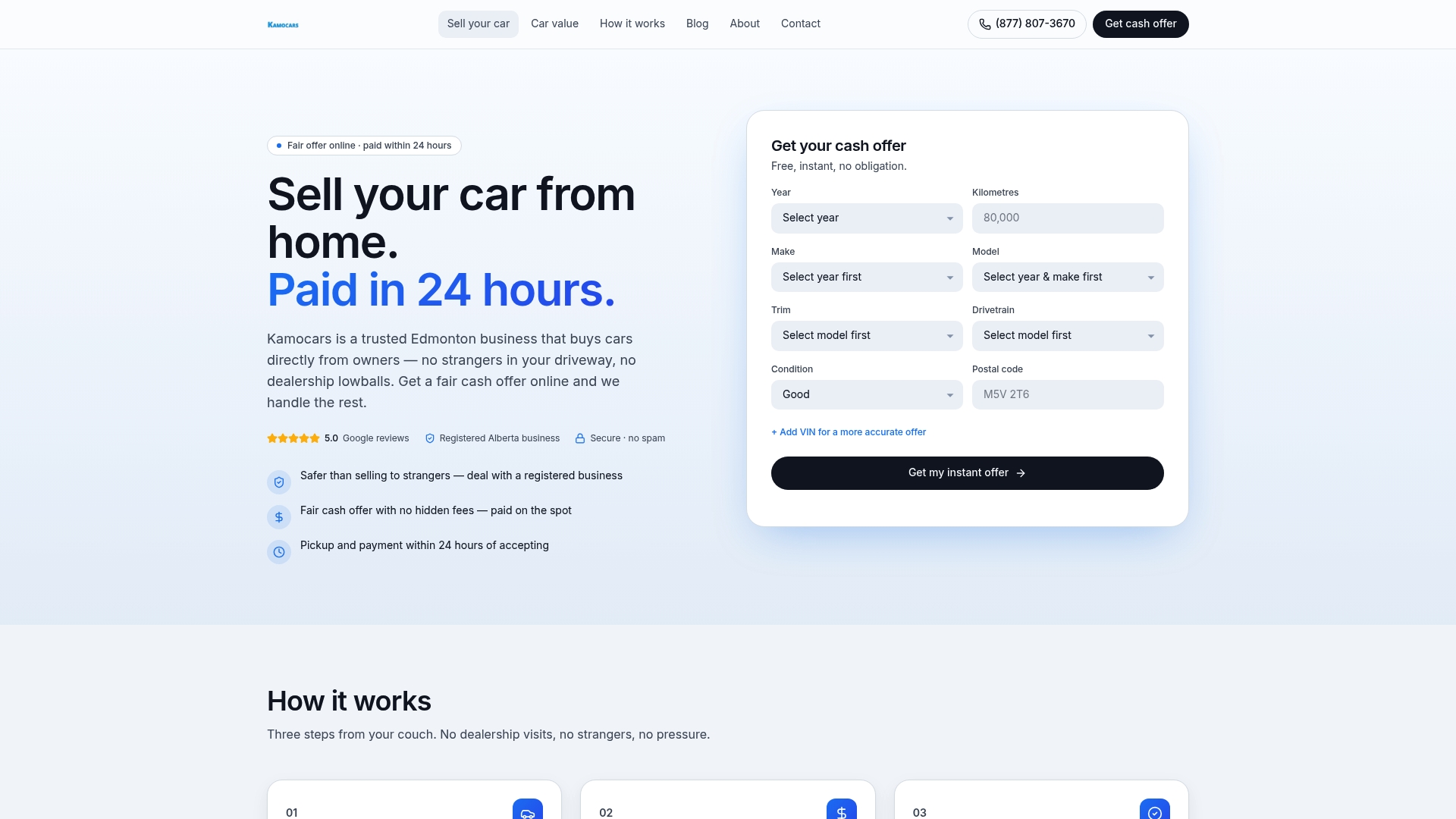
- Free home pickup anywhere in Alberta, no driving to a lot
- Payment handled quickly, including cars with financing or leases still attached
- Provided by a registered business accredited by relevant authorities
If you don’t have a spare key and don’t want it to work against you in a dealer’s recon math, this route sidesteps that conversation entirely. Check your car’s value with our free Alberta car value tool, then head to Sell My Car to get your offer started.
Sources
Before you list or book an appraisal, check these: a CARFAX Canada history report, Canadian Black Book valuation data, AMVIC’s vehicle research guidance for Alberta buyers and sellers, and the Canada Revenue Agency’s GST/HST rules for motor vehicles.
This article is general information, not a substitute for advice from a qualified financial advisor. Consult a qualified financial professional about your own circumstances before acting on anything here.
- Auto Values - What Should I Charge for My Used Car? | CARFAX Canada
- Mastering Modern Auto Valuation: Expert Tips for Data-Driven Depreciation & Leasing Strategies in Canada - Canadian Black Book
FAQ
Does a missing spare key lower a car’s trade-in value?
It can, though usually as part of a broader reconditioning deduction rather than a separate line item. Dealers tend to fold the cost of replacing or programming a key into their overall offer, based on their own recon and shop costs rather than retail replacement pricing, according to CARFAX Canada’s selling guidance.
How much does it cost to replace a spare car key?
Costs vary widely by make, model, and whether the fob needs programming, so get a direct quote from a locksmith or your dealer’s parts department before deciding. There’s no single published figure for this because pricing depends on your specific vehicle’s key system.
Should I replace my spare key before selling privately?
If the replacement quote is clearly lower than the price deduction a buyer would likely ask for, yes. If you don’t have time or the quote comes back high, disclosing the gap honestly and backing up the rest of the car’s condition with a CARFAX Canada report and service records often works just as well.
Does selling to a cash buyer avoid key-related deductions?
Often, yes, because fast cash buyers typically price the offer upfront based on the details you provide rather than running a full dealer-style reconditioning process. Kamocars, for instance, reviews offers against what you disclose and keeps the number binding once accepted, which removes the back-and-forth a missing key can create in a private sale or trade-in.
Do I need a vehicle history report to sell my car in Alberta?
It’s not legally required, but it strongly helps your negotiating position. AMVIC’s guidance on researching a vehicle points to the Vehicle Information Report and lien checks as standard due diligence for Alberta buyers and sellers, alongside a CARFAX Canada report covering accident and ownership history.
Recommended
Get a real cash offer in 2 minutes
Trusted business. Fair price. Paid on the spot when we pick up your car.