
Sell Your Electric Car in Canada: Beat the $5,000 EVAP Ceiling
Sell your electric car in Canada for more: factor the $5,000 EVAP effect, document battery capacity, and choose between private sale, EV marketplaces, or...
Sell Your Electric Car in Canada: Beat the $5,000 EVAP Ceiling
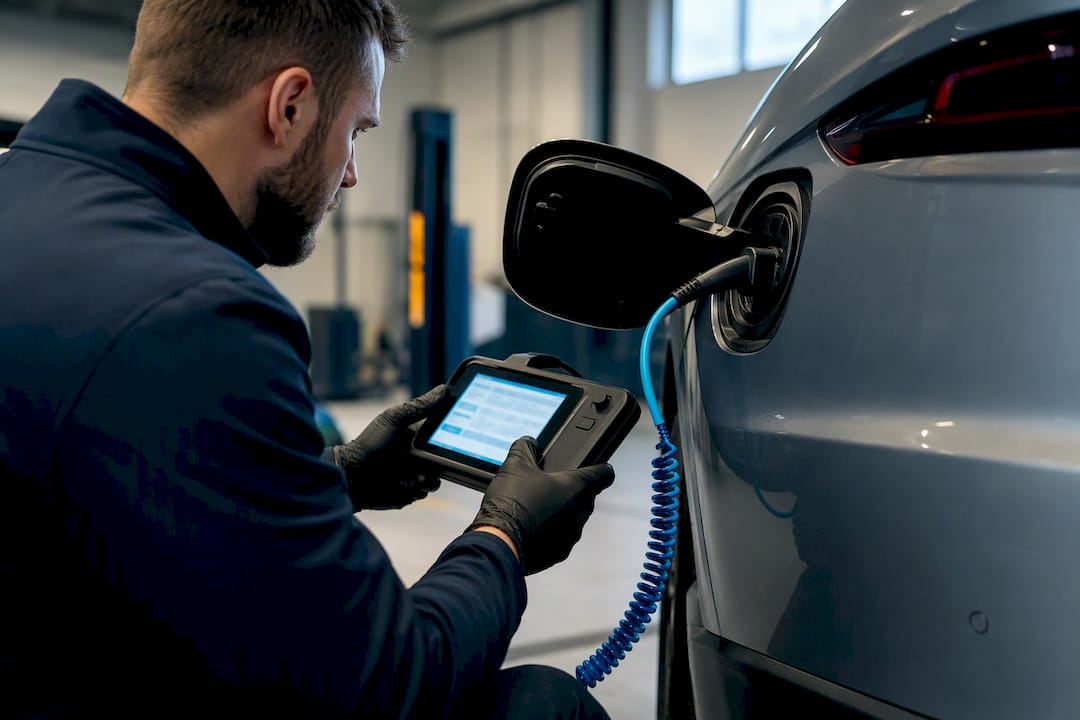
If you want speed, a trusted instant buyer is your fastest route; if you want the highest net price, private sale or an EV specialist marketplace usually wins when you can prove battery health. Before you pick a channel, check three things: battery health, remaining OEM warranty, and how your asking price compares to new EVs after the EVAP rebate.
TL;DR:
- Selling through an instant buyer can provide cash within three days but typically results in a lower price than private sales or marketplace channels.
- Buyers largely determine resale value based on remaining usable battery capacity, with capacities above 90% commanding much higher premiums.
- A transferable OEM warranty remaining for several years can significantly boost your EV’s value, especially in markets with high provincial demand like BC and Quebec.
- Listing your EV in spring or during tax refund season can shorten market time, while pricing close to new EVs after incentives caps potential gains.
- Proper documentation of battery health, remaining warranty, and recent repairs directly increases buyer confidence and final sale price.
Table of Contents
- Best Ways to Sell an Electric Car in Canada
- What Actually Moves EV Resale Value in Canada
- How Do You Prove Battery Health to Buyers?
- How Should You Price and Time Your EV Listing?
- Paperwork You Need to Sell an EV in Canada
- Where Kamocars Fits in the EV Selling Process
- Get an Instant Offer From Kamocars
- Sources
- FAQ
Best Ways to Sell an Electric Car in Canada
Choosing where to sell an EV in Canada comes down to one trade-off: speed versus money. Here’s how the four main channels actually perform.
- Dealer trade-in. Fastest and lowest effort, but dealers price in resale risk on battery degradation, so offers typically land well below private-sale value. Best for owners who want zero hassle and are already buying a replacement vehicle.
- Instant-offer buyer. A trusted instant buyer can turn an appraisal into cash in as little as a day to three days, using current wholesale data rather than a dealer’s trade-in math. This suits sellers with financed or leased EVs, tight timelines, or anyone who would rather skip strangers coming through their driveway.
- Private sale. Takes longer, usually 2 to 8 weeks or more, but tends to deliver the highest net price when you can document battery health and drivetrain condition clearly.
- EV-specialist marketplace. Buyers here already understand EV pricing, so a well-documented listing gets fair scrutiny instead of lowball guesses. Expect moderate speed and solid prices, especially for models with strong secondary demand.
Before contacting any buyer, gather your registration, a recent battery health screenshot, service records, and your lien payoff amount if the vehicle is financed. For private sales, never accept a check from a stranger. Insist on a verified e-transfer with confirmed receipt, or complete the transaction with the buyer at their financial institution before releasing keys. If you’d rather skip the in-person handoff entirely, selling sight unseen to a vetted buyer removes that risk altogether.
What Actually Moves EV Resale Value in Canada
Three factors decide your ceiling and your floor: how healthy the battery tests, how much OEM warranty transfers with the car, and how your price stacks up against a new EV after government incentives shrink the gap.
- Battery degradation. Buyers price used EVs almost entirely on remaining usable capacity, not just odometer mileage. A pack still testing above 90% capacity commands a real premium over one sitting closer to 80%, and buyers discount per point of measured degradation once they see the number.
- Remaining battery and drivetrain warranty. A transferable OEM warranty with several years or tens of thousands of kilometers left removes the buyer’s biggest fear and often adds more to the sale price than an equivalent warranty would on a gas vehicle.
- The EVAP ceiling. Canada’s federal EVAP program, which launched in February 2026, offers up to $5,000 off a new battery electric vehicle and up to about $2,500 off a plug-in hybrid. Buyers do the math: if a new EV after rebate costs only a few thousand dollars more than your three-year-old model, your asking price has a hard ceiling.
- Provincial demand. Uptake varies sharply by province, and BC and Quebec show stronger EV market shares than most other regions, which translates into faster sales and firmer pricing in those markets.
Market snapshot: ZEVs made up a little over 10% of new vehicle registrations in Canada in Q2 2026, totaling 58,811 units, a 26.7% jump year over year. That growth means more comparison shoppers cross-checking your used EV against a fresh lineup of new options, so pricing accuracy matters more than it did even a year ago.
How Do You Prove Battery Health to Buyers?
Buyers pay more when uncertainty disappears, and nothing removes uncertainty faster than a real diagnostic report. Skip this step and even a healthy pack gets discounted on suspicion alone.
The metrics that matter are remaining usable capacity as a percentage, cycle count if your model tracks it, and any recent high-voltage service history.

You have two solid options for getting that report in Canada: book a diagnostic through the OEM’s service center, or use an independent EV diagnostic specialist that can pull the same data through the vehicle’s onboard system. Ask for a printed or PDF summary showing capacity percent, cycle count, and the test date.
When you build your listing, don’t bury this information in a paragraph. Show it the way buyers expect:
- A clear photo or screenshot of the OEM app’s battery health screen
- The capacity percentage and cycle count stated explicitly, not vaguely (“great battery!”)
- A downloadable copy of the diagnostic report linked or attached
- One sentence disclosing any known issues: “Battery tested at 91% capacity in March 2026, no high-voltage repairs on record.”
Pro Tip: A $40 to $100 independent battery diagnostic often pays for itself many times over. Buyers who see documented battery health up front routinely offer more than they would for an identical car with no proof at all.
How Should You Price and Time Your EV Listing?
Start with comparables, not gut feeling. Pull three to five recent sold listings for your exact trim and model year, then adjust up or down for your battery capacity percentage and remaining warranty term relative to those comparables.
- Gather comparable sold prices for your model, trim, and year.
- Adjust for battery health: add for capacity above the group average, subtract for capacity below it.
- Adjust for warranty: a fully transferable warranty with years remaining pushes your price toward the top of the range.
- Check your number against a new EV’s post-EVAP price for a similar configuration. If you’re within a few thousand dollars of new, pull back.
- If you need speed, price 5 to 10% below your adjusted comparable average. If you’re chasing top dollar, list at the top of the range and plan a price cut after two weeks with no serious offers.
Spring and the weeks after tax refunds land are historically strong windows for used-vehicle shopping in Canada, since buyers have fresh cash for a down payment. Listing in that window, rather than deep winter, generally shortens your time on market.
| Approach | Speed | Typical net outcome |
|---|---|---|
| Instant offer, accept immediately | 1 to 3 days | Lower, but certain and fast |
| Private sale, priced at comparable average | 2 to 8 weeks | Highest, if well documented |
| Private sale, priced 5 to 10% below average | 1 to 3 weeks | Moderate to high, faster turnover |
Recharged’s data shows that well-priced, well-documented EVs often sell within a few weeks, while vague listings with no battery evidence can drag on for months. Before committing to one channel, request instant offers from two or three buyers while your private listing runs in parallel. That parallel approach preserves your options and frequently pushes your final payout higher, since you can walk away from a low offer without losing momentum.
Paperwork You Need to Sell an EV in Canada
Every province handles vehicle transfers a little differently, but the core paperwork is consistent nationwide. Have these ready before you meet a buyer or contact an instant buyer:
- Vehicle registration in your name
- A completed bill of sale with VIN, sale price, and odometer reading
- A safety standards certificate, required in provinces like Ontario and Alberta for private sales (check your provincial motor vehicle authority for your exact requirement)
- A lien release or payoff statement if the vehicle is financed
- Your battery health report and any remaining warranty documentation
For payment, never release the vehicle before funds clear. A verified e-transfer confirmed in your account, or an in-person transaction completed at your bank, protects both parties. Build a simple handover packet, all documents in one folder plus the charging cable and any extra key fobs, so the transaction closes cleanly whether you’re selling privately or to a buyer picking up the car directly.
Where Kamocars Fits in the EV Selling Process
Some services focus on fast, secure sales for newer vehicles and prioritize particular regions. Over 500 completed transactions, instant appraisals, and 24-hour pickup and payment make it a solid fit when speed and certainty matter more than squeezing out the last dollar. If your priority is top dollar over weeks of negotiation, a private sale or EV-specialist marketplace may still outperform a direct offer.
— Omar
Get an Instant Offer From Kamocars
If speed and certainty matter more than maximizing sale price, some services offer a straightforward path to cash without requiring listing photos, buyer meetups, or haggling. Enter your EV’s details online and get an instant appraisal based on wholesale data, with fast pickup and payment options available.
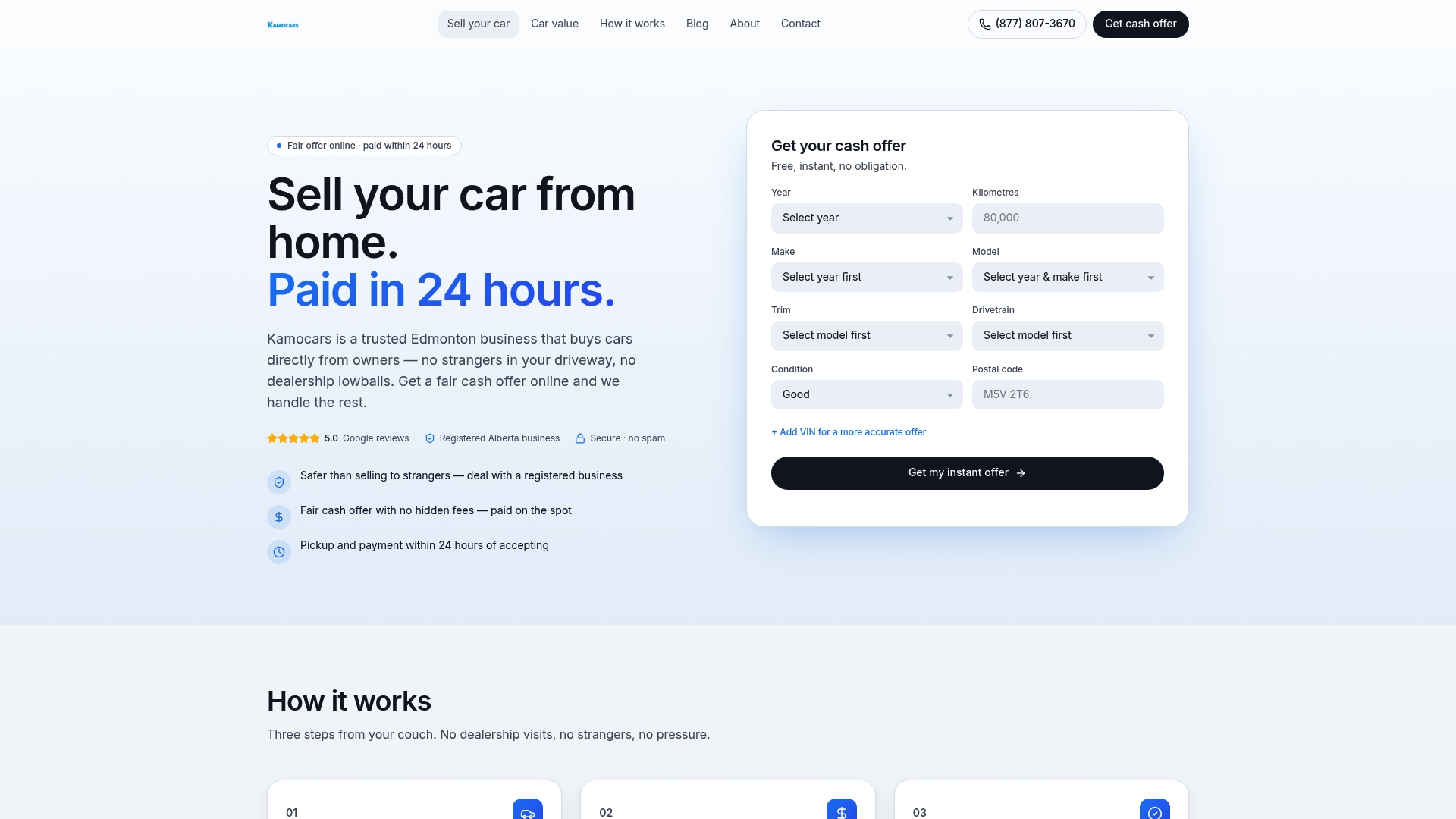
This approach can work well if your EV is financed or leased, as some services handle payoffs directly to simplify the process. It also suits sellers who prefer to avoid in-person test drives or negotiating detailed battery reports directly with buyers. Dealers and wholesalers managing aged EV inventory or trade-ins can move volume through the Kamocars dealer program instead of holding depreciating stock. Start with a free instant appraisal and see your offer before you commit to anything.
Sources
- New motor vehicle registrations, second quarter 2026
- CER – Market Snapshot: Canadian electric vehicle sales ride a roller coaster in 2024 and 2025
FAQ
Are EV sales declining in Canada?
No. ZEV registrations rose 26.7% year over year in Q2 2026, though the Canada Energy Regulator has noted month-to-month volatility tied to shifting incentive programs.
What happens to an EV after 8 years?
Most EVs still run well past 8 years, but battery capacity typically declines enough by then that a documented health report becomes essential for a fair resale price. Remaining OEM warranty coverage often narrows or ends around this age, which is why proving capacity percentage matters more the older your EV gets.
What is the amount of the $5,000 electric vehicle rebate in Canada?
Canada’s EVAP program, launched in February 2026, offers up to $5,000 toward a new battery electric or fuel-cell vehicle and up to $2,500 toward a plug-in hybrid. That rebate directly affects used-EV pricing by narrowing the price gap between a used model and a comparable new one.
What EVs should I stay away from?
There’s no universal blacklist, but resale outcomes vary heavily by model and battery warranty status, with some vehicles depreciating far faster than comparable gas vehicles. Before buying or selling any used EV, check its specific battery health report and remaining warranty rather than relying on model reputation alone.
Where is the best place to sell an electric car in Canada?
It depends on your priority: an instant buyer like Kamocars offers the fastest, most certain sale, while private sale or an EV-specialist marketplace tends to net a higher price for sellers with strong battery documentation.
Recommended
Get a real cash offer in 2 minutes
Trusted business. Fair price. Paid on the spot when we pick up your car.