
Safe Car Sale Transaction Guide for Private Sellers
Ensure a smooth car sale with our safe car sale transaction guide. Learn buyer screening, payment verification, and essential paperwork today!
Safe Car Sale Transaction Guide for Private Sellers

A safe car sale transaction is defined as a private vehicle sale completed with verified buyer identity, confirmed payment, and legally valid documentation that protects the seller from future liability. Most sellers focus on price and ignore the three elements that actually prevent disputes: buyer screening, payment verification, and proper paperwork. This guide covers all three in the order you need them, drawing on the Uniform Commercial Code, DMV release of liability requirements, and federal odometer disclosure rules. Sellkamocars has processed over 500 transactions and built this framework from real-world experience.
What does a safe car sale transaction guide actually cover?
A secure vehicle transaction starts with a fair asking price. Without one, you either leave money on the table or attract buyers who sense desperation and push for unsafe payment arrangements.
Use a trusted car valuation tool to set your number before you list. Sellkamocars offers a free Alberta car value tool built on current market data, which removes the guesswork from pricing. Cross-reference that figure against recent private sale listings in your area to confirm you are in the right range.
Assess your vehicle’s condition honestly before you publish a price. Buyers who arrive and find undisclosed damage feel deceived, and that friction creates pressure to accept unsafe payment workarounds. Accurate condition grading prevents that dynamic entirely.
Watch for pricing scams that target sellers, not just buyers. If a buyer offers significantly above your asking price and asks you to wire back the difference, that is a classic overpayment fraud. Legitimate buyers negotiate down, not up.
- Check your vehicle’s mileage, service history, and accident records before pricing
- Use current market data, not last year’s sale prices
- Price within 5–10% of comparable private listings to attract serious buyers
- Avoid round-number pricing like $10,000 exactly, which signals a seller who guessed
Pro Tip: Set your price slightly above your minimum acceptable number. Buyers expect to negotiate, and you need room to move without going below your floor.
How do you verify a buyer’s identity and meet safely?
Careful buyer screening and secure meeting locations significantly reduce transaction risks. This step is where most private sellers cut corners, and it is where most problems originate.
- Request a valid driver’s license before any test drive. Photograph both sides. In every safe private sale, sellers document the buyer’s license before handing over keys.
- Choose a public, monitored location. Police station parking lots designated for private sales are the gold standard. Bank parking lots during business hours are a strong second choice.
- Schedule meetings during daylight hours only. Evening meetings reduce your ability to inspect the vehicle and assess the buyer’s behavior clearly.
- Bring a second person. A friend or family member present during the test drive and negotiation changes the dynamic and adds a witness.
- Accompany the buyer on every test drive. Never allow a solo test drive, regardless of how legitimate the buyer appears.
“Legitimate buyers never rush inspections or insist on odd payment methods. Any buyer who pressures you to skip steps or move faster than you are comfortable with is telling you something important about their intentions.”
Watch for buyers who arrive with a third party who does all the talking, or who ask to take the car to their own mechanic before you have verified their identity. Both are tactics used to create confusion and separate you from your vehicle.
What payment methods are safest when selling a car?
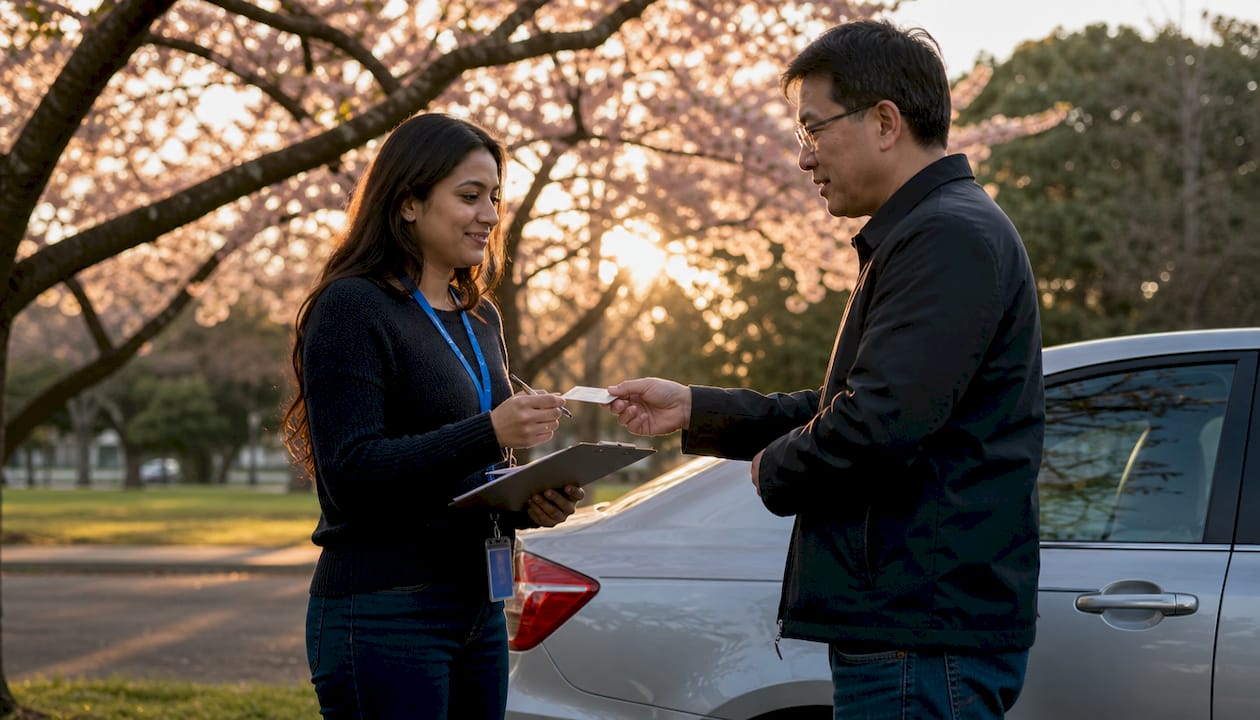
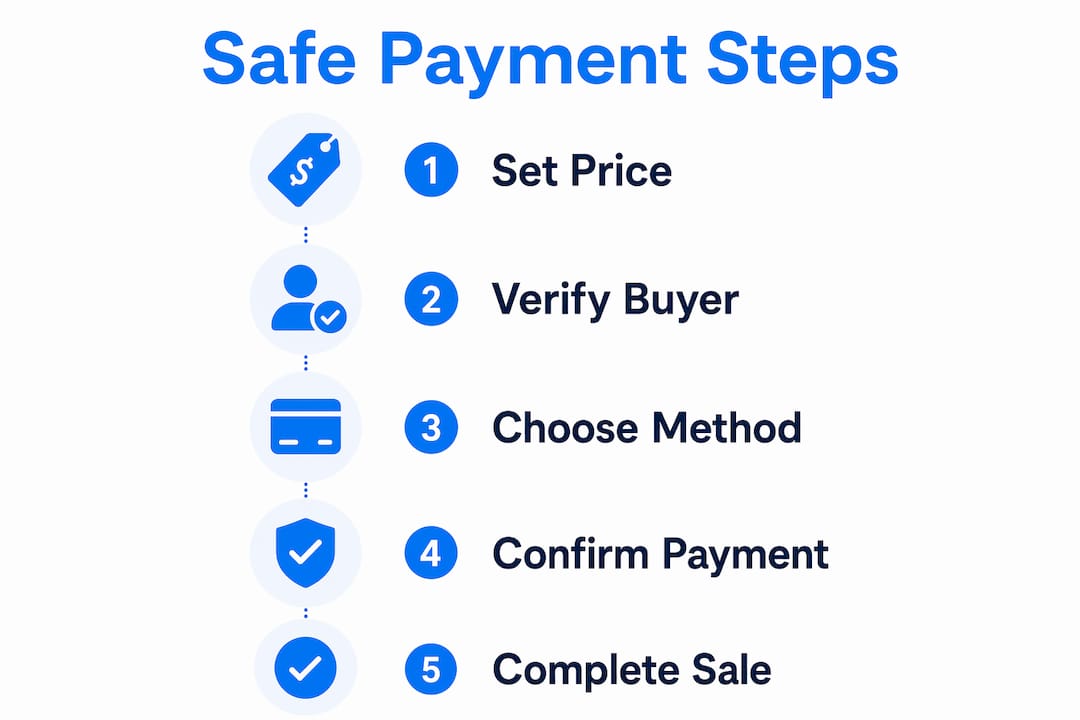
Payment fraud is the most common risk in private car sales. The rule is direct: for vehicles above $5,000, accept only verified cashier’s checks or bank wire transfers confirmed in person at the buyer’s bank.
| Payment method | Risk level | Recommended use |
|---|---|---|
| Cashier’s check (verified at bank) | Low | Vehicles over $5,000 |
| Bank wire transfer (confirmed in person) | Low | Vehicles over $5,000 |
| Cash | Low to medium | Vehicles under $3,000 |
| Personal check | High | Never recommended |
| Zelle, Venmo, PayPal | Very high | Never for vehicle sales |
Personal checks can bounce days after you have handed over the title. Digital payment apps like Zelle and Venmo offer no buyer or seller protection for vehicle transactions, and payments can be reversed after the fact.
The safest process for a cashier’s check is to meet the buyer at their bank, watch the teller issue the check, and confirm the funds are drawn on a real account before you leave the building. Never release the title or keys based on a photo of a check, a screenshot of a transfer, or a pending notification. The most common scam involves trusting digital proof of payment that is later reversed or fabricated.
Pro Tip: Call the issuing bank directly using the number on their official website, not a number the buyer provides, to verify a cashier’s check before you accept it.
Red flags that signal payment fraud include buyers who insist on paying through an escrow service you have never heard of, buyers who offer to overpay and request a refund, and buyers who claim their bank is closed but want to take the car today.
What legal documentation protects you after the sale?
Legal car sale documentation is the part most sellers underestimate. The title transfers ownership, but the bill of sale is your evidence that the transaction happened on specific terms. Under the Uniform Commercial Code, vehicle sales over $500 generally require a written contract to be enforceable. The bill of sale fulfills that requirement and protects you against misrepresentation claims.
A legally valid bill of sale must include these eight fields:
- Full legal names and addresses of both buyer and seller
- Vehicle identification number (VIN)
- Year, make, model, and color of the vehicle
- Agreed sale price and date of sale
- Odometer reading at time of sale (required by federal law)
- “As-is” declaration if no warranty is provided
- Signatures of both parties
- Notarization if required by your state
16 U.S. states require a bill of sale for used car registration, and 12 more strongly recommend one. Even in states where it is optional, the bill of sale is your primary legal defense if a buyer later claims the car was misrepresented. Retain your copy for at least four years, which matches the standard contract statute of limitations.
The release of liability is a separate document you file with your state DMV. File it the same day as the sale. Filing even five to ten days later reduces your protection against parking tickets, toll violations, or accidents the new owner causes before they register the vehicle in their name. For Alberta sellers, the vehicle registration transfer process has specific provincial steps worth reviewing before you sign anything.
For a complete breakdown of what paperwork you need, the car sale documentation guide from Sellkamocars covers Alberta-specific requirements in detail.
What are the most common private car sale mistakes?
Most private sale problems fall into a small number of predictable categories. Knowing them in advance is the simplest form of protection.
- Pre-signing documents before payment clears. Never sign the title over until funds are verified at the bank teller’s window.
- Releasing the vehicle on a verbal agreement. A handshake is not a contract. Every agreement must be in writing before the car moves.
- Selling a vehicle with an active lien. If you still owe money on the car, the lender holds the title. You must pay off the loan and obtain a clear title before you can legally transfer ownership.
- Accepting a buyer’s word on financing. If a buyer says their loan is approved, wait for the actual funds. Loan approvals fall through, and you do not want to have already signed paperwork.
- Skipping the release of liability. This is the single most overlooked step in private sales, and it is the one that causes the most post-sale headaches.
“Scammers use urgency tactics like ‘today only’ offers and pressure to use unknown escrow services specifically to bypass the protections that slow them down. The moment a buyer tries to rush you past any verification step, stop the transaction.”
If a problem arises after the sale, your bill of sale, release of liability filing receipt, and the photograph of the buyer’s license are your three strongest pieces of evidence. Retain copies of all transaction documents for at least four years. Car sale contracts provide detailed legal protection that a title transfer alone does not.
Key Takeaways
A safe car sale transaction requires verified payment, documented buyer identity, a legally valid bill of sale, and a same-day release of liability filing to fully protect the seller.
| Point | Details |
|---|---|
| Price with market data | Use a trusted valuation tool and current listings to set a defensible asking price. |
| Screen every buyer | Photograph the driver’s license and meet in a public, monitored location every time. |
| Verify payment at the bank | Accept only cashier’s checks or wire transfers confirmed in person before releasing keys. |
| Complete the bill of sale | Include all eight required fields and retain your copy for at least four years. |
| File release of liability same day | Submit the DMV form the day of sale to prevent post-sale tickets or accident liability. |
What I have learned from watching private car sales go wrong
The sellers who get burned are almost never naive. They are experienced adults who made one exception to a rule they already knew. They accepted a personal check “just this once” because the buyer seemed trustworthy. They handed over the keys before the wire transfer cleared because the buyer was in a hurry. They skipped the bill of sale because the title felt like enough.
The documentation step is the one I see misunderstood most consistently. The bill of sale is not a formality. It is your legal record of what was agreed, what condition the car was in, and what price was paid. The title proves who owns the car now. The bill of sale proves what happened during the transfer. You need both.
Meeting at a bank is the single highest-impact change most private sellers can make. It solves the payment verification problem and the safety problem in one step. The buyer cannot fake a cashier’s check when you are watching the teller print it. You are not alone in a parking lot with a stranger and a large amount of cash.
My honest advice: treat every step of the process as non-negotiable until the transaction is complete. Patience is not a weakness in a private car sale. It is the only thing standing between you and a very expensive mistake.
— Omar
Selling your car without the private sale risk
Private sales require time, patience, and careful execution at every step. Sellkamocars removes most of that friction by handling verification, payment, and pickup through a registered business process.
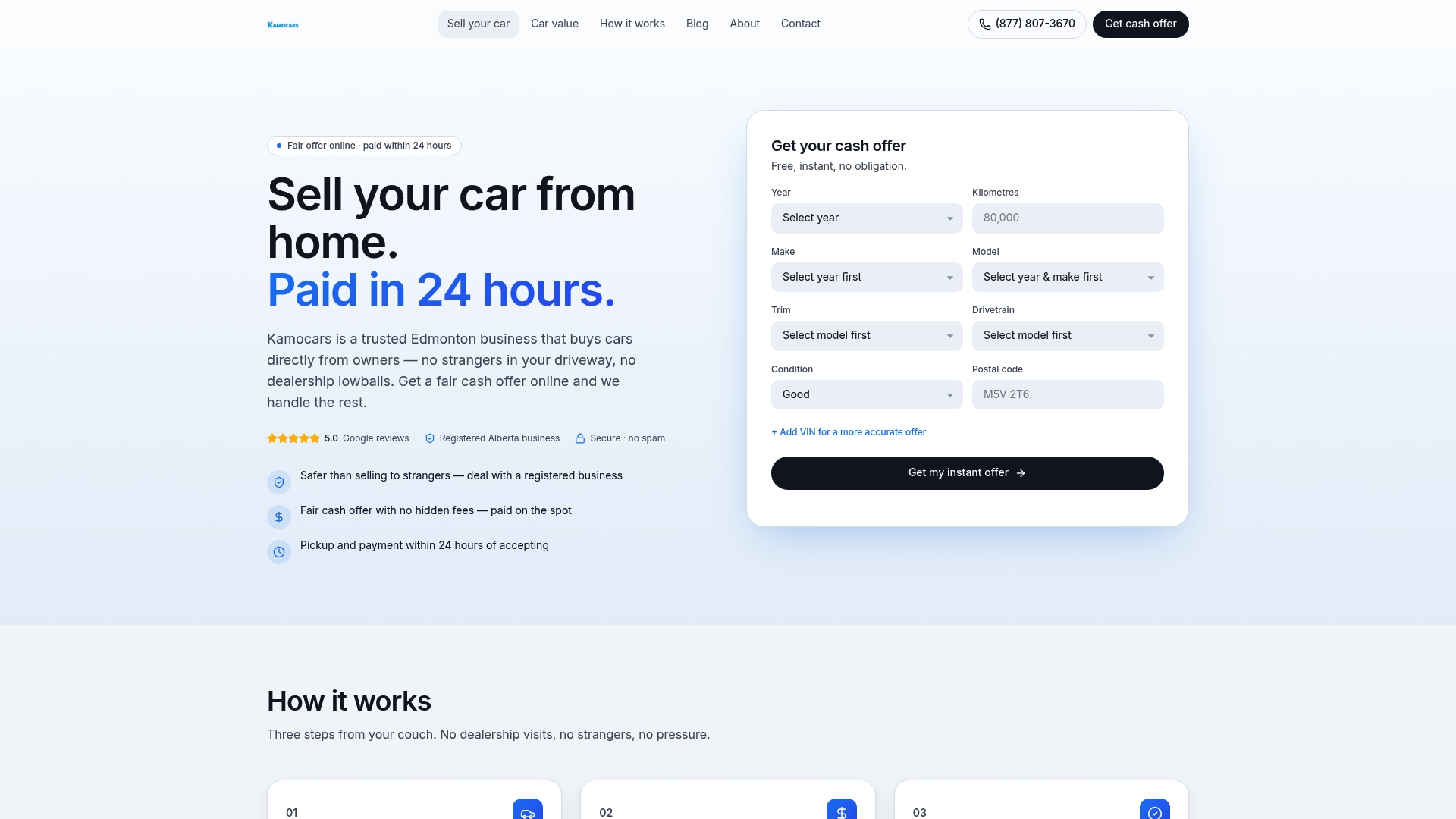
You get a fair cash offer based on current market data, with no haggling and no strangers at your door. Payment is processed and confirmed within 24 hours, and Sellkamocars manages the paperwork on its end. With over 500 completed transactions and a verified business registration, the process is built around seller protection from the first appraisal to the final handoff. See how it works or get a cash offer online to compare your options without any commitment.
FAQ
What is the safest payment method for a private car sale?
For vehicles over $5,000, a cashier’s check verified in person at the buyer’s bank is the safest option. Bank wire transfers confirmed at the teller window are equally secure.
What must a bill of sale include to be legally valid?
A valid bill of sale must include the VIN, sale price, odometer reading, buyer and seller names, date of sale, and both signatures. Federal law requires the odometer disclosure, and 16 states require the bill of sale for registration.
When should I file the release of liability with the DMV?
File the release of liability the same day as the sale. Filing even a few days later leaves you exposed to tickets, tolls, or accident liability caused by the new owner before they register the vehicle.
How do I spot a car sale scam before it costs me?
Watch for buyers who offer above your asking price, pressure you to skip inspections, or insist on unfamiliar payment methods. High-pressure tactics are the clearest signal that a buyer is not legitimate.
Do I need a bill of sale if I already have the title?
Yes. The title transfers ownership, but the bill of sale documents the terms of the sale and protects you against misrepresentation claims. Under the Uniform Commercial Code, a written contract is generally required for vehicle sales over $500.
Recommended
Get a real cash offer in 2 minutes
Trusted business. Fair price. Paid on the spot when we pick up your car.