
Amid 15.5% Depreciation, Protect Your Modified Car's Value in Canada
Learn how aftermarket mods change resale value in Canada. Get what to disclose to insurers, which mods to revert or part out, and Alberta selling options.
Amid 15.5% Depreciation, Protect Your Modified Car’s Value in Canada

Most aftermarket modifications reduce your car’s resale or trade-in value in Canada, because they shrink your buyer pool and raise red flags for dealers, appraisers, and insurers. Some tasteful, reversible, or safety-focused upgrades can hold value or even help. The Insurance Bureau of Canada and Canadian Black Book both flag modifications as a risk factor. Disclose everything to your insurer, keep every receipt, and hang onto your original parts.
TL;DR:
- Reversible modifications, well-documented repairs, and OEM-style upgrades tend to preserve or improve resale value more than permanent or poorly executed customizations.
- Automakers and insurers consider unauthorized or non-compliant mods as risks, which can lead to lower trade-in offers or denied claims if not disclosed properly.
- Upgrades like aftermarket exhausts or engine tunes often decrease value, especially if they violate safety standards or involve emissions tampering.
- Disclosing all modifications to insurers, keeping receipts, and reverting major changes before sale can minimize negative impacts and widen the buyer pool.
- Selling through an online service in Alberta offers a quick cash option that avoids dealer haggling and requires proper documentation of modifications.
Table of Contents
- Which Mods Actually Affect Resale Value in Canada
- How Insurance and Canadian Law Treat a Modified Car
- How Dealers and Private Buyers Actually Price a Modified Car
- Preparing a Modified Car for Sale: The Documentation Checklist
- Should You Keep, Revert, or Part Out Your Mods Before Selling?
- Balancing Enjoyment Now Against Resale Value Later
- Sell Your Modified Car in Alberta Without the Haggling
- Sources
- FAQ
Which Mods Actually Affect Resale Value in Canada
Not all modifications carry the same weight when it comes to how mods affect resale value. A tuner box under the hood and a set of OEM-style alloy wheels land in completely different categories once a dealer, appraiser, or private buyer starts pricing your vehicle. Understanding those categories is the first step toward protecting what you’ve invested.
Three factors decide whether a mod helps, hurts, or does nothing to your car’s worth: reversibility, installation quality, and legality. A mod you can undo in an afternoon carries far less risk than one welded, drilled, or wired permanently into the vehicle. A mod installed by a certified shop with paperwork to prove it reads completely differently than the same part bolted on in a driveway. And a mod that violates Canada Motor Vehicle Safety Standards (CMVSS) or provincial equipment rules can tank a sale entirely, regardless of how good it looks.
Here’s how the common categories typically shake out:
- Cosmetic mods (vinyl wraps, tinted windows, badge deletes): Usually neutral to slightly negative. Buyers often see them as personal taste that doesn’t match their own, and window tint that exceeds provincial legal limits becomes the buyer’s problem to fix.
- Wheels and tires: OEM-style upgrades in a factory-appropriate size can be neutral or mildly positive. Oversized wheels with stretched tires or aggressive negative camber usually hurt value because they signal harder driving and faster wear on suspension components.
- Suspension work (lowering springs, coilovers, lift kits): Frequently a red flag. Lowered cars raise concerns about scraped pans and worn bushings; lifted trucks can trigger CMVSS compliance questions if the modification wasn’t done to standard.
- Engine and performance mods (tunes, turbos, intakes): Almost always a value drag for mainstream buyers, since they imply harder use and voided factory warranty coverage, even when the work is well documented.
- Exhaust systems: Loud aftermarket exhausts and, worse, removed catalytic converters are consistently resale negative. Emissions tampering can also fail provincial inspection where testing applies.
- Interior mods (aftermarket stereo, custom upholstery): Generally neutral unless the factory system was ripped out and not preserved, since replacing it costs the next owner real money.
- Safety and tech upgrades (backup cameras, Apple CarPlay retrofits, dash cams): One of the few categories that can genuinely help. Buyers value visible, useful technology that mirrors what comes standard on newer trims.
- Conversions (camper builds, trike conversions, off-road overlanding rigs): Extremely niche. These can command a premium from the right enthusiast buyer but often eliminate 90% or more of your potential audience.
Aftermarket parts affect a car’s value depending heavily on which part it is and how it was installed. A backup camera retrofit reads as a helpful addition. A straight-piped exhaust reads as a warning sign. The dividing line usually comes down to whether the mod solves a problem a mainstream buyer already has, or whether it solves a problem only you had.
Documented reliability repairs deserve a mention here too. Replacing a timing chain early, upgrading a known-weak radiator, or swapping in an OEM-spec part that Transport Canada recall notices flagged as problematic isn’t really a “mod” in the traditional sense, but it functions like one on your bill of sale. Buyers and appraisers reward proof that you fixed a known weakness before it became their problem.
How Insurance and Canadian Law Treat a Modified Car
Undisclosed modifications create two separate problems in Canada: a coverage problem now, and a resale problem later. Neither one is small.
Start with insurance. If you’ve changed your vehicle from its factory configuration and didn’t tell your insurer, you’re carrying more risk than you realize. According to guidance from MyBrokers, undisclosed modifications can be treated as material misrepresentation, which gives insurers grounds to deny a claim outright or cancel the policy entirely. That means the tune you installed to gain 30 horsepower could cost you your entire claim payout after an accident that has nothing to do with the engine.
Statistic Callout: Insurers classify undisclosed alterations as material misrepresentation, a category serious enough to justify denying a claim or canceling a policy outright, according to MyBrokers.
The Insurance Bureau of Canada has also been vocal about how regulatory change intersects with modifications. As federal vehicle safety standards evolve, IBC’s statement on proposed modernization shows insurers paying close attention to how modifications interact with immobilizers, anti-theft systems, and electronic components. A mod that disables or bypasses factory security tech can complicate your coverage in ways that have nothing to do with horsepower.
Legality compounds the risk. Transport Canada requires that modified vehicles still meet CMVSS, and modifications beyond routine maintenance, like suspension lifts, body conversions, or non-factory structural changes, can change a vehicle’s certification status. That matters most for imported vehicles, but it also affects resale: a buyer’s own insurer or provincial inspection station can flag a noncompliant modification and refuse to register the car until it’s fixed or reverted.
Before you list a modified vehicle, run through this checklist:
- Confirm any structural or suspension modification meets CMVSS and was installed to a documented standard.
- Check your provincial inspection requirements, especially around emissions equipment and lighting, since these vary by province.
- Call your insurer and disclose every modification in writing, keeping a copy of that confirmation for your records.
- Gather receipts and installer contact information so a buyer’s insurer can verify the work if asked.
- If the vehicle was ever imported, confirm compliance documentation exists and is available to show a buyer.
Noncompliant conversions come up more often than people expect. A common example: aftermarket lift kits on trucks that weren’t installed with matching brake and suspension upgrades which can fail a safety inspection during resale even if the truck drove fine for years.
How Dealers and Private Buyers Actually Price a Modified Car
Dealers, trade-in appraisers, and private buyers don’t treat modifications the same way, and knowing the difference changes where you should sell.
- Dealers and trade-in desks discount first, ask questions later. Most dealerships want inventory that appeals to the widest possible buyer, which means stock vehicles move faster and cost less to recondition. A modified car usually gets a lower trade-in number because the dealer has to budget for reverting mods, replacing missing OEM parts, or simply accepting a longer time on the lot.
- Private buyers can pay a premium, but the pool is smaller. Selling directly to another enthusiast means you might recoup more of what you spent on a quality exhaust or wheel setup, but you’re negotiating with a narrower audience and dealing with more back-and-forth over price, history, and condition.
- Appraisers apply a risk premium even to good work. According to a Canadian used vehicle market report from TradeBasis Insights, appraisers often discount modified vehicles even when the parts installed are high quality, because the assumption of “hard use” is baked into the valuation model. A flawless tune with dyno sheets to prove it still gets treated with more caution than a bone stock equivalent.
- Parting out or listing to an enthusiast marketplace sometimes beats a traditional sale. If your car has expensive, desirable mods and the vehicle itself is aging out or has cosmetic issues elsewhere, separating the parts from the car can net more total dollars than selling the package as one unit, especially for niche builds that would otherwise sit unsold for months.
Well-executed, reversible, or OEM-style modifications consistently perform better at resale than permanent or poorly executed customizations, across every one of these buyer types. That single distinction, reversible versus permanent, does more to predict your outcome than almost any other factor.
Preparing a Modified Car for Sale: The Documentation Checklist
The single biggest lever you control before listing a modified vehicle is documentation. Buyers, dealers, and insurers all respond to proof, not promises.
Assemble these items before you list the car:
- Original receipts for every modification, including part numbers and installer names.
- Dyno sheets or tune logs if you touched the engine or transmission software.
- Full service history showing regular maintenance wasn’t neglected in favor of upgrades.
- Original factory parts you removed, especially wheels, exhaust components, and suspension pieces.
- Written confirmation from your insurer that the modifications were disclosed and covered.
Some fixes pay for themselves before a sale. Reverting a lowered suspension back to stock height, resetting an engine tune to factory settings, and correcting any wiring modifications tied to lighting or audio systems all tend to widen your buyer pool more than they cost. A step-by-step online valuation guide can help you figure out which reversions are worth the labor before you commit to them.
When you write the listing itself, lead with honesty rather than hype. State clearly what’s modified, link to your receipts, and price the car relative to stock comparables in your area rather than what you personally spent on the parts. Buyers researching a modified car assume you’ll inflate the price to recover your investment; proving otherwise with real comps builds trust fast.
Pro Tip: Photograph your original parts before you sell or discard them. Buyers and even some appraisers will ask for proof that OEM components exist and are available, especially for wheels and exhaust systems.
Negotiation looks different depending on your buyer. Enthusiasts want to talk shop: brand names, install quality, and performance numbers. Mainstream buyers want reassurance: that the car is safe, that maintenance wasn’t skipped, and that the mods won’t cause them problems down the road. Match your pitch to your audience instead of using the same script for both.
Should You Keep, Revert, or Part Out Your Mods Before Selling?
Every modified car owner in Canada eventually faces the same question: is it worth fixing anything before selling, or should you just list it and see what happens?
Start with the market baseline. Canadian Black Book’s 2025 Vehicle Depreciation Report found average depreciation across the Canadian market was elevated in 2024, above historical norms, with luxury segments dropping faster and light trucks proving more resilient. That macro trend matters because it means even a modest resale discount for modifications hits harder in dollar terms than it would have a few years ago, when depreciation was gentler across the board.

From there, weigh recoverable parts value against buyer discount and reconditioning cost. A practical rule from valuation practitioners: price the stock car first, then add a conservative fraction of your documented, desirable modifications while subtracting for buyer-perceived risk. If your parts would cost $3,000 used and reverting them would cost $800 in labor, but the discount buyers apply for keeping them installed exceeds $2,200, reverting wins.
Use these thresholds as a starting point:
- If the mod is cheap to revert and widely disliked by buyers (loud exhaust, aggressive lowering), revert it.
- If the mod is expensive, well documented, and desirable to a specific niche (turbo kit with full records), consider parting it out separately.
- If the car itself is near the end of its useful life but the parts are new, part out first and sell the shell separately.
When time and certainty matter more than squeezing out every dollar, a fast, guaranteed cash offer can beat months of enthusiast marketplace negotiation, particularly for sellers who’d rather avoid reconditioning costs and buyer back-and-forth altogether.
That’s exactly the calculation Kamocars sees from Alberta sellers every week: sellers who’ve done the math on parting out versus a quick sale and decided speed was worth more than an extra few hundred dollars in recovered parts value.
Balancing Enjoyment Now Against Resale Value Later
Not every mod decision should be about resale math. If you’re building a project car you plan to keep for years, chase what makes you happy behind the wheel and worry about resale later. If your vehicle is a daily driver you’ll likely sell within a few years, lean conservative: OEM-style wheels, tasteful tint within legal limits, and safety tech additions rather than performance work that narrows your buyer pool.
Documentation discipline matters regardless of which camp you’re in. Keep receipts even if you never plan to sell, because plans change. I have real respect for enthusiasts who accept the resale trade-off consciously, knowing a built car might take longer to sell or fetch less than stock, because the ownership experience was worth it to them. The mistake isn’t modifying your car. It’s modifying it without ever asking what it will cost you at the finish line.
— Omar
Sell Your Modified Car in Alberta Without the Haggling
An online car buying service provides an alternative to negotiating with a dealer who discounts cars for modifications or handling numerous private buyer questions about the build. You submit your vehicle details, get an instant cash offer based on current market data, and the service handles free home pickup within Alberta with payment completed quickly, avoiding haggling over modifications.
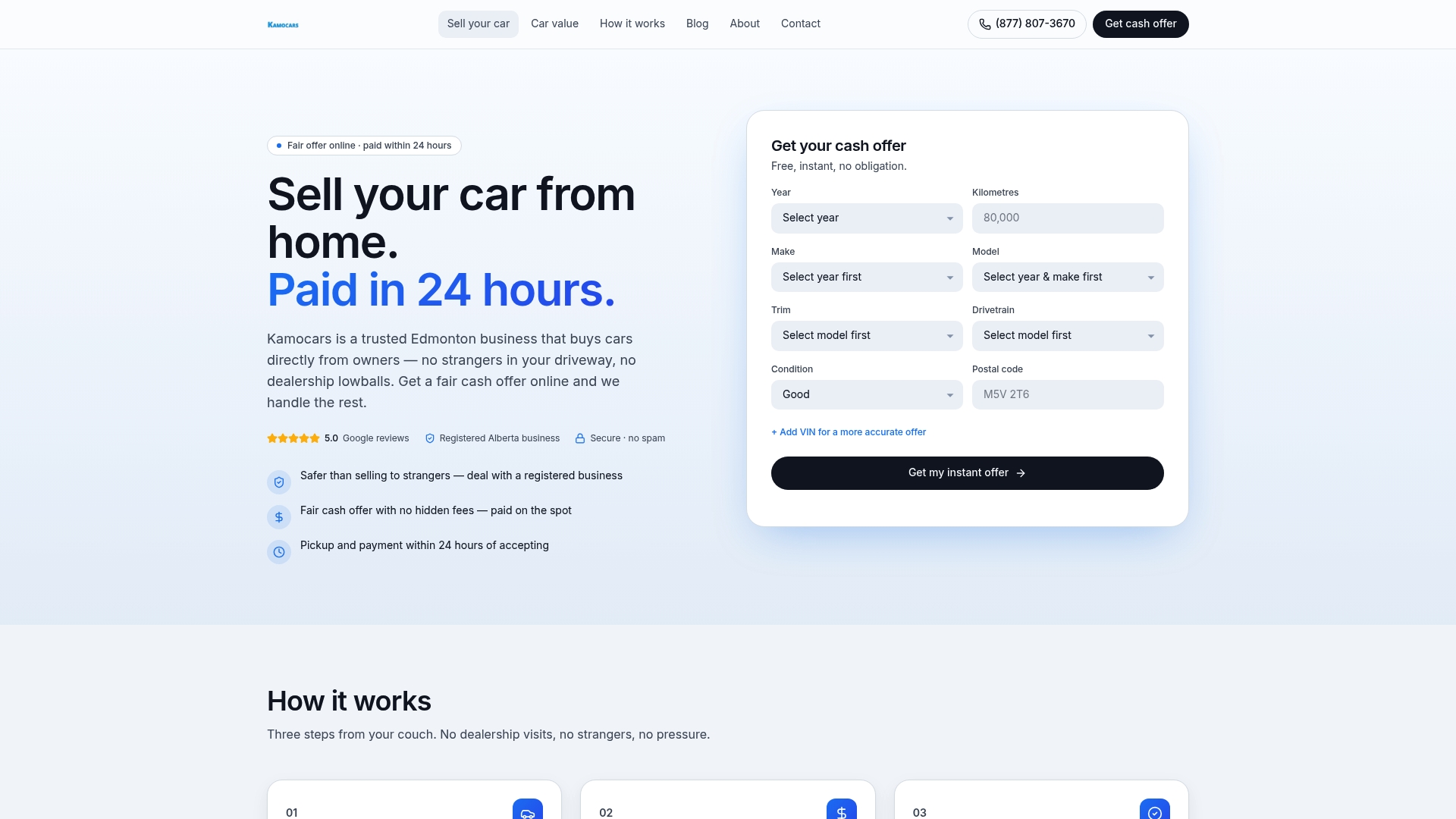
This route can be best when speed and certainty matter more than chasing every last dollar from an enthusiast buyer, especially if a vehicle has modifications that might reduce appeal for mainstream trade-in offers. The service asks about modifications as any serious buyer would: receipts, installer details, and availability of original parts. Having that paperwork ready before requesting an offer speeds up the process. As a registered business with accreditation and experience handling numerous transactions, the company manages financed or leased vehicles and lien clearance directly.
If you’re in Alberta and ready to see what your modified car is worth, get your cash offer through Sell My Car today, or check the free car value tool first if you want a quick estimate before committing.
Sources
These are the primary Canadian references behind the guidance in this article, useful if you want to dig deeper into any single point.
- Do vehicle modifications and aftermarket parts affect car insurance? — MyBrokers
- Importing vehicles purchased in the United States to Canada — Transport Canada
- Do mods affect your car’s resale value? — Yahoo Autos
FAQ
Is it legal to mod cars in Canada?
Yes, modifying a car is legal in Canada, but the modification must still meet Canada Motor Vehicle Safety Standards and any provincial equipment rules. Transport Canada notes that non-routine changes, like suspension lifts or body conversions, can change a vehicle’s certification status and create problems at import, registration, or inspection.
What mods do I have to declare to my insurer?
Any modification that changes the vehicle from its factory configuration should be declared, including performance, suspension, and exhaust changes. According to MyBrokers, undisclosed modifications can be treated as material misrepresentation, putting your entire claim at risk if something goes wrong.
Which cars in Canada have the highest depreciation rates?
Luxury vehicles tend to depreciate faster than mainstream models. Canadian Black Book’s 2025 Vehicle Depreciation Report found average depreciation hit 15.5% in 2024, with luxury segments seeing steeper declines while light trucks held value better.
What holds its resale value better, stock or modified?
Stock vehicles generally hold resale value better because they appeal to the widest range of buyers, dealers, and appraisers. Reversible, well-documented, or OEM-style modifications can come close to stock performance at resale, but permanent or poorly executed mods consistently underperform stock equivalents.
Is modifying my car worth it if I plan to sell later?
It depends on your priority: enjoyment now or maximum resale value later rarely align perfectly. Conservative, reversible mods with full documentation protect resale value reasonably well, while extreme performance or cosmetic changes typically cost more than they return when it’s time to sell.
Recommended
Get a real cash offer in 2 minutes
Trusted business. Fair price. Paid on the spot when we pick up your car.