
How Car Selling Confidence Is Built for Better Offers
Learn how car selling confidence is built through transparency and communication. Secure better offers and master trust-based selling today!
How Car Selling Confidence Is Built for Better Offers

Car selling confidence is defined as the seller’s ability to communicate value, price, and vehicle condition honestly and without hesitation. It is not a personality trait. It is a skill built through transparency, product knowledge, and deliberate communication. Sellers who master these three areas consistently secure better offers and close deals faster. The industry term for this approach is trust-based selling, and it is now the standard in both private and professional car sales. This article breaks down exactly how car selling confidence is built, so you can walk into any transaction ready to lead it.
How car selling confidence is built through transparency
Transparency is the single most powerful tool a car seller has. 91% of buyers say trust is a primary factor in choosing who they buy from. That number tells you one thing clearly: buyers are not just shopping for a car. They are shopping for a seller they can trust.
Pricing transparency is where most sellers either win or lose the deal. 41% of buyers say honoring the price they saw online is critical to their confidence in the transaction. If your listed price and your in-person price do not match, the deal is effectively over before it starts. Inconsistent pricing between digital and in-person interactions irreparably damages trust.

Disclosing vehicle condition is equally non-negotiable. 31% of buyers rank honesty about vehicle imperfections as their top priority. Proactively sharing scratches, mechanical history, or past repairs removes the buyer’s biggest fear: being deceived. Sellers who share this information upfront report far fewer price objections and shorter negotiation cycles.
Here is what full transparency looks like in practice:
- Share the vehicle history report before the buyer asks for it
- List all fees in your asking price so there are no surprises
- Disclose any accident history, reconditioning, or repairs in writing
- Match your online listing price exactly to your in-person quote
- Provide warranty information or certified pre-owned documentation if applicable
Pro Tip: Sharing a vehicle history report proactively, before the buyer requests it, signals confidence and cuts negotiation time significantly. Buyers who receive it unprompted are far less likely to challenge your price.
How product and market knowledge boost your confidence
Knowledge removes hesitation. When you know your vehicle’s history, its market value, and what buyers typically ask, you stop reacting and start leading the conversation. Buyers spend about 48 days researching vehicles before making a decision. That means the buyer sitting across from you has done significant homework. Your job is to match their preparation and exceed it.
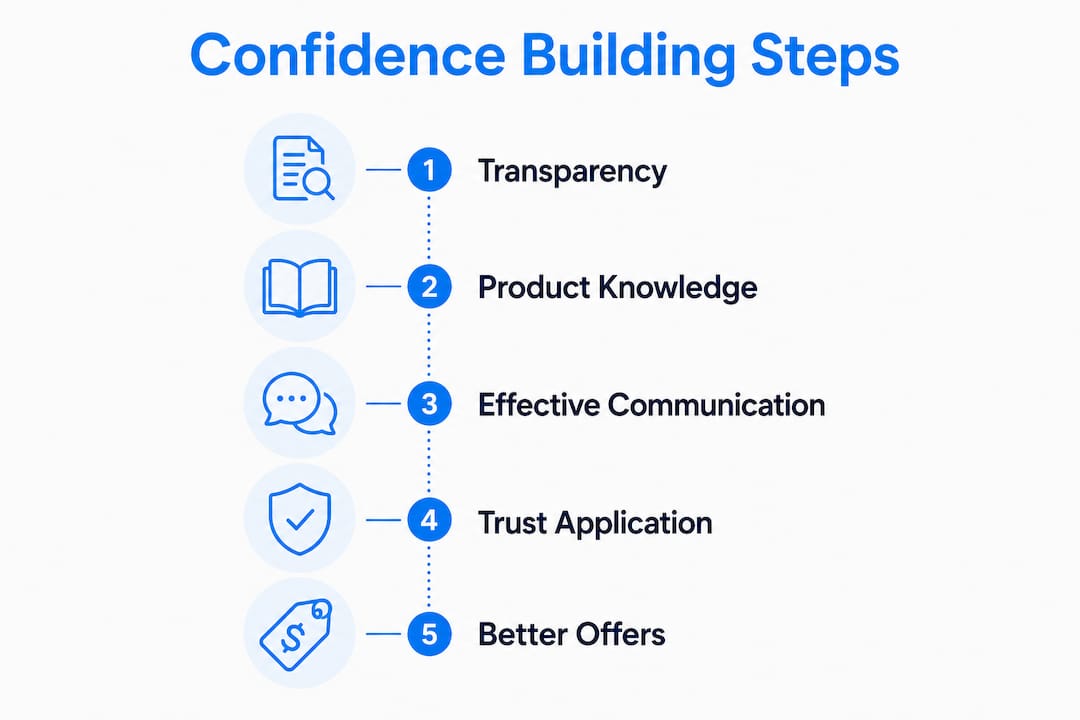
Sharing product knowledge openly, including pricing rationale and vehicle specifics, builds respect and speeds up the transaction. Sellers who can explain why their price is fair, with data to back it up, face far less resistance. This is not about overwhelming the buyer with information. It is about answering their questions before they ask them.
Use these steps to build your knowledge base before listing your car:
- Pull a vehicle history report from a recognized provider and review it yourself first
- Check current market values using a free car value tool to anchor your asking price to real data
- Document your vehicle’s trim level, mileage, service records, and any upgrades
- Research what buyers in your area are asking for comparable vehicles
- Understand your financing or lien situation so you can answer equity questions clearly
Dealership websites that provide clear vehicle info and helpful content convert more online interest into real sales. The same principle applies to private sellers. A detailed, accurate listing with thorough vehicle information does much of the selling before you ever speak to a buyer.
Pro Tip: Know your “out-the-door” number before any conversation begins. That is the total amount you will accept after fees and taxes. Sellers who know this number negotiate from a position of clarity, not anxiety.
What role does communication play in building selling confidence?
Communication is where confidence becomes visible. A seller can have perfect pricing and a spotless vehicle history, but if they freeze when a buyer says “I need to think about it,” the deal stalls. Elite sellers recognize buyer hesitation as fear, not disinterest. That reframe changes everything about how you respond.
The most effective technique for handling hesitation is naming it directly. Instead of pushing harder or dropping your price immediately, acknowledge the concern out loud. Saying “It sounds like you want to be sure this is the right decision” shifts the conversation from adversarial to collaborative. Naming buyer hesitation early reduces anxiety and moves deals forward.
Pushing harder when a buyer hesitates is the most common mistake private sellers make. It signals desperation, and buyers read that signal immediately. The better move is to slow down, ask a clarifying question, and listen. Empathy is a practical sales tool, not just a soft skill.
“Buyer hesitation is almost never about the car. It is about the fear of making a wrong decision. When you name that fear out loud and address it directly, you become the safest person in the room to buy from. That is when deals close.”
Key communication habits that build selling confidence:
- Pause after making your case. Silence is not a problem. It is the buyer processing.
- Ask open questions: “What would make you feel confident about this purchase?”
- Avoid defensive language when a buyer raises a concern. Treat every objection as a question.
- Confirm next steps clearly at the end of every conversation so nothing is left ambiguous
Practical steps to apply trust-building strategies for better offers
Knowing the theory is one thing. Applying it in a real transaction is another. The sellers who consistently get better offers follow a repeatable process that combines transparency, knowledge, and communication at every stage of the sale.
Start with your listing. A listing that includes accurate pricing, full vehicle details, and honest condition notes attracts serious buyers and filters out time-wasters. Positive reviews and strong online presence increase dealership visits by 5.3 times. For private sellers, the equivalent is a detailed listing with real photos and a clear description. Credibility starts before the first conversation.
Sharing vehicle history proactively during the walk-around is one of the highest-leverage moves a seller can make. Walk the buyer around the car and point out any imperfections yourself. This removes the buyer’s fear of hidden problems and positions you as an honest seller. Transparency about vehicle condition leads to 75% higher customer satisfaction. Higher satisfaction means fewer last-minute price challenges.
Here is a practical checklist for applying these strategies in sequence:
- Prepare an accurate listing with real photos, honest condition notes, and a firm asking price
- Gather your vehicle history report, service records, and any warranty documentation
- Set your “out-the-door” price in advance and commit to it across all platforms
- During the walk-around, disclose imperfections proactively before the buyer notices them
- Address hesitation by naming concerns, not by cutting your price immediately
- Confirm payment method, pickup logistics, and timeline clearly before closing
| Stage | Trust-building action |
|---|---|
| Listing | Accurate price, real photos, honest condition description |
| First contact | Confirm listing details match exactly; share vehicle history report |
| Walk-around | Point out imperfections yourself; explain service history |
| Negotiation | Hold your price with data; address hesitation by naming concerns |
| Closing | Confirm all terms in writing; clarify payment and pickup timeline |
Understanding how car condition affects offers helps you price accurately from the start, which reduces the gap between your ask and what buyers are willing to pay.
Key Takeaways
Car selling confidence is built through three non-negotiable pillars: transparency in pricing and condition, deep product knowledge, and proactive communication that addresses buyer fear before it stalls the deal.
| Point | Details |
|---|---|
| Transparency wins deals | Honoring your listed price and disclosing vehicle imperfections upfront removes the buyer’s biggest fear. |
| Knowledge anchors your price | Researching market values and vehicle history lets you defend your asking price with data, not emotion. |
| Communication converts interest | Naming buyer hesitation directly shifts the conversation from adversarial to collaborative and closes deals faster. |
| Consistency is non-negotiable | Your online price and in-person price must match exactly. Any gap destroys trust immediately. |
| Preparation beats personality | Sellers who prepare accurate listings and full documentation outperform those who rely on charm alone. |
What I’ve learned from watching sellers get this wrong
Most sellers I’ve observed lose deals not because their price is wrong, but because they panic the moment a buyer hesitates. They interpret silence as rejection and immediately offer a discount. That move signals desperation, and buyers use it against them.
The sellers who consistently get the best offers do something counterintuitive. They slow down. They name the concern out loud. They say, “It sounds like you want to be sure you’re not overpaying.” Then they let the buyer respond. That single habit, naming the fear instead of reacting to it, changes the entire dynamic of the conversation.
I’ve also seen how much damage a single inconsistency causes. A seller lists a car at one price online and then adds fees in person. The buyer shuts down immediately, even if the total is reasonable. Consumer trust in dealerships has risen to 69% among buyers who use digital tools, precisely because digital platforms force pricing consistency. Private sellers who apply the same discipline get the same result.
The emotional benefit of selling with full transparency is real and underrated. When you have nothing to hide, you stop dreading questions. You start welcoming them. That shift in posture is visible to buyers, and it is the most persuasive thing you can do.
— Omar
Sellkamocars makes confident selling the default
Selling your car with confidence becomes much easier when the process itself is built on transparency. Sellkamocars offers Edmonton car owners a fair cash offer based on current market data, with no hidden fees and no price changes between online and in-person.
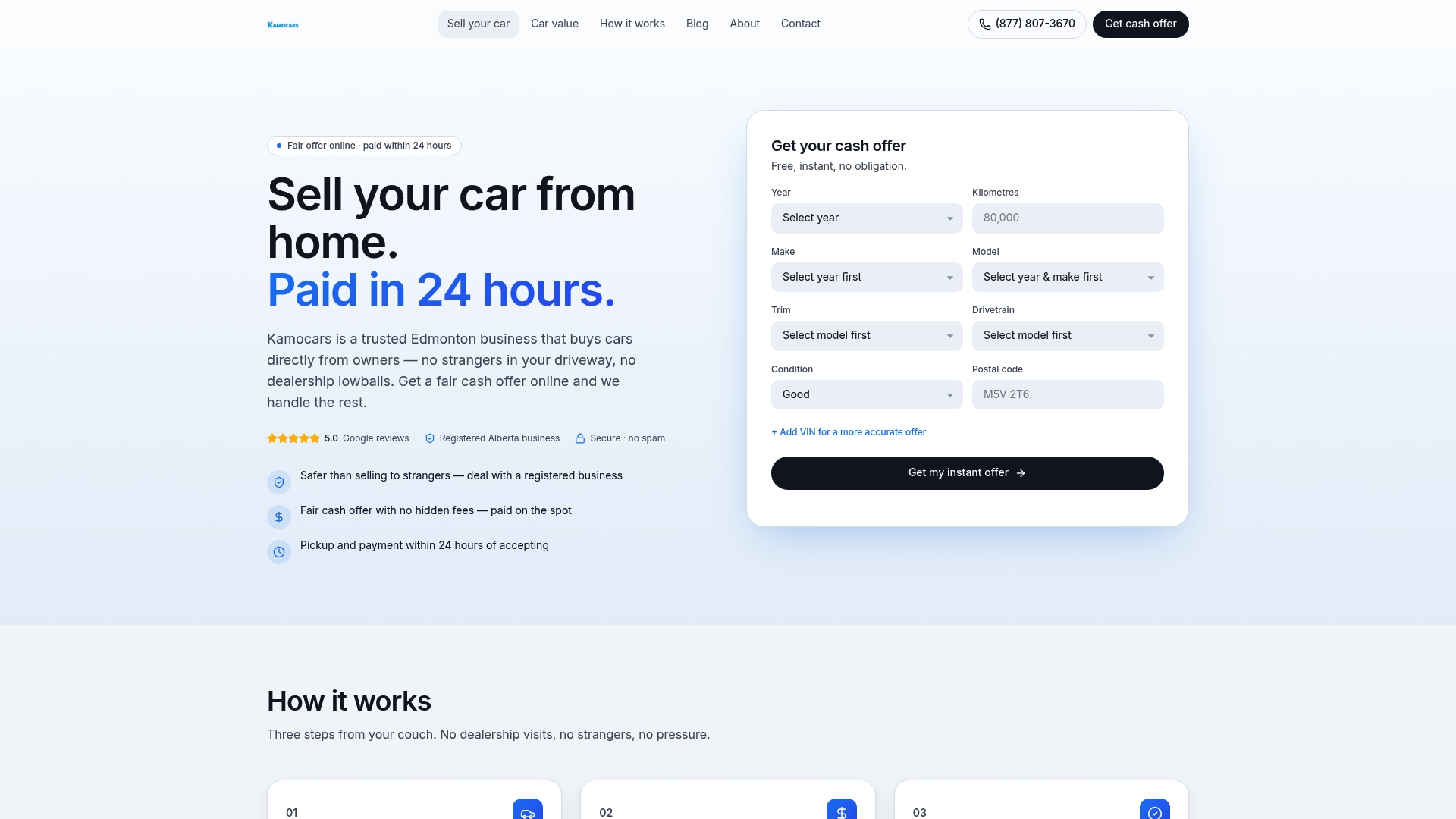
The process is straightforward. You get an instant appraisal, Sellkamocars handles free pickup, and payment arrives within 24 hours. There is no haggling, no strangers at your door, and no surprises. With over 500 completed transactions and a strong customer rating, Sellkamocars is a registered business, not an informal platform. See how it works and get a fair offer today, or sell your car online and skip the back-and-forth entirely.
FAQ
What is the most important factor in building car selling confidence?
Transparency in pricing and vehicle condition is the foundation of selling confidence. 41% of buyers say honoring the price they saw online is critical, making pricing consistency the single highest-impact factor.
How does sharing vehicle history affect buyer trust?
Proactively sharing a vehicle history report, including accident records and service history, leads to 75% higher customer satisfaction and significantly reduces price objections during negotiation.
How should a seller handle buyer hesitation?
Name the concern directly rather than cutting your price. Top sellers treat hesitation as fear of a wrong decision, not lack of interest, and address it by asking clarifying questions and slowing the conversation down.
Does online research by buyers affect how I should prepare my listing?
Yes. Buyers spend about 48 days researching before purchasing, so your listing must match what they already know. Accurate pricing, real photos, and honest condition notes are the baseline expectation, not a bonus.
How do I know if my asking price is fair before listing?
Use a free car value tool to compare your vehicle against current market data. Anchoring your price to real data lets you defend it confidently and reduces the chance of lowball offers.
Recommended
Get a real cash offer in 2 minutes
Trusted business. Fair price. Paid on the spot when we pick up your car.