
Alberta 2018+ Sellers: Skip Car Sale Deposits With 24 Hour Cash Offers
Skip car sale deposits in Alberta. Follow AMVIC steps to accept cleared payment or use online buyers for verified cash offers and pickup.
Alberta 2018+ Sellers: Skip Car Sale Deposits With 24 Hour Cash Offers
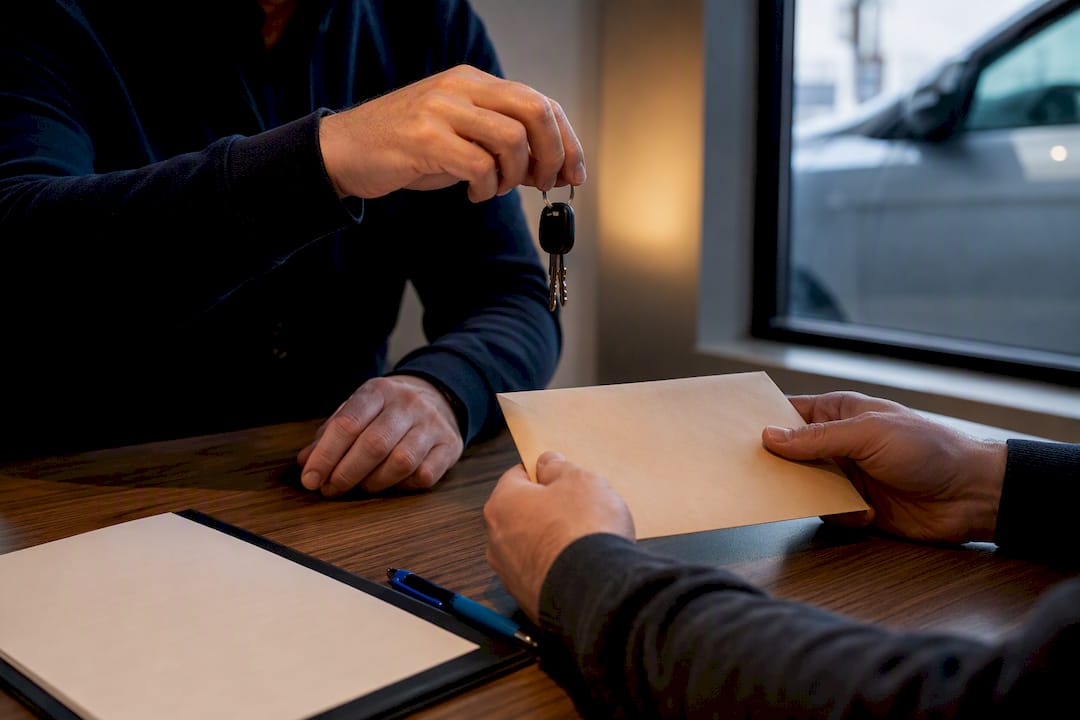
No, deposits are not typical or required for private car sales in Alberta, and you shouldn’t ask for one or accept one. The safest move is to skip deposits entirely, take full cleared payment before handing over the keys, or sell to a licensed buyer instead. Alberta’s guidance points sellers toward the standard bill of sale and AMVIC as the two references that actually matter here.
TL;DR:
- Private car sales in Alberta do not require or typically involve deposits, and full payment should be verified at a bank or licensed dealer.
- Taking a deposit before the sale is finalized creates legal risks and often lacks enforceability without a signed bill of sale.
- Verify funds with a bank draft or real-time transfer at a verified location, and only hand over keys once payment clears in full.
- Selling to a licensed buyer or using online platforms simplifies the process, avoiding deposit disputes and ensuring verified payment.
- A properly completed bill of sale and a clear, verified payment are the best safeguards for private Alberta car transactions.
Table of Contents
- What Alberta Rules Say About Deposits and the Bill of Sale
- Why Taking a Deposit From a Private Buyer Is Risky
- Safer Ways to Close the Sale Without a Deposit
- Step-by-Step: Completing the Sale Without a Deposit
- What I’ve Seen Go Wrong (and What Actually Works)
- Where Conventional Advice Falls Short
- If You’d Rather Skip the Deposit Conversation Entirely
- Sources
What Alberta Rules Say About Deposits and the Bill of Sale
Private sellers in Alberta have no legal requirement to collect a deposit, and buyers have no obligation to pay one. There’s no standardized industry practice for it either, unlike financed dealership purchases where deposit agreements are common paperwork. Most private transactions in Alberta close as a straightforward exchange: the buyer hands over payment, the seller hands over keys, and both sign the standard bill of sale.
That bill of sale is the document that actually protects you. It records the sale price, VIN, odometer reading, and date, and it’s what you’ll want on file if a dispute ever surfaces down the road. Alberta’s own guidance is direct: transfer of ownership should happen only after payment has cleared in full, not before.
AMVIC, the province’s motor vehicle regulator, does address deposits. But its deposit agreement forms and consumer complaint process exist for licensed dealers and businesses, not private, person-to-person sales.
- AMVIC’s rule of thumb: never pay (or take) a deposit just to test drive a vehicle or start negotiating.
- Deposit agreements are not bills of sale and carry no legal weight without a signed contract behind them.
- AMVIC’s consumer guide confirms buyers dealing with private sellers can’t access the AMVIC Compensation Fund if something goes wrong.
Pro Tip: If a buyer offers you a deposit “just to hold” the car, treat that as a signal to speed up the real sale, not a reason to slow down and wait around.
Why Taking a Deposit From a Private Buyer Is Risky
Once money changes hands before the sale is final, you’ve created a dispute waiting to happen. Without AMVIC’s licensed-business protections behind you and without a signed bill of sale to anchor the terms, a deposit sits in a legal gray zone. If the buyer backs out, wants it refunded, or claims you never agreed on terms, you’re negotiating that argument alone.
Watch for these red flags before any money is exchanged:
- A bank draft you can’t verify, or one the buyer refuses to confirm at the issuing branch.
- Reluctance to meet at a bank at all, especially for anything beyond a small amount.
- Pressure to “lock in the deal today” with a rushed partial payment.
- A buyer who won’t confirm their ID or hesitates when you ask them to check the VIN against the registration.
Pro Tip: If a buyer pushes hard for a deposit instead of just showing up with full payment, that urgency is often the first sign of trouble, not commitment.
The downside cuts both ways. You might end up holding a “nonrefundable” deposit you can’t legally justify keeping, or you might be stuck trying to enforce a refund the buyer refuses to pay. Either way, you’ve traded a clean transaction for a paperwork fight, and private sellers get no built-in recourse the way a licensed dealer’s customers do.
Safer Ways to Close the Sale Without a Deposit
You don’t need a deposit to protect a sale. You need verified funds and a clean handoff. Here’s what actually works for Alberta sellers:
- Meet at your bank. Cash or a certified bank draft, confirmed at the counter, is about as close to fraud-proof as a private sale gets.
- Wait for funds to clear before you transfer anything. Don’t hand over keys or sign the bill of sale until the payment has actually settled, not just been “sent.”
- Sell to a licensed car-buying service instead. A registered buyer handles the offer, payment verification, and pickup as one package, which removes the deposit question entirely.
- If you insist on a written hold, put refund terms in writing and get a signed, dated receipt. Vague verbal promises don’t hold up if things go sideways.
If your priority is speed and low hassle over squeezing out the highest possible private-sale price, a licensed buyer or dealer trade-in is usually the better route. You skip the deposit conversation, the no-show risk, and the buyer-financing delays that stall private sales for weeks.
Reservation and deposit workflows work differently in online vehicle purchase settings, where platforms build in verification steps a casual private sale simply doesn’t have.
Step-by-Step: Completing the Sale Without a Deposit
- Pick a public, verifiable location. A bank branch or a registry agent’s office works best, ideally with a witness present and both parties carrying photo ID.
- Verify payment before anything else moves. Confirm a bank draft directly with the issuing bank, or watch an e-transfer clear in real time. Skip digital P2P apps unless you can watch the funds land.
- Complete the bill of sale in full. VIN, odometer reading, sale price, date, and both signatures, matching the details on the required paperwork for an Alberta title transfer.
- Hand over the keys only after funds have cleared, not the moment a draft appears in the buyer’s hand.
- If a buyer still insists on a deposit, require a dated, signed receipt spelling out refund terms exactly, or decline the deposit and ask them to come back with full payment.
Pro Tip: Bring a printed bill of sale template to the meeting. Filling it out on the spot from memory is how sellers miss required fields.
What I’ve Seen Go Wrong (and What Actually Works)
Most deposit disputes I’ve come across in Alberta start the same way: a buyer sounds serious, offers cash to “hold” the car, and the seller takes it without a second thought. Then the buyer disappears, or comes back wanting the money returned, and there’s no AMVIC complaint process available because neither party is a licensed business.
A registered Edmonton buyer can sidestep that entire problem by design, giving sellers a written offer, verifying payment, and completing pickup within 24 hours, so there’s never a deposit stage to negotiate in the first place.
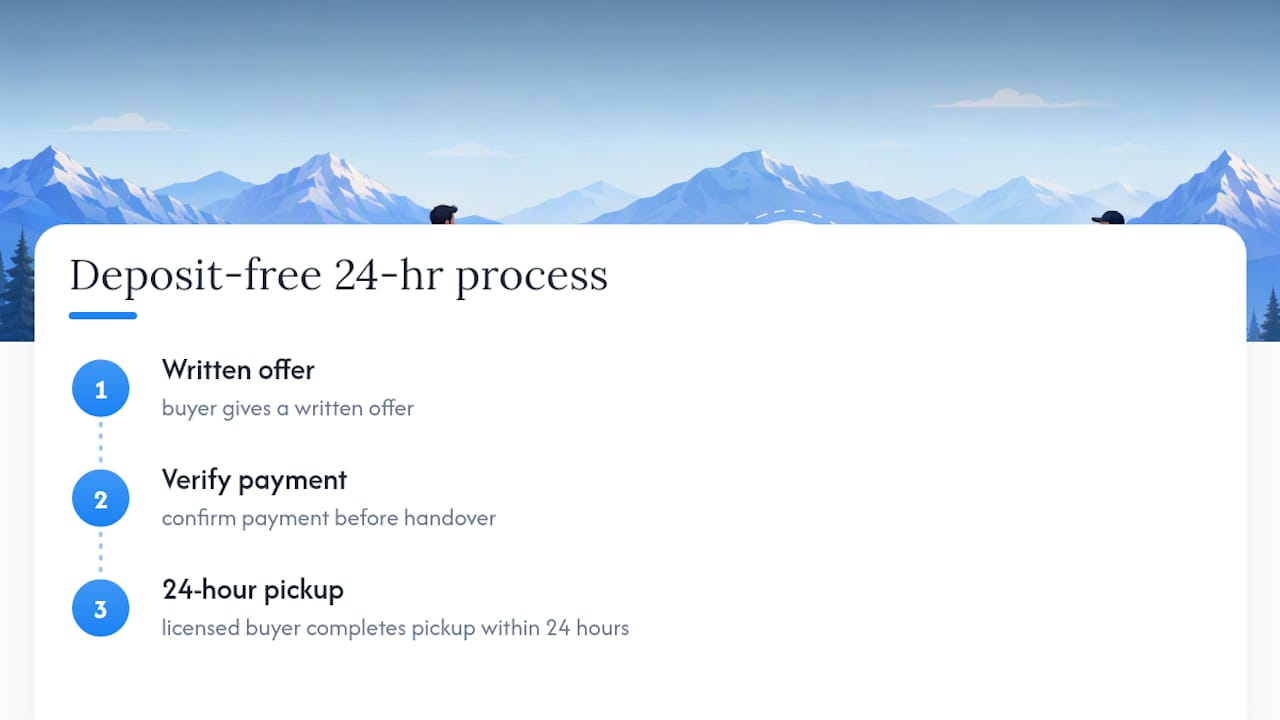
If you’re selling a car you’re not attached to timing on, and you’d rather skip the stranger-meets-stranger risk altogether, a licensed buyer is the sensible call.
Where Conventional Advice Falls Short
Most private-sale guides tell you to “get a deposit to hold the buyer’s commitment.” That advice ignores what actually happens in Alberta: a deposit protects a business relationship backed by AMVIC oversight and a signed agreement. It does almost nothing for a private seller standing in a driveway with a stranger’s cash.
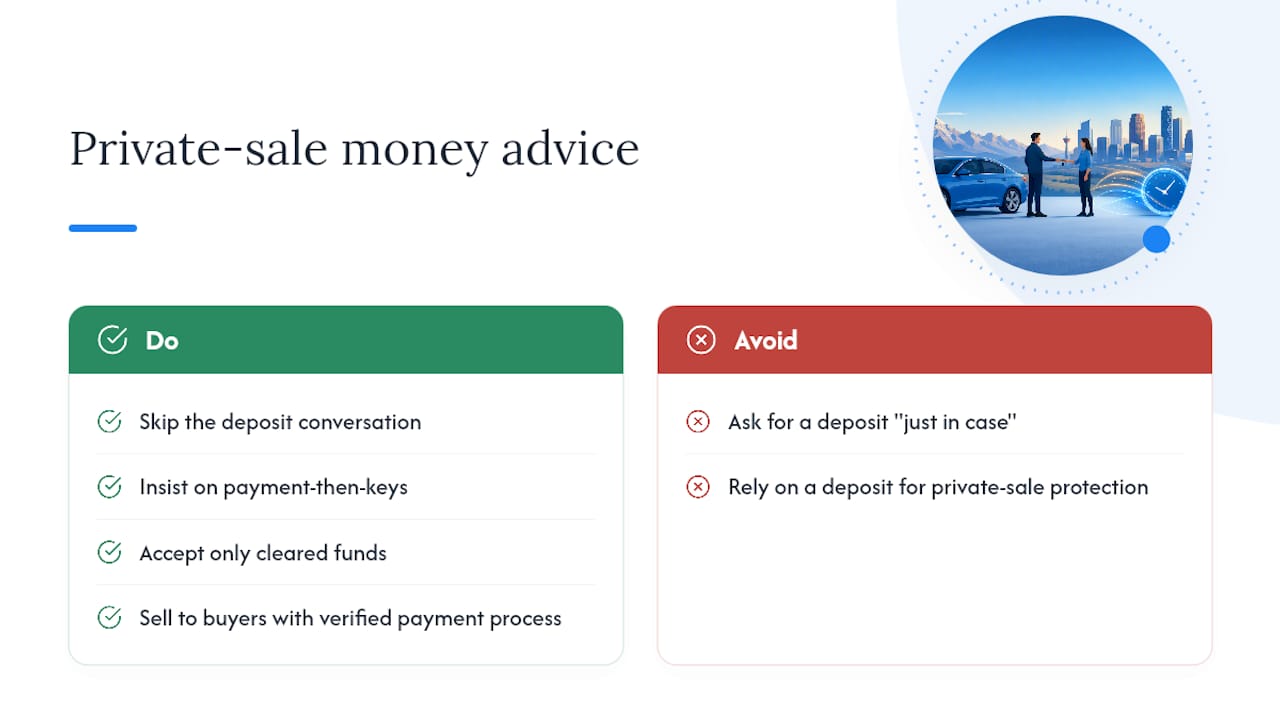
The real priority isn’t collecting money early. It’s controlling when the transfer happens relative to when funds clear. A seller who insists on payment-then-keys, in that order, avoids nearly every deposit dispute I’ve seen discussed in Alberta consumer guidance. A seller chasing a deposit “just in case” is usually creating the exact dispute they were trying to prevent.
If you take one thing from this, take this: skip the deposit conversation altogether. Either the buyer shows up with cleared funds, or you sell to a buyer whose whole process is built around verified payment from the start.
— Omar
If You’d Rather Skip the Deposit Conversation Entirely
An online car buying service is the alternative to negotiating deposits, meeting strangers at a bank, and waiting on a private buyer to actually show up with money. Instead of managing that risk yourself, you can get an online cash offer based on market data, verified payment, and pickup within 24 hours.
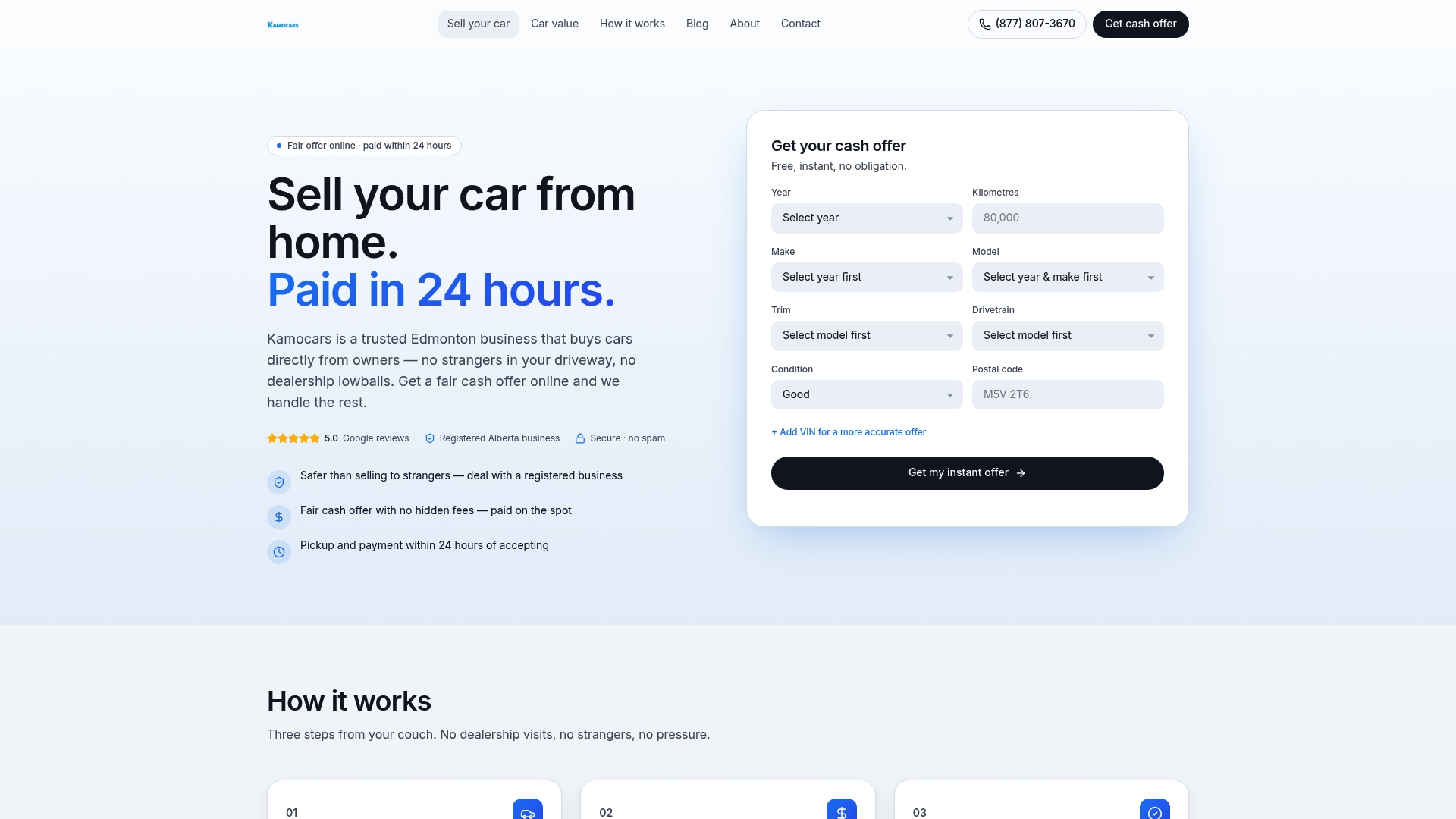
Here’s what that looks like in practice: you submit your vehicle details online, receive a firm cash offer, and if you accept, the service arranges payment and pickup without you having to vet a stranger’s bank draft or draft a deposit receipt. No haggling, no waiting for a buyer to line up financing, no deposit dispute to manage after the fact.
If your 2018 or newer car, truck, or SUV is running and you’d rather have a finished deal than a deposit negotiation, get your online offer and see what Kamocars can pay before you list it privately. Edmonton sellers can also check local pickup details directly.
Sources
- Standard bill of sale — Government of Alberta
- Deposits — Alberta Motor Vehicle Industry Council (AMVIC)
Recommended
Get a real cash offer in 2 minutes
Trusted business. Fair price. Paid on the spot when we pick up your car.