
Car History's Role in Valuation: A Seller's Guide
Discover the role of car history in valuation. Learn how service records and ownership data can increase your vehicle's market price. Read more!
Car History’s Role in Valuation: A Seller’s Guide

A vehicle’s documented past is the single most powerful factor in determining its market price. The role of car history in valuation goes beyond a simple background check. Service records, accident reports, and ownership data create a transparent risk profile that buyers, dealers, and appraisers use to set final offers. A full service history can boost a used car’s value by up to 20%, while missing records can trigger a drop of up to 40%. Understanding how each piece of your vehicle’s history moves the needle gives you real leverage, whether you are buying or selling.
How does a comprehensive service history affect car valuation?
Service history is the foundation of any used car appraisal. Appraisers treat it as a baseline health measure, not a bonus feature. When records are complete, they eliminate uncertainty about how the vehicle was maintained, which directly reduces the risk premium a buyer or dealer builds into their offer.

The key distinction sellers often miss is this: service records protect value rather than add a premium on top of market price. A well-maintained 2019 Honda Civic does not sell above its market ceiling just because it has full records. What those records do is prevent the buyer from discounting the price to account for unknown risks. That protection is worth real money.
Here is what complete service documentation typically covers in a valuation review:
- Oil change intervals: Consistent intervals signal disciplined ownership and reduce engine risk assumptions.
- Manufacturer-scheduled maintenance: Timing belt replacements, transmission services, and brake fluid flushes show the car was maintained to spec.
- Dealer vs. independent shop records: Both are accepted, but dealer stamps carry slightly more weight with appraisers.
- Recall completion records: Documented recall repairs remove liability concerns that can otherwise reduce offers.
- Repair invoices for major work: A documented transmission rebuild with parts receipts is far less damaging than an undocumented one.
Valuation experts adjust automated baseline figures based on detailed vehicle histories, treating service records as risk mitigators rather than mandatory price increases. That means the seller with a full folder of receipts is not getting a bonus. They are avoiding a penalty.
Pro Tip: Start a dedicated folder, physical or digital, for every service receipt from the day you buy a car. When it comes time to sell, that folder is worth hundreds or even thousands of dollars in avoided discounts.
What impact does accident and damage history have on vehicle value?
Accident history creates what appraisers call a price anchor. Once a damage flag appears on a vehicle history report, it sets a psychological and financial ceiling that is very difficult to overcome, even with excellent repairs.
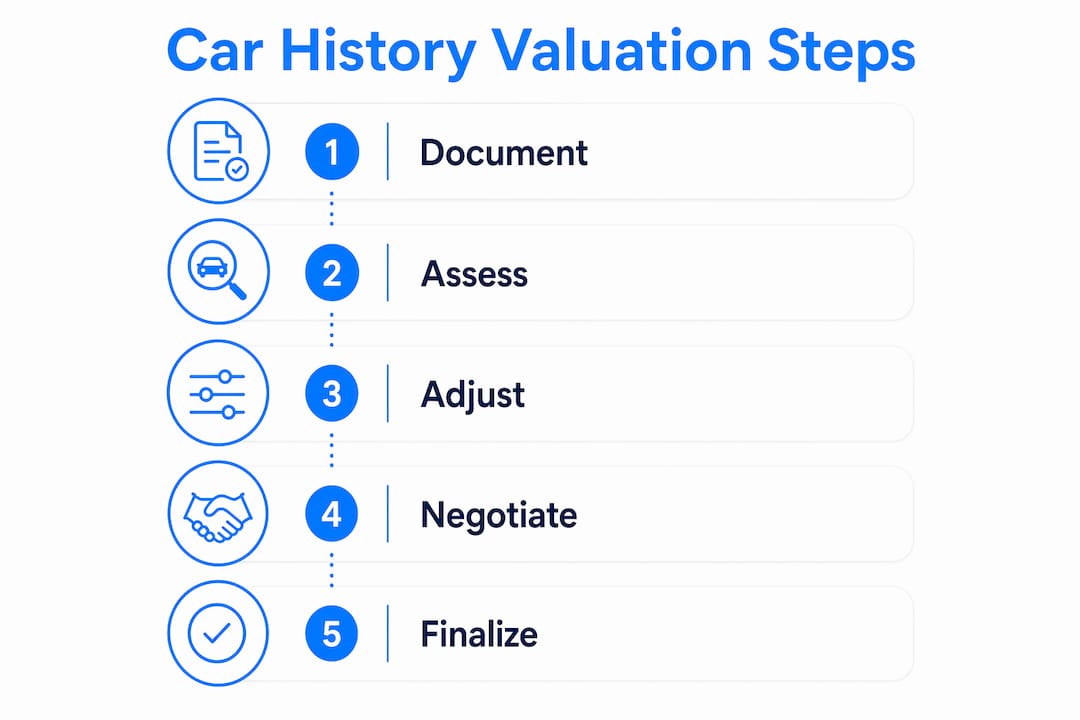
The numbers are specific. Minor accident entries reduce vehicle value by 10–15%. Structural or moderate damage causes depreciation of 25% or more. These are not negotiating starting points. They are recognized industry standards applied by insurance adjusters, certified appraisers, and dealer software alike.
The sequence of events after an accident flag appears typically follows this pattern:
- Report flag triggers automatic software reduction. Automated dealer valuation software applies immediate price cuts upon accessing accident history, before any physical inspection takes place.
- Buyer perception shifts. Even a minor fender repair raises questions about hidden frame stress, airbag deployment, or flood damage that was not fully documented.
- Certified Pre-Owned disqualification. A vehicle history report’s damage record causes slower resale times and often disqualifies cars from Certified Pre-Owned programs, removing a significant market segment from the buyer pool.
- Diminished value persists. Quality repairs do not erase the financial loss. Diminished value lasts despite quality repairs, and accident records function as permanent financial losses recognized by insurance and appraisal professionals.
- Disclosure becomes a legal and ethical obligation. In most jurisdictions, sellers are required to disclose known damage history. Failing to do so creates liability that can unwind a sale after the fact.
Diminished value is not a negotiating tactic buyers use. It is a permanent market reality. A car that was repaired to factory condition still carries a lower market value than an identical car that was never in an accident. The report does not care how good the bodywork is.
Pro Tip: If your car has an accident on record, get an independent appraisal that documents the repair quality in detail. A professional inspection report showing zero structural damage gives buyers confidence and can reduce the discount they demand.
What are the limitations of vehicle history reports in valuation?
Vehicle history reports are reconstruction efforts, not complete records. Reports pull data from over 151,000 sources including government agencies and insurance companies, but they only capture documented incidents. Anything that was never reported simply does not appear.
Reports generally cost $25–$40 and should always be paired with a professional pre-purchase inspection. That pairing matters because the report tells you what was recorded, while the inspection tells you what is actually there.
The most common gaps in vehicle history reports include:
- Unreported accidents. A private seller who repairs minor damage out of pocket and never files an insurance claim leaves no trace on any report.
- Cash maintenance. Oil changes and repairs paid in cash at independent shops often go unrecorded, creating false gaps in service history.
- Out-of-country history. Vehicles imported from the United States into Canada, or vice versa, may have incomplete records from their country of origin.
- Odometer discrepancies. Rollbacks performed before electronic odometer systems became standard may not appear on older vehicles.
- Flood and hail damage. Cosmetic damage repaired without an insurance claim leaves no digital footprint.
Vehicle history systems reduce information asymmetry and act as market-level transparency tools, but uncertainty remains wherever data is missing. A clean report is a good sign. It is not a guarantee. Treat reports as a strong starting point, not the final word on a vehicle’s condition.
How do buyers and sellers use car history to negotiate fair valuations?
Car history is a negotiation tool for both sides of a transaction. The seller who understands their vehicle’s history can present it confidently. The buyer who reads a report carefully can identify legitimate grounds for a price adjustment.
For sellers, the goal is to reduce uncertainty before the buyer ever asks a question. A comprehensive vehicle history combined with a physical inspection leads to the most accurate valuation and reduces costly mistakes on both sides. Presenting organized records upfront signals credibility and removes the buyer’s justification for demanding a risk discount.
Sellers can strengthen their position by doing the following:
- Pull your own report before listing. Knowing what buyers will see lets you address issues proactively rather than reactively.
- Gather all physical service records. Paper receipts from independent shops fill gaps that digital systems miss.
- Get a pre-sale inspection. A clean inspection report from a licensed mechanic counters the psychological weight of a minor accident flag.
- Price accurately from the start. Overpricing a car with a known history issue extends the time on market and attracts lowball offers.
For buyers, the report is a risk-pricing tool. A minor accident flag on an otherwise well-maintained vehicle may justify a 10% discount request. Structural damage warrants a larger reduction or a decision to walk away. Understanding how car history affects value at each damage tier gives you a factual basis for every number you put on the table.
Pro Tip: Ask the seller for physical service receipts even after reviewing the digital report. The two sources together give you a far more complete picture than either one alone.
Key Takeaways
A vehicle’s documented history directly sets its market price by reducing buyer uncertainty, anchoring accident-related discounts, and signaling maintenance reliability to every appraiser in the chain.
| Point | Details |
|---|---|
| Service history protects value | Complete records prevent risk discounts rather than push prices above market ceilings. |
| Accident flags create permanent anchors | Minor damage reduces value by 10–15%; structural damage causes 25% or more depreciation. |
| Reports have real data gaps | History reports miss unreported repairs, cash maintenance, and out-of-country incidents. |
| Physical inspections are non-negotiable | A professional inspection paired with a report gives the most accurate valuation. |
| Transparency benefits both parties | Sellers with organized records attract better offers and faster, cleaner transactions. |
What I’ve learned about car history and valuation after hundreds of transactions
The biggest mistake I see sellers make is treating a clean history report as a selling point rather than a baseline expectation. Buyers do not pay extra for a car that was simply maintained the way it should have been. What they do is penalize cars that cannot prove it. That shift in framing changes how you should think about your records entirely.
The second thing that surprises people is how permanent accident flags really are. I have seen beautifully repaired vehicles lose thousands of dollars in offers because the report showed a minor rear-end collision from four years ago. The repair was invisible. The flag was not. Automated valuation tools apply that discount before a human ever looks at the car, and most buyers accept the software’s number as the starting point.
The practical takeaway is this: the best time to manage your car’s history is while you still own it. Keep records, report damage properly, and get repairs documented. By the time you are ready to sell, the history is already written. What you can control is how clearly and confidently you present it. Sellers who walk in with organized records, a recent inspection report, and a realistic price based on their vehicle’s actual history close deals faster and with fewer headaches than those who leave buyers to fill in the blanks themselves.
— Omar
Selling your car with Sellkamocars: history-based offers, no guesswork
Sellkamocars builds its offers around your vehicle’s actual history and current market data, not a generic estimate. When you get a cash offer through Sellkamocars, the appraisal accounts for your service records, reported incidents, and real-time pricing in the Edmonton market.
Sellers with complete histories consistently receive stronger offers because Sellkamocars can price with confidence rather than building in a risk buffer. The process takes less than 24 hours from appraisal to payment, with free pickup included. Over 500 completed transactions back that up. If you want to know exactly what your car is worth before you commit to anything, the free Alberta car value tool gives you a real number to start from.
FAQ
How much does service history affect a car’s resale value?
A full service history can increase a used car’s value by up to 20%, while missing records can cause a valuation drop of up to 40% due to buyer uncertainty. The impact depends on the vehicle’s age, mileage, and the completeness of the records.
Does a minor accident permanently lower my car’s value?
Yes. Minor accident entries reduce vehicle value by 10–15%, and that reduction persists even after quality repairs because the damage flag remains on the vehicle history report as a permanent record.
Are vehicle history reports always accurate?
No. Reports pull from over 151,000 sources but only capture documented incidents. Unreported repairs, cash maintenance, and out-of-country history create gaps that a professional pre-purchase inspection can help identify.
What is diminished value and does it apply to my car?
Diminished value is the permanent reduction in a vehicle’s market price following an accident, regardless of repair quality. Insurance and appraisal professionals recognize it as a real financial loss that stays with the vehicle’s title history.
Should I get a history report before selling my car?
Yes. Pulling your own report before listing lets you see exactly what buyers will see, address any issues proactively, and price your vehicle accurately based on its documented history rather than guessing.
Recommended
Get a real cash offer in 2 minutes
Trusted business. Fair price. Paid on the spot when we pick up your car.