
Canadian Black Book Accuracy for Sellers: Daily Data, Local Gaps
Canadian Black Book uses daily wholesale data, but province, condition, and local demand shift offers. Learn to reconcile its estimate with a real sale price.
Canadian Black Book Accuracy for Sellers: Daily Data, Local Gaps

Canadian Black Book is a reliable industry baseline for trade-in and wholesale values, but it commonly understates what you can get in a hot private-sale or retail market. The number comes from real dealer and wholesale transaction data updated daily, which makes it a defensible floor in any pricing conversation. Local demand, vehicle condition, and timing often push your actual sale price above or below that baseline, so the real skill is knowing how to close the gap.
TL;DR:
- Canadian Black Book separates trade in, wholesale, and retail reference values; confirm which figure a dealer used before comparing its offer with your estimate.
- Estimates assume average condition unless you specify otherwise, so verify the VIN, trim, and mileage, then bring service records and a clean CARFAX report.
- Ask dealers for itemized reconditioning deductions and collect multiple written offers; local listings can reveal whether seasonal demand supports a higher private sale price.
- Dealers can close sales the same day, while private listings may take weeks; cash buying services can complete payment within 24 hours after inspection.
Table of Contents
- What Canadian Black Book is and how its valuation process works
- How accurate CBB is: strengths and limitations for Canadian sellers
- Why CBB may differ from the offer you get
- How dealers and lenders use CBB in the appraisal workflow
- Practical checklist: reconcile a CBB estimate with the closest real-world price
- Typical timeline and cost considerations for trade-ins vs private sales
- How to interpret fluctuations in Canadian Black Book values over time
- Comparing Canadian Black Book with other valuation tools
- Using Canadian Black Book values to negotiate a better price
- How we read the numbers at Kamocars
- Get a binding cash offer from Kamocars
- FAQ
- Sources
What Canadian Black Book is and how its valuation process works
Canadian Black Book pulls its numbers from dealer auctions, wholesale transactions, and retail sell-through data gathered across the country, then refreshes the figures daily rather than monthly or quarterly. That cadence matters because used vehicle prices move fast, and a static number from six weeks ago can mislead both buyer and seller. Canadian Black Book’s trade-in values are built from dealer auctions and wholesale transaction data and are treated as the industry standard for appraisal baselines across Canada.
When CBB generates a figure, it makes standard assumptions about condition (typically “average” unless you specify otherwise) and mileage based on regional norms for the vehicle’s age. The tool publishes several distinct value types, and mixing them up is where a lot of confusion starts:
- Trade-in value, which reflects what a dealer might offer against another purchase.
- Wholesale value, which reflects what a dealer would pay outright or at auction.
- Retail reference points, which approximate what a dealer might list the vehicle for after reconditioning.
Canadian Black Book also offers VIN-level matching and API tools for businesses, which signals a level of technical transparency: the more precisely your VIN and trim match the comparables, the tighter your estimate will be.
How accurate CBB is: strengths and limitations for Canadian sellers
CBB earns its reputation because of scale. It draws on a wide base of Canadian dealer auction and wholesale transaction records, updates those figures daily, and is used by dealers, lenders, and insurers as a common reference point. Industry analysis on CBB versus market value notes that it functions as a standardized benchmark, but accurate market-value appraisals still require layering in local comparables and demand data.
Daily data refresh: Canadian Black Book updates its trade-in values every day, drawing on wholesale and auction transactions from across the country rather than a periodic snapshot.
Where CBB tends to line up well:
- Wholesale-facing deals, like a dealer trading a vehicle at auction.
- Trade-ins against a new purchase, where the dealer wants a defensible, conservative number.
- Financing and insurance conversations, where lenders want a consistent reference.
Where it tends to fall short:
- Hyper-local demand spikes, like a sudden run on all-wheel-drive trucks before winter in a specific region.
- Vehicle history or condition details the algorithm cannot see, such as a spotless service record or a rare color.
- Private retail sales, where a motivated buyer will pay a premium CBB’s wholesale lens does not capture.
A seller with a well-documented, low-mileage vehicle in a seller’s market can often beat the CBB figure in a private sale. A seller who needs speed and certainty, or who is trading in at a dealership, will usually land close to it.
Why CBB may differ from the offer you get
Several concrete factors explain the gap between a CBB number and the offer in front of you.
- Condition and reconditioning deductions. Dealers budget for tires, brakes, detailing, and minor repairs, and those deductions come off the top before they quote you a number.
- Regional and seasonal demand. A truck is worth more in Alberta before winter than the same truck in a market flooded with similar inventory; CBB’s national averages smooth over these swings.
- Trim, options, mileage, and VIN mismatches. If the tool matches your vehicle to a close but imperfect comparable, the quoted value will not reflect your exact configuration.
- Branded titles or CARFAX flags. A rebuilt title, accident history, or odometer discrepancy pulls the number down regardless of what the baseline estimate says.
- Paperwork and disclosure requirements. Provincial rules around disclosure and documentation add cost and time to a transaction, which dealers often price into their offer.
Most of these levers are things you can actually influence. Fixing a CARFAX error or documenting a clean service history, for instance, can meaningfully change what a dealer is willing to pay. Our guide to verifying and fixing your CARFAX before listing walks through exactly how to catch and correct these issues.
How dealers and lenders use CBB in the appraisal workflow
Most Canadian dealerships start with an automated CBB lookup, then layer a physical inspection and a reconditioning estimate on top before they write a documented offer. The sequence usually looks like this:
- Automated CBB lookup based on VIN, trim, and mileage.
- In-person inspection to confirm condition and flag any mechanical or cosmetic issues.
- Reconditioning estimate covering detailing, tires, brakes, or bodywork.
- A final, documented offer that references the CBB baseline alongside those adjustments.
Lenders and insurers lean on CBB for the same reason dealers do: it gives them a consistent, defensible number to anchor a financing decision or a total-loss settlement. Provincial disclosure and licensing rules add pressure toward conservative, well-documented offers, since appraisers need a paper trail they can defend if a sale is ever questioned. Our breakdown of why dealers lowball valuations covers this process in more depth.
Practical checklist: reconcile a CBB estimate with the closest real-world price
Closing the gap between a CBB number and the price you actually get comes down to preparation and comparison shopping.
- Confirm your VIN, trim, and mileage match exactly what any valuation tool is quoting against; a mismatch here is the single most common source of error.
- Pull and review your CARFAX for errors or outdated accident flags before you list or negotiate.
- Gather photos and service records that document condition, since well-documented history can recover real money in an appraisal.
- Check local comparable listings on dealer sites and classifieds to see what similar vehicles are actually selling for in your region.
- Ask for an itemized reconditioning estimate whenever a dealer quotes below the CBB baseline, so you can see exactly what is being deducted.
- Collect multiple offers before committing, since appraisals vary between individual appraisers even at the same dealership.
Our free Alberta car value tool gives you a fast, in-market estimate to cross-check against any dealer quote.
Pro Tip: Ask the dealer to cite the CBB figure they used and compare it against your own lookup. If the numbers don’t match, the gap usually reveals exactly what the dealer deducted and why.
If you need the sale done quickly and want price certainty, a fast cash-buying service can make more sense than chasing the last few hundred dollars through private listings. If you have time and a well-documented vehicle in a strong local market, a private sale often beats both the CBB figure and a dealer trade-in.
Typical timeline and cost considerations for trade-ins vs private sales
A dealer trade-in is usually the fastest route: once you accept an offer, the paperwork and transfer typically close the same day, and the dealer handles any lien payoff directly. The tradeoff is price, since trade-in offers are built conservatively to protect the dealer’s margin on resale.
A private sale can net a higher price, especially in a strong local market, but it comes with real costs that are easy to underestimate. Listing, fielding calls, arranging test drives, and negotiating with multiple buyers can stretch over several weeks, and you carry the vehicle’s insurance and depreciation the entire time. You are also responsible for verifying buyer payment, handling the bill of sale, and managing any lien clearance yourself.
A fast cash-buying service sits between the two: you typically get a quote based on current wholesale data within minutes, and a completed sale with payment in as little as 24 hours once the vehicle is inspected. It will not usually match a strong private-sale outcome in a hot niche market, but it removes the time, effort, and uncertainty that come with listing a car yourself. Weighing these three paths against how much your time is worth, and how badly you need certainty versus the last few hundred dollars, is the real decision most sellers are making.

How to interpret fluctuations in Canadian Black Book values over time
Because CBB recalibrates daily from live auction and wholesale data, the number for your vehicle can shift week to week even if nothing about the car itself has changed. Black Book’s market insights reports describe regular adjustments to wholesale reference points and mileage-based pricing to keep estimates aligned with current auction behavior.
Several forces drive these swings. Seasonal demand is the most visible: trucks and all-wheel-drive vehicles often firm up in price heading into a Canadian winter, while convertibles and soft-tops soften. Interest rate changes affect new vehicle affordability, which in turn shifts demand toward or away from the used market. Supply shocks, like a shortage of a particular model from a manufacturer, can lift used values for comparable vehicles almost overnight.
If you check your vehicle’s CBB value today and again in a month and see a meaningful difference, that is not a sign the tool is unreliable. It is a sign the wholesale market actually moved, and your timing matters. Watching the trend over a few weeks before you list or trade in gives you a better sense of whether values are climbing, holding steady, or softening for your specific make and model. Our guide to what determines your car’s worth breaks down the specific vehicle and market factors behind these shifts.
Comparing Canadian Black Book with other valuation tools
Canadian Black Book is built specifically around Canadian dealer auction and wholesale transaction data, which makes it the primary reference for trade-in and wholesale figures used by dealers, lenders, and insurers across the country. Kelley Blue Book, by contrast, is an American tool calibrated to US market data, so its figures do not reliably translate to Canadian conditions, currency, or regional demand patterns.
CARFAX serves an entirely different function: it reports a vehicle’s accident, ownership, and service history rather than estimating its dollar value. The two tools work best together, since a clean CARFAX report can support a stronger negotiating position against a CBB-based offer, while a flagged report explains why a dealer’s number came in below the baseline.

Other online estimators and dealer-branded tools often borrow or approximate CBB-style wholesale data without the same transparency about data sources or update frequency. When you are comparing tools, the most useful question is not which number is highest, but which tool is drawing from actual Canadian transaction data updated close to real time. That is the detail that separates a defensible starting point from a guess.
Using Canadian Black Book values to negotiate a better price
The single most useful move in any negotiation is asking the dealer to show you the CBB figure they used and the assumptions behind it. If their number comes in well below a clean lookup using your correct VIN, trim, and mileage, that gap is your opening to ask questions.
Request an itemized reconditioning estimate rather than accepting a single lump deduction. Dealers who automate their CBB lookups through integrated tools still apply standard reconditioning allowances, and asking for the breakdown often reveals deductions that do not apply to your specific vehicle. Bring your own documentation, including service records, recent photos, and a clean CARFAX, since well-documented condition can recover real money that a generic baseline assumption would otherwise deduct.
Finally, collect more than one offer before you commit. Appraisals vary between individual appraisers even within the same dealership group, and having a second or third quote in hand gives you real leverage rather than a hypothetical one.
How we read the numbers at Kamocars
We build our cash offers from current wholesale data, then confirm the figure with a binding quote once we inspect the vehicle. Have your VIN, mileage, service records, and payout details ready, since that speeds up the process. We see ourselves as the fast, transparent complement to a CBB-based trade-in: same data discipline, less back-and-forth.
— Omar
Get a binding cash offer from Kamocars
If you would rather skip the back-and-forth of dealer appraisals and private-sale listings, we make the process simple. We give you an instant online appraisal based on current wholesale data, arrange vehicle pickup, and complete payment promptly once everything checks out.
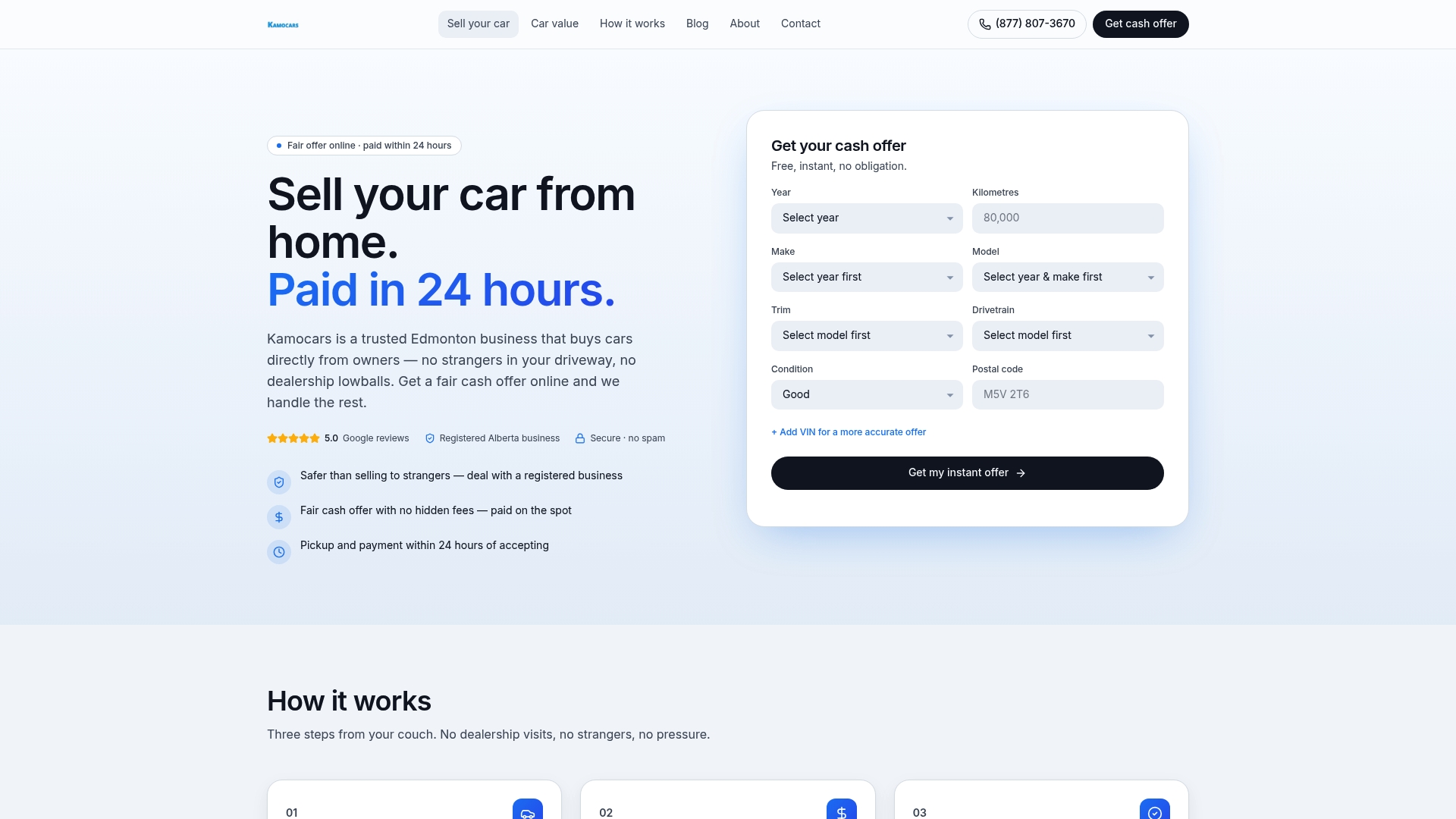
Have your VIN, mileage, and any lien information ready before you start. You can see exactly what we need and how the timeline works on our how it works page, then request your quote directly through Sell My Car when you are ready for a number you can count on.
FAQ
How accurate is the Canadian Black Book?
Canadian Black Book is highly reliable as a baseline for trade-in and wholesale values because it draws on daily-updated dealer auction and wholesale transaction data from across Canada. It tends to understate what you can get in a strong private-sale or retail market, so treat it as a defensible floor rather than a ceiling.
What is the best car value estimator in Canada?
There is no single best tool, since each one answers a different question: Canadian Black Book is the standard for trade-in and wholesale figures, while CARFAX reports vehicle history rather than price. Pairing a CBB-based baseline with local comparable listings and a clean vehicle history typically gives you the most complete picture.
What dealership fees should I avoid in Canada?
Watch for vague reconditioning or administration charges that are not itemized, since these are the most common place a quoted price quietly drops. Always ask for a documented breakdown of any deductions a dealer applies against a Canadian Black Book baseline before you sign anything.
Which car brand breaks down the most?
Reliability varies by model year, trim, and maintenance history more than by brand alone, so a blanket ranking by brand is not something we can responsibly point to. A vehicle’s actual service records and a current CARFAX report are a far more reliable guide to its condition than its badge.
Sources
Recommended
Get a real cash offer in 2 minutes
Trusted business. Fair price. Paid on the spot when we pick up your car.