
Quick Vehicle Sale Best Practices: Sell Fast and Profitably
Learn the best practices for a quick vehicle sale. Get multiple cash offers and maximize profit with our effective selling strategy!
Quick Vehicle Sale Best Practices: Sell Fast and Profitably
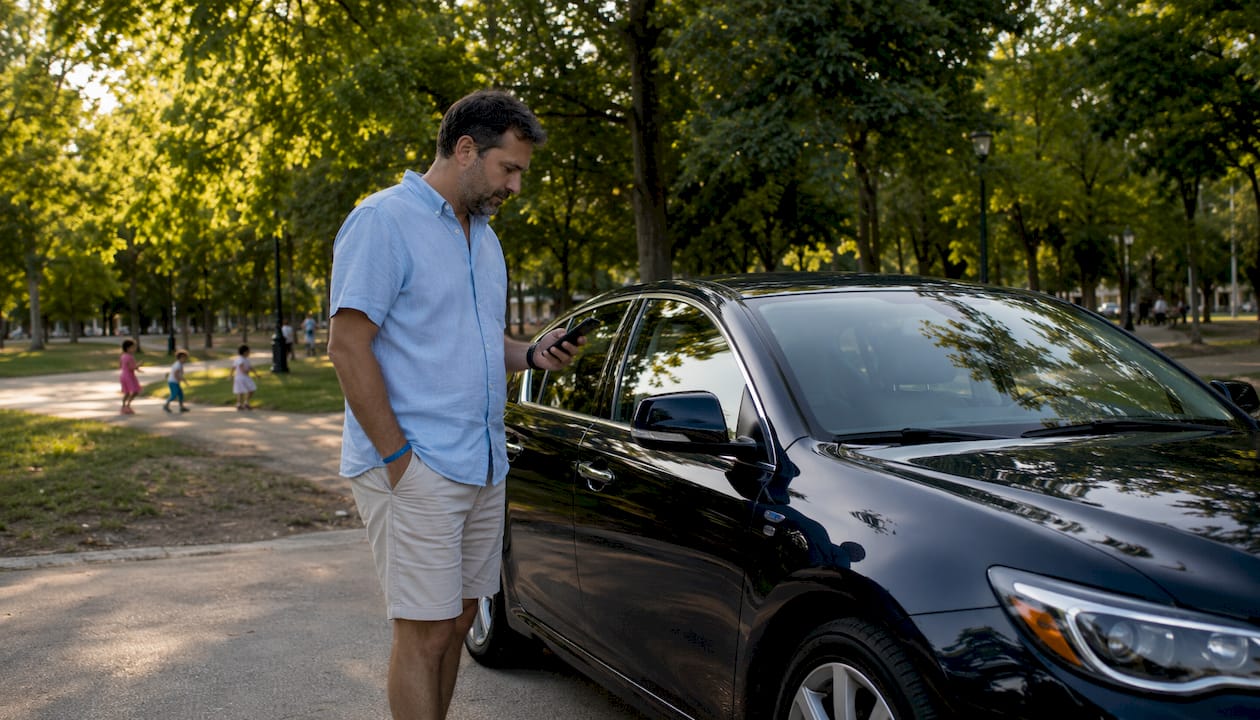
The most effective approach to a quick vehicle sale is a hybrid strategy: get multiple instant cash offers first to lock in a price floor, then list privately on one primary platform for about two weeks to beat that number. If you clear it, great. If not, take the best instant offer. This method protects you from lowball traps, cuts wasted time, and keeps the sale moving whether you prioritize speed or maximum profit.
Here is what that looks like in practice:
- Get multiple instant cash offers simultaneously using Kelley Blue Book and Edmunds as benchmarks before accepting anything
- List privately on one primary platform (Facebook Marketplace works well for most sellers) plus one or two secondary sites
- Clean the car thoroughly — vacuum, wipe surfaces, remove personal items — before any appraisal or showing
- Gather your title, registration, and maintenance records before you list, not after an offer arrives
- Meet buyers in public, daytime locations, bring a companion, and verify identity before any test drive
- Set an asking price slightly above your target and a firm walk-away price equal to your best instant offer
- Accept only certified funds, cashier’s checks, or verified wire transfers — never personal checks or payment apps beyond their daily limits
What are your real options when selling a vehicle?
Every seller faces the same core trade-off: speed versus price. Understanding where each method lands on that spectrum lets you choose without second-guessing yourself.
- Private sale yields the highest payout, typically $1,500–$3,000 more than an instant cash offer, but requires up to 30 hours of seller effort and a timeline of two to eight weeks. You field messages, screen buyers, host test drives, and handle all paperwork yourself.
- Dealer trade-in is the fastest exit, often same-day, but consistently produces the lowest price. One meaningful upside: in most U.S. states, you only pay sales tax on the difference between the trade-in value and the new car price, which can offset some of the price gap.
- Instant cash offer (ICO) platforms deliver speed and convenience. Offers typically run 10–20% below private sale values, but the transaction can close within 24–48 hours with minimal effort. Many platforms give you about a week to consider and compare offers after an appraisal.
- Hybrid approach combines the best of both: use instant offers as a guaranteed floor, then list privately for a short window to see if the market beats it. This is the method that works best for most sellers with a decent car and a week to spare.
Your vehicle’s condition and your urgency decide which path wins. Good condition and flexible timing favor private sale. Mechanical issues or a tight deadline favor instant offers or a dealer.
What documents and prep work do you need before listing?
Paperwork gaps are one of the most common time wasters when selling a car. Buyers lose confidence fast when a seller can’t produce the title on the spot.
- Title and proof of ownership are non-negotiable. If you’re still making payments, contact your lender for the payoff amount and process, since the lender holds the title until the loan is cleared.
- Registration and maintenance records support your asking price and signal to buyers that the car was cared for. No receipts? Ask your mechanic or dealer for a service summary.
- Odometer disclosure is required by federal law at the time of sale.
- State-specific requirements vary. Check your state DMV website before listing to confirm what forms you’ll need at closing.
- Clean the interior and exterior before photos or appraisals. Vacuum the seats and floor, wipe down hard surfaces, wash the exterior, and remove all personal items. This takes about an hour and consistently moves appraisals in the right direction.
- Unlink personal accounts from the vehicle’s infotainment system, including phone contacts, navigation history, and any connected apps.
- Take honest, well-lit photos from multiple angles, including any scratches or dents. A scratch in a photo is a fact a buyer can accept; the same scratch discovered at the test drive becomes a renegotiation.
Pro Tip: Pull a vehicle history report on your own VIN before listing. Buyers will ask for it anyway, and having it ready signals transparency and speeds up the process.
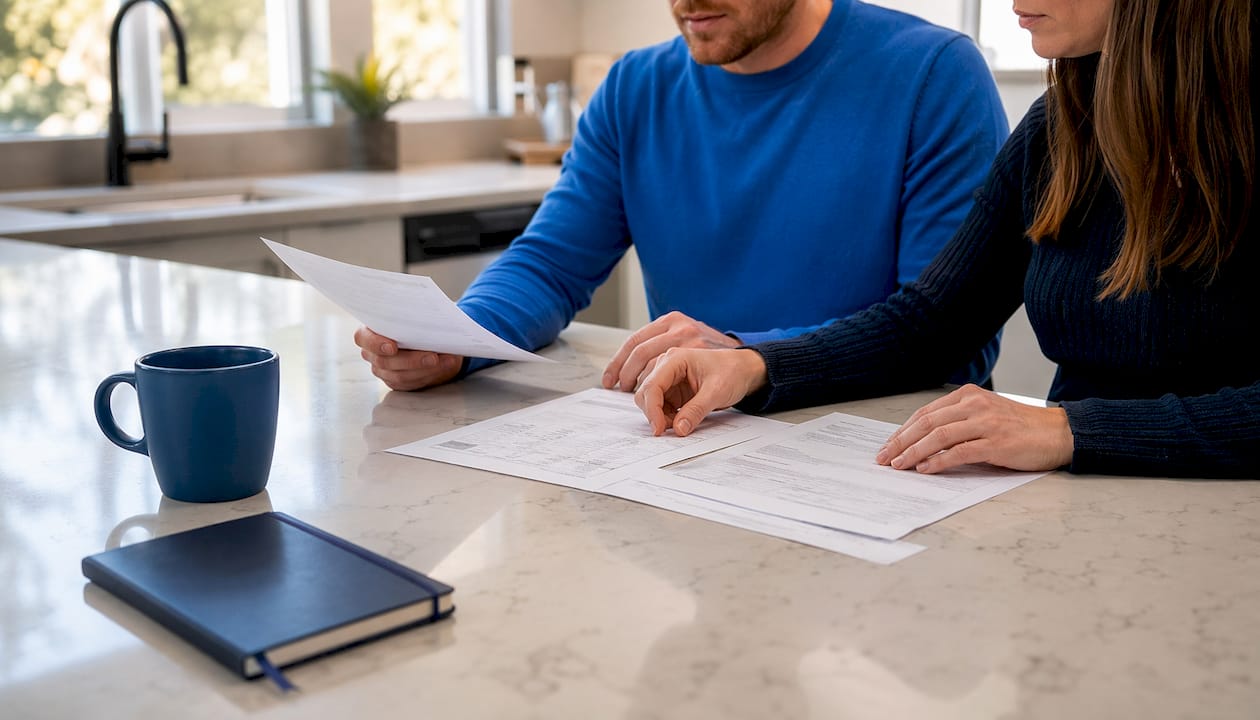
How do you price and advertise your car to attract offers fast?
Pricing is where most private sellers lose money or lose time. Price too high and the listing sits. Price too low and you leave cash on the table.
- Use Kelley Blue Book’s private party value and Edmunds’ True Market Value as your two primary benchmarks. They often differ, so check both and treat the range as your target zone.
- Research comparable local listings on Facebook Marketplace and AutoTrader within 50 miles. Five to ten similar listings tell you what buyers in your area are actually paying, which matters more than any national average.
- Set your asking price slightly above your target to leave room for negotiation. Your walk-away price should match your best instant cash offer — that number is your guaranteed floor.
- Write a specific, honest listing that includes year, make, model, trim, mileage, recent maintenance, known issues, and cosmetic condition. Clear and specific listings consistently outperform vague ones, even at the same price.
- Pick one primary platform and one or two secondary sites. Listing on too many platforms creates duplicate impressions, confuses buyers, and wastes your time managing messages across channels.
How do you stay safe and negotiate effectively with private buyers?
Private sales put you face-to-face with strangers, and that requires a clear protocol. Safety and negotiation go hand in hand here.
- Meet in busy, well-lit public locations during daylight hours. Bank parking lots, busy shopping centers, and police station designated safe-exchange zones all work well. Verify buyer identity and ask for proof of insurance before any test drive.
- Bring a trusted companion and tell someone where you’re going. Never hand over the keys and wait behind — always ride along on the test drive.
- Watch for overpayment scams. If a buyer offers more than your asking price and requests a refund for the difference, walk away. That is a well-documented fraud pattern.
- Set your walk-away price before you meet and treat it as fixed. Having multiple competing offers deters lowball buyers and gives you real leverage in any negotiation.
- Keep negotiations professional. A good negotiation ends with both parties satisfied, not with one side feeling pressured. If a buyer pushes below your walk-away price, suggest they contact you if they reconsider and move on.
For a deeper look at fraud prevention tactics, the car sale fraud prevention guide from Sellkamocars covers buyer screening and secure transaction protocols in detail.

What paperwork do you need to complete the sale legally?
The final steps are where sellers most often make costly mistakes, especially around the release of liability. Get these right and you protect yourself from post-sale headaches.
- Agree on payment before the buyer arrives. Accept only certified funds, cashier’s checks from a bank you both visit together, or a verified wire transfer that clears before you hand over the title. Never transfer ownership before confirmed payment.
- Sign the title in the seller assignment section, record the odometer reading, and hand it over only after payment clears.
- Write a bill of sale with two signed copies. Include the VIN, sale date, sale price, and full names and addresses of both parties. A valid bill of sale protects you if any dispute arises later.
- Remove your license plates if your state requires it. Most do — check your DMV.
- File a release of liability with your state DMV the same day. This is the single most forgotten step. If the buyer delays registration and gets a ticket or is in an accident, that liability can come back to you without this filing.
- Cancel or transfer your insurance only after the title is officially in the buyer’s name, not before.
What does a research-backed hybrid selling strategy look like?
The hybrid approach is the most efficient method for sellers who want both speed and a fair price. It works because it eliminates the two biggest risks: accepting a lowball offer out of desperation, and wasting weeks on a private sale that never closes.
- Request multiple instant cash offers simultaneously from at least three sources. This takes about 15 minutes total and gives you a verified price floor before you list anywhere. Getting multiple quotes is the single most important step when using instant offer platforms.
- List privately on one primary platform for up to 10–14 days. If a private buyer beats your best instant offer, you win on price. If not, you already have a confirmed offer waiting.
- Use your best instant offer as a negotiation anchor. Sellers with competing offers are less likely to accept below market, and buyers know it.
- Keep prep minimal but deliberate. A vacuumed interior, clean exterior, and honest condition disclosure do more for your appraisal outcome than a full professional detail.
- Screen buyers before committing time. Real buyers ask specific questions about maintenance history, accident records, and inspection access. Generic “is this available?” messages rarely convert.
- Value your time honestly. Private sale effort often costs more in time value than the extra profit gained, especially for busy sellers. If the private sale window closes without a better offer, the instant offer is the right call.
Pro Tip: Use the cash offer process guide from Sellkamocars to walk through the hybrid method step by step, including how to compare offers and time your decision.
How do you choose the best selling method based on your timeline and goals?
The right method depends on two variables: how quickly you need the money and how much effort you’re willing to put in. Map those honestly before you start.
If you need the car gone within a week and don’t want to deal with strangers, an instant cash offer is the right tool. The price will be lower than a private sale, but the transaction is fast, safe, and handled by a registered business. For sellers with a tight deadline or a vehicle with higher mileage or minor issues, this path removes friction entirely.
If you have two to four weeks and your car is in solid condition, a private sale or the hybrid approach will net you more. The sell vs. trade-in comparison is worth reviewing if you’re also considering a new purchase, since the tax savings on a trade-in can close more of the price gap than most sellers expect.
A dealer trade-in makes sense primarily when you’re buying another vehicle at the same dealership and the tax offset on the difference is meaningful for your situation. Outside of that scenario, it’s rarely the highest-value option.
How do minor repairs and detailing actually affect your sale price?
Cleaning and minor cosmetic work have a direct effect on appraisal outcomes and buyer perception. The key is knowing where to spend and where to stop.
A thorough interior clean, exterior wash, and removal of personal items signals to any appraiser or buyer that the car was maintained. Professional detailing beyond that level rarely recovers its cost in a higher offer, particularly for instant cash offer platforms where staff technicians handle their own prep before resale.
Minor cosmetic repairs are worth considering selectively. Fixing a cracked windshield or a broken taillight costs relatively little and removes easy objections. For larger repairs, get an estimate first and use it as a negotiation tool rather than paying upfront. A buyer who knows the repair cost can factor it into their offer; you don’t have to absorb it yourself.
Fresh tires, a recent oil change, and a clean cabin air filter are low-cost signals of mechanical care that buyers notice. These details don’t require a shop visit if the car is already current on maintenance. What you want to avoid is spending $800 on repairs to recover $400 in sale price.
How do you handle multiple offers without losing the best one?
Multiple offers are an asset, but only if you manage them deliberately. The most common mistake is letting good offers expire while waiting for a better one that never comes.
Set a clear decision window before you start. If you’re running the hybrid strategy, that window is 10–14 days from your private listing date. When offers come in, rank them against your instant cash floor and your target price. An offer that clears your target by a meaningful margin deserves a fast response, not a delay.
When two serious buyers are interested at the same time, be transparent without creating a bidding war. Tell each buyer you have other interest and that you’ll make a decision by a specific date. That’s honest, professional, and creates natural urgency without pressure tactics.
Never let a buyer’s deposit or verbal commitment substitute for a signed agreement and cleared payment. Until the title is signed and funds are verified, the car is still yours and the sale is still open.
What are you legally and ethically required to disclose to buyers?
Disclosure requirements vary by state, but the ethical standard is consistent: tell buyers what you know about the car’s condition, history, and title status.
Federal law requires you to disclose the odometer reading at the time of sale. Beyond that, most states require disclosure of known material defects, meaning issues that would affect the buyer’s decision or the car’s value. Selling a car with a known transmission problem without disclosing it exposes you to legal liability after the sale.
Title status matters too. A salvage title, rebuilt title, or lien must be disclosed upfront. Buyers have the right to know if the car was in a major accident, flooded, or declared a total loss. A Carfax or AutoCheck report on your own VIN, which runs about $40, lets you see exactly what’s on record and address any surprises before a buyer finds them.
If the car is being sold “as-is,” state that clearly in the listing and in the bill of sale. That language doesn’t eliminate your duty to disclose known defects, but it does protect you from claims about issues you genuinely weren’t aware of.
Key Takeaways
The fastest and most profitable vehicle sale combines a verified instant cash offer as a price floor with a focused private listing of 10–14 days to capture higher bids without wasted effort.
| Point | Details |
|---|---|
| Use a hybrid strategy | Get multiple instant cash offers first, then list privately for 10–14 days to beat that floor. |
| Private sales pay more, but cost time | Private buyers typically pay $1,500–$3,000 more than instant offers, but require up to 30 hours of seller effort. |
| Instant offers run 10–20% below private value | They close in 24–48 hours, making them the right call when speed outweighs the price difference. |
| File the release of liability same day | This single step protects you from post-sale tickets, accidents, and registration delays tied to your name. |
| Multiple offers prevent lowball acceptance | Sellers with competing offers in hand have real negotiation leverage and a clear floor to defend. |
Sell your car fast with Sellkamocars
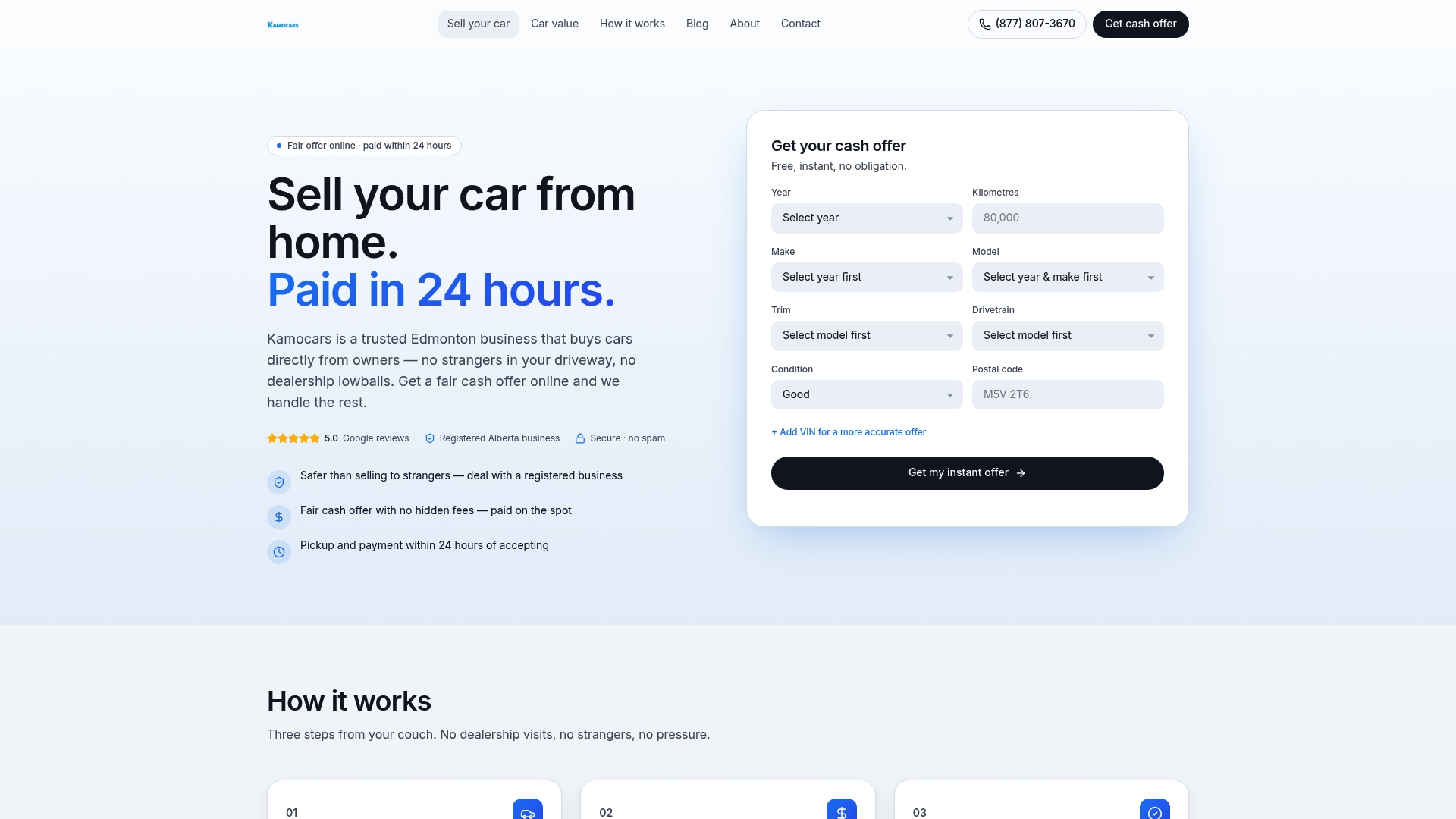
Sellkamocars takes the friction out of the process. You get a fair cash offer based on current market data, free pickup, and payment within 24 hours. No strangers at your door, no haggling, and no waiting weeks for a private buyer to commit. With over 500 completed transactions and a registered business backing every deal, it’s a secure option for sellers who want speed without sacrificing value.
Get your instant offer today, or use the free car value tool to see what your vehicle is worth before you decide. If you want to understand the full process first, the how it works page walks you through every step from appraisal to pickup.
Recommended
Get a real cash offer in 2 minutes
Trusted business. Fair price. Paid on the spot when we pick up your car.