
Alberta Sellers: 1 in 4 Cars Show Accidents and Lose Resale Value
Alberta sellers: accident records reduce resale. See which VIN brands and repairs protect price, and learn faster sale options via Kamocars.
Alberta Sellers: 1 in 4 Cars Show Accidents and Lose Resale Value

Yes, a recorded accident history usually lowers resale value in Canada. VIN-specific reports like CARFAX Canada and insurer branding are the main reasons buyers pay less for a repaired vehicle. Alberta sellers who prepare documentation early, and know their options including instant cash buyers like Kamocars, keep more of their car’s value.
TL;DR:
- Recorded accident history, especially branded titles like salvage or rebuilt, significantly reduces resale value and affects insurability across Canada.
- Insurance claims that are close to the deductible might be cheaper to settle out-of-pocket since they do not create a permanent damage record.
- Providing detailed repair invoices, photos, and official reports can help mitigate value loss and build buyer confidence during private sales.
- Selling through a cash-buy service like Kamocars offers quick, hassle-free transactions for accident-repaired vehicles, avoiding the lengthy negotiation process.
- About one in four vehicles searched on CARFAX Canada show recorded damage, making accident history a routine part of valuation discussions in the Canadian market.
Table of Contents
- How accident history changes valuation
- Which records, brands and repair details matter most in Canada
- Legal disclosure and paperwork sellers and buyers use in Canada
- Practical pre-sale checklist for Alberta sellers
- When speed beats chasing a higher private sale price
- How Kamocars helps sellers of accident-repaired vehicles
- Sources
- FAQ
How accident history changes valuation
Buyers and appraisers do not price a car off its condition alone. Services like CARFAX Canada pull VIN-specific records and apply history-based value adjustments that account for reported damage, repair estimates, ownership changes, and how the vehicle was used. A clean-history car and a mechanically identical repaired one rarely sell for the same price, even when both drive perfectly.

Part of that gap comes from what appraisers call inherent diminished value. Even a flawless repair leaves a permanent mark on the vehicle’s record, and buyers factor in the risk of hidden structural or electrical issues that a fresh paint job can hide. Repair quality narrows that gap but rarely closes it.
About 1 in 4 vehicles searched on CARFAX Canada show recorded damage, which means accident history is a routine part of pricing conversations in Canada, not an edge case.
Valuation models typically weigh:
- Severity of the recorded damage and estimated repair cost
- Point of impact and whether it affected structural or frame components
- Number of separate incidents on the vehicle’s record
- Age of the vehicle when the damage occurred
- Quality and documentation of the repair work
A well-documented, professionally repaired fender bender affects value far less than an undocumented or structurally significant incident.
Which records, brands and repair details matter most in Canada
Not all accident history carries the same weight. Branding status, assigned by insurers and recorded permanently against the VIN, matters more than almost anything else. The Insurance Bureau of Canada explains that categories like Irreparable, Salvage, and Rebuilt stay attached to a vehicle for life and affect both insurability and registration in every province the car moves to.
Ranked roughly by impact on resale value:
- Structural or frame damage, which raises safety questions even after repair
- Airbag deployment, which signals a more serious collision
- Flood or fire damage, which insurers and buyers treat with particular caution
- Multiple recorded incidents, even minor ones, which compound buyer hesitation
- Minor cosmetic repairs such as bumper or panel work, which have the smallest effect
When you do have repair history to disclose, documentation does most of the work of protecting your price. Shop invoices that itemize parts and labor, before-and-after photos, and proof that OEM parts were used all give buyers confidence that the repair matches professional standards rather than a shortcut fix.
Legal disclosure and paperwork sellers and buyers use in Canada
Disclosure rules differ depending on whether you sell privately or through a dealer, but the paper trail buyers expect is fairly consistent across Canada. Dealer rules set the floor: OMVIC-registered dealers in Ontario must disclose repair costs exceeding $3,000 in writing, and similar dealer-disclosure thresholds exist in other provinces. Private sellers in many provinces are expected to provide a Used Vehicle Information Package, and Alberta’s own government guidance tells buyers to expect mechanical fitness assessments and written estimates when purchasing from a business.
To satisfy a reasonably informed buyer, plan to have on hand:
- A CARFAX Canada Vehicle History Report covering accidents, liens, and recalls
- A Used Vehicle Information Package, where applicable in your province
- Repair invoices itemizing parts, labor, and shop details
- A signed mechanic’s inspection report covering the repaired areas
- A lien check confirming the vehicle is free to sell
- Any relevant Transport Canada recall information
Handing over this package upfront changes the tone of a negotiation. Buyers who see the full picture tend to negotiate on facts rather than suspicion, which usually means a smaller discount than sellers who get caught hiding something.
Practical pre-sale checklist for Alberta sellers
A little preparation before listing does more to protect your price than any negotiating tactic. Work through these steps in order:
- Order a CARFAX Canada Vehicle History Report and a lien check, then gather every repair invoice and photo you have
- Book an independent mechanic inspection focused specifically on the repaired areas and get a signed report
- Decide whether remaining issues are worth fixing by weighing the repair cost against the value you would recover
- Consider whether a claim is worth filing at all: minor damage near your deductible may be cheaper to pay out-of-pocket, since a claim becomes a permanent record that a deductible payment never does
- Be transparent in your listing and bill of sale, then price using the history-adjusted value rather than a clean-title baseline
- Weigh your selling channel: private sale can net more but takes longer and puts the documentation burden on you, a dealer trade-in is fast but typically offers less, and a cash-buy service like Kamocars sits between the two on speed and certainty
Pro Tip: List repair invoices and before-and-after photos directly in your ad description, not just on request. It signals you have nothing to hide before a buyer even asks.
When speed beats chasing a higher private sale price
Selling a car with accident history privately can net more money, but it also means fielding buyer suspicion, answering the same questions repeatedly, and sometimes watching a deal fall through after a third-party inspection turns up something you already disclosed. For a branded VIN, multiple recorded incidents, or a tight timeline, the incremental amount a patient private sale might recover often gets eaten up by the time and negotiation it takes to get there.
— Omar
How Kamocars helps sellers of accident-repaired vehicles
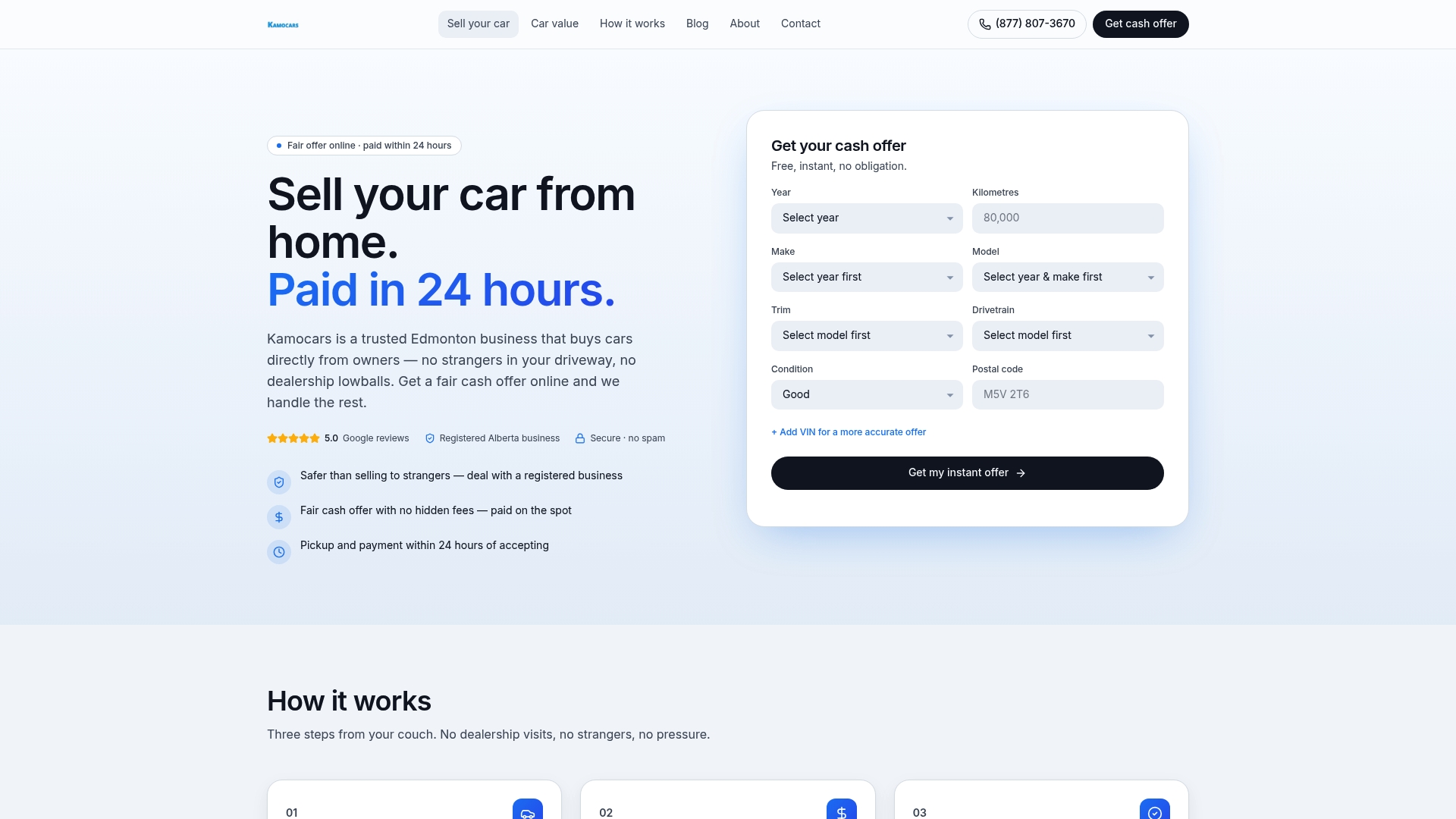
Selling a car with accident history does not have to mean weeks of showings and buyers second-guessing your paperwork. A cash-buy service gives sellers an instant appraisal based on current market data, a cash offer, and free pickup with payment inside 24 hours for eligible vehicles.
For sellers of repaired or accident-history vehicles specifically, that means:
- No need to convince private buyers your repair was done right
- The service handles lien checks and paperwork on your behalf
- An offer once accepted, with no last-minute deductions
If your car, truck, or SUV is a 2018 model or newer and still runs, start with the Sell My Car page for an instant offer, or read how it works to see the full process before you commit.
Sources
Before you list, verify your car’s own record rather than relying on memory of what happened.
- CARFAX Canada Vehicle History Report
- Insurance Bureau of Canada — branding
- OMVIC protects buyers: ensuring OMVIC-registered dealers provide full disclosure
- Your car may be worth less after an accident: Learn about diminished value
For more on how history-based adjustments show up in an actual offer, see this guide on car history’s role in valuation and this breakdown of what hurts resale value.
FAQ
Does a Carfax report always show accident history?
A CARFAX Canada report shows accidents, damage, and liens that were reported to insurers, police, or registered shops, but not every fender bender gets reported. Roughly 1 in 4 vehicles searched turn up recorded damage, so a clean report is a strong signal but not an absolute guarantee of a damage-free past.
How much does a branded title lower resale value?
A vehicle branded Salvage, Rebuilt, or Irreparable loses significant value because these categories are permanently tied to the VIN and limit insurability in every province the car travels to. The exact discount depends on the branding type and buyer pool, but branded vehicles consistently sell for less than equivalent clean-title cars.
Can I recover diminished value from my insurance claim?
Generally no. Canadian insurers typically pay for repair costs but do not offer a standard provision for diminished value, meaning the permanent resale loss from having an accident on record usually falls on the owner.
Do private sellers in Alberta need to disclose accident history?
Alberta buyers purchasing from a business should expect mechanical fitness assessments and written estimates as standard practice. Private sellers are not bound by the same dealer-disclosure thresholds as OMVIC-registered dealers, but providing a vehicle history report and repair invoices protects both parties and supports a fair price.
Should I fix damage or claim insurance before selling?
If repair costs are close to your deductible, paying out-of-pocket can be worth it since filing a claim creates a permanent record that a direct payment does not. For more significant damage, get a mechanic’s assessment first, then weigh the repair cost against the value you would likely recover at sale.
Recommended
Get a real cash offer in 2 minutes
Trusted business. Fair price. Paid on the spot when we pick up your car.